Today’s Sponsor
Trump's Department of Labor just proposed allowing physical gold inside 401(k)s — and if approved, millions of Americans could gain access by 2027. BlackRock is already launching new gold funds. JP Morgan forecasts gold hitting $6,000/oz. And gold has already surged 64% in 2025 — before this policy even officially dropped.
If you're over 59½, there's a legal, IRS-approved strategy to move part of your 401(k) or IRA into physical gold right now — tax-deferred and penalty-free. A free guide called "Retirement to Gold" breaks down exactly how to do it before everyone else catches on.
Get the Free Guide NowThis is an advertisement. If you no longer wish to receive promotional messages from Secco Squared, please unsubscribe here. Or write to: 351 Paseo Nuevo, Floor 2, Santa Barbara, CA, US 93101.

From the Senate map to trade authority, today’s through-line is institutions under pressure: parties stuck with imperfect nominees, Congress sidelined on tariffs, a member facing a serious allegation, a major lender tightening costs, and Israel escalating movement restrictions after a deadly attack.
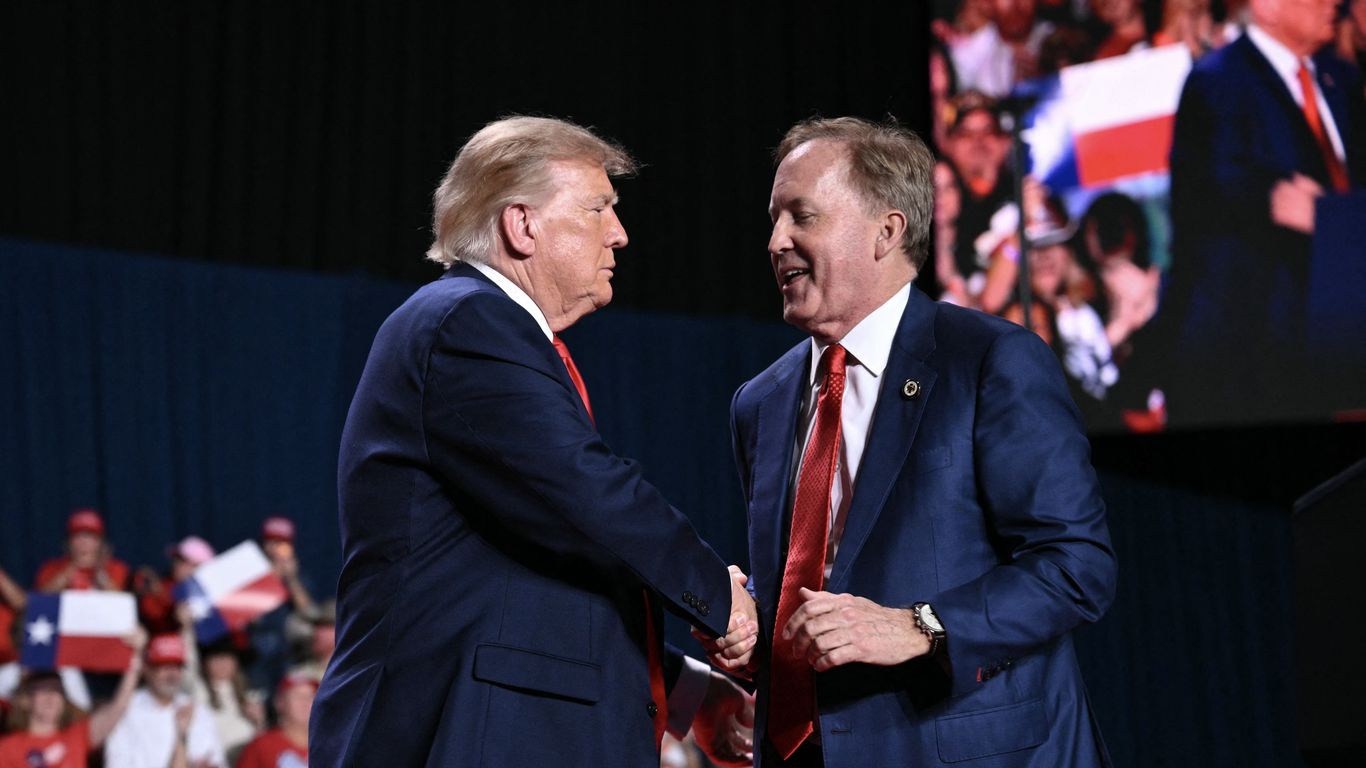
Image via Axios
Senate control may ride on candidates party leaders didn’t want
Senate Majority Leader John Thune and Minority Leader Chuck Schumer are facing a familiar midterm hazard: critical races defined less by message discipline than by nominees and dynamics leadership didn’t choose. Axios reports both leaders are now contending with a mix of unwanted nominees, former colleagues, and unpredictable candidate brands in a cycle where a few seats could decide control.
The practical problem is that Senate campaigns are increasingly nationalized, but candidate quality is still local and personal. When nominees drift toward factional politics, baggage, or past controversies, it forces leadership-aligned super PACs into defensive spending and awkward triangulation—support the party nominee while trying to limit the nominee’s ability to define the race. With the margin for control narrow, the map can turn on just one or two races where the candidate isn’t built for a general election.
Leadership will still try to nationalize: tying opponents to unpopular policies, spotlighting incumbents’ records, and focusing on cost-of-living and public safety. But when the nominee becomes the story, message discipline collapses, donors get skittish, and swing voters default to their broader impression of competence—or lack of it.
✓ The Bottom Line: Parties keep learning the same lesson: voters may be polarized, but they still punish chaos and amateurism when stakes are high. If either side loses a winnable seat because it couldn’t manage candidate selection, it won’t be a mystery—it will be self-inflicted. Senate control is too tight for protest nominees and personality dramas.
📎 Axios

Image via The Hill
A new push argues Congress should take trade back from the White House
A Hill opinion piece argues that after the midterms, Congress should reassert its role in trade policy—particularly in response to President Trump’s tariffs, which the author says are highly unpopular with voters. The piece also links political blowback to higher oil prices tied to the Iran war, contending that the combination is putting household budgets under stress and amplifying demand for policy change.
At the core is a long-running institutional drift: presidents of both parties have accumulated wide latitude on tariffs and trade restrictions, often through legacy authorities designed for emergencies or national security. The result is that sweeping trade actions can be imposed quickly, with limited direct accountability for the inevitable costs—higher input prices, retaliation against U.S. exporters, and consumer inflation in targeted categories.
Any serious congressional reassertion would require more than speeches. It would mean rewriting tariff authorities, narrowing national security carve-outs, and forcing time-limited approvals for major trade actions. The politics are complicated: many lawmakers like the symbolism of toughness, but fewer want to own the price tag.
✓ The Bottom Line: Congress should stop outsourcing trade to executive improvisation, especially when tariffs become a substitute for strategy. If tariffs are meant to serve national security or industrial policy, lawmakers should debate them, authorize them narrowly, and measure outcomes honestly. A center-right approach should favor rules, predictability, and competitiveness—not open-ended tariff powers that function like a hidden tax.
📎 The Hill

Image via Fox News
GOP lawmaker threatens Omar expulsion bid tied to DOJ probe
Fox News reports Rep. Randy Fine says he plans to pursue House expulsion of Rep. Ilhan Omar if the Justice Department finds her guilty of immigration fraud. The threat is tied to a DOJ probe referenced in the report, with Fine framing expulsion as the appropriate remedy if criminal wrongdoing is established.
Expelling a member is among the most severe actions the House can take and historically has been rare, typically reserved for extraordinary misconduct and requiring a two-thirds vote. In practice, even serious allegations often lead first to investigations, committee action, or censure while facts are developed. Fine’s statement reads as both a legal conditional and a political escalation: it sets a maximal penalty now, before the public knows what DOJ will ultimately conclude.
The broader risk is that Congress turns expulsion into a routine partisan weapon rather than a last-resort safeguard for institutional integrity. If DOJ reaches findings, the House will still need to weigh due process, standards of evidence, and precedent carefully.
✓ The Bottom Line: If DOJ proves a crime beyond reasonable dispute, Congress shouldn’t flinch from consequences—but it also shouldn’t pre-announce expulsion as a talking point. The right standard is evidence first, then proportional accountability that can survive the next majority reversal. Treating expulsion as performative politics cheapens a power meant for the clearest cases.
📎 Fox News
American Express cuts 5% of staff as restructuring costs hit earnings
American Express is cutting about 5% of its workforce, CNBC reports, alongside a $336 million restructuring charge recorded in the quarter. CEO Stephen Squeri disclosed the move as the company reported third-quarter results Friday.
The decision fits a pattern across large financial and corporate firms: management teams are tightening cost structures after years of wage inflation and uneven demand, while still trying to protect core growth businesses. For Amex, which is tightly linked to consumer and small-business spending, a restructuring can signal a desire to maintain margins even if the macro outlook is less certain.
For workers, job cuts at a blue-chip lender are a reminder that corporate America is not waiting for a recession headline before acting. For investors and customers, the key question is whether the move reflects a temporary efficiency drive or a deeper concern about credit, spending, and defaults.
✓ The Bottom Line: A 5% cut isn’t panic, but it’s not nothing—and it suggests executives see enough risk ahead to pay real money now to lower costs later. The healthier path is transparency: explain what’s being streamlined and how service and risk controls won’t degrade. Restructuring can be prudent; hollowing out front-line operations and compliance is not.
📎 CNBC
Israel orders full West Bank lockdown after deadly shooting attack
NBC News reports Israeli Prime Minister Benjamin Netanyahu ordered the Israel Defense Forces to impose a closure of Hebron and prepare for a full West Bank lockdown following a deadly shooting attack. The order reflects an immediate security posture aimed at preventing follow-on attacks and facilitating searches and intelligence operations.
Lockdowns and closures can be tactically effective in the short term, but they also carry steep humanitarian and political costs. Restricting movement across the West Bank affects daily life, access to work and medical care, and the broader economy—effects that can fuel further anger and instability. The Israeli government faces pressure to act decisively after attacks, while also managing international scrutiny and the practical limits of collective restrictions.
The durability of a lockdown often depends on what comes next: whether authorities identify perpetrators quickly, whether rules are applied narrowly or broadly, and whether there is a credible plan to reduce violence rather than simply freeze it in place.
✓ The Bottom Line: Israel has a clear obligation to protect civilians and prevent repeat attacks, and rapid security measures are understandable in the immediate aftermath. But a full-scale lockdown is a blunt instrument that should be narrowly tailored, time-limited, and paired with a realistic plan to disrupt the networks behind the violence. The longer broad restrictions persist, the more they risk trading short-term control for long-term instability.
📎 NBC News
That’s the file for Friday. We’ll be watching the Senate map, trade authority momentum, and any formal DOJ or House steps closely over the weekend.
— Brief Updates Editorial