Today’s Sponsor
Before a ticker heats up, there's a brief window — a signal phase — that shows up quietly. No alerts. No buzz. Just a subtle shift for those watching the right tells. Most people wait for confirmation, but by then the early edge is already gone.
Our FREE Market Signal Brief is built to identify these quiet setups before they turn into noisy moves. Get the fast-read breakdown that spots momentum shifts before the news cycle catches on.
Get the Free Signal Brief*We encourage readers to perform their own research and due diligence on any information we provide. By clicking the link you will automatically be subscribed to the Daily Edge Report Newsletter.

Thursday, June 4, 2026 — Ukraine brings the war closer to Russia’s economic stage; chip stocks slide on a Broadcom hangover; Somalia’s political crisis turns kinetic; Israel advances new West Bank housing plans; and a subtle SpaceX filing tweak fuels outsized merger chatter.
Image via AP News
Ukraine’s drones darken Putin’s St. Petersburg economic showcase
Ukrainian drone strikes near St. Petersburg threw a harsh spotlight on Russia’s vulnerability just as the Kremlin tries to project stability and investment appeal around the St. Petersburg International Economic Forum. Footage and images showed black smoke rising over the port area after the attack, an uncomfortable backdrop for an event designed to signal that Russia’s economy can function — and attract partners — despite sanctions and wartime strain.
The timing matters. Moscow uses the forum to court non-Western capital, lock in commodity and infrastructure deals, and sell a narrative of resilience. Strikes that reach Russia’s second city undercut that pitch by raising questions about air defenses, critical infrastructure risk, and the practical cost of a war the Kremlin insists is manageable. For Ukraine, long-range drone operations are a relatively low-cost way to impose psychological and economic pressure, disrupt logistics, and force Russia to divert resources to domestic defense.
The broader implication is that the battlefield is increasingly entwined with Russia’s economic messaging. Even limited damage can have outsized signaling value: insurers, shippers, and investors price risk forward, and officials must answer why high-profile areas are not fully protected. As both sides head deeper into a war of endurance, expect more attempts to puncture the other’s claims of control — especially when cameras are rolling.
Read the full story at AP News →
Chip stocks slide premarket after Broadcom disappoints, pulling peers down with it
U.S. semiconductor shares fell in premarket trading, led by Micron, Marvell, and Broadcom, after Broadcom’s results and/or outlook failed to meet elevated investor expectations. The move underscores how tight the market’s tolerance has become: after months of optimism around AI-driven demand, anything short of a clear beat-and-raise can trigger a swift repricing across the group.
Broadcom often trades as a bellwether for enterprise spending and AI networking, so weakness there tends to ripple into adjacent names — memory, connectivity, and data-center-exposed chip designers — regardless of company-specific fundamentals. Traders also appear to be rebalancing after a strong run, with the sector still priced for robust growth, healthy margins, and sustained hyperscaler capex.
What to watch next is whether this is a one-day sentiment shock or the start of a broader rotation. If guidance across the next few earnings cycles shows demand normalization, tighter inventory discipline, or slower AI infrastructure buildouts, the market may continue to compress multiples. Conversely, a couple of strong prints from peers could quickly stabilize the tape, but the bar is now plainly higher.
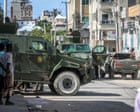
Image via The Guardian
Mogadishu erupts as political dispute turns into street fighting and civilian flight
Civilians fled parts of Mogadishu as clashes broke out between Somali government forces and opposition-allied militias, with gunfire and heavy weapons reported in several areas ahead of planned protests. The violence follows a worsening political standoff tied to President Hassan Sheikh Mohamud’s decision to remain in office after his term expired, a move opponents say lacks legitimacy and threatens constitutional order.
Somalia’s security landscape is already fragile, with the government fighting al-Shabab and relying on a mix of national units, clan-linked forces, and international support. When political disputes spill into armed confrontation in the capital, it can quickly widen: militias mobilize along clan lines, security forces fragment, and civilians pay the immediate price through displacement, disrupted services, and closed roads.
The risk now is a feedback loop: unrest in Mogadishu weakens counterterror operations, strains donor confidence, and makes compromise harder as leaders calculate from a position of force rather than law. A near-term de-escalation will likely require credible mediation and clear commitments around elections and the rules of succession — because in Somalia, contested legitimacy is not an abstract argument; it can become gunfire in days.
Read the full story at The Guardian →
Israel advances plans for 2,162 West Bank homes as coalition hardliners press ahead
Israel’s far-right finance minister, Bezalel Smotrich, announced plans to move forward with 2,162 housing units in the occupied West Bank, framing the step as a way to "strengthen" Israel’s hold on the territory. The announcement fits a long-running pattern: incremental planning and construction that changes facts on the ground while political negotiations remain stalled.
Supporters argue settlement building meets natural growth, security, and historical claims, and that the West Bank’s final status should be resolved through Israeli political decisions rather than international pressure. Critics — including many foreign governments and Palestinian leaders — view such moves as deepening occupation, complicating the viability of a future Palestinian state, and inflaming tensions at a time when violence in the West Bank remains elevated.
The practical implication is more than housing numbers. Each new tranche tends to trigger disputes over land, access roads, and security coverage, and it can harden positions on both sides. International reactions are likely to include renewed diplomatic criticism, but past experience suggests tangible constraints are harder to muster — especially if Israeli domestic politics reward a show of resolve.
Read the full story at Al Jazeera →
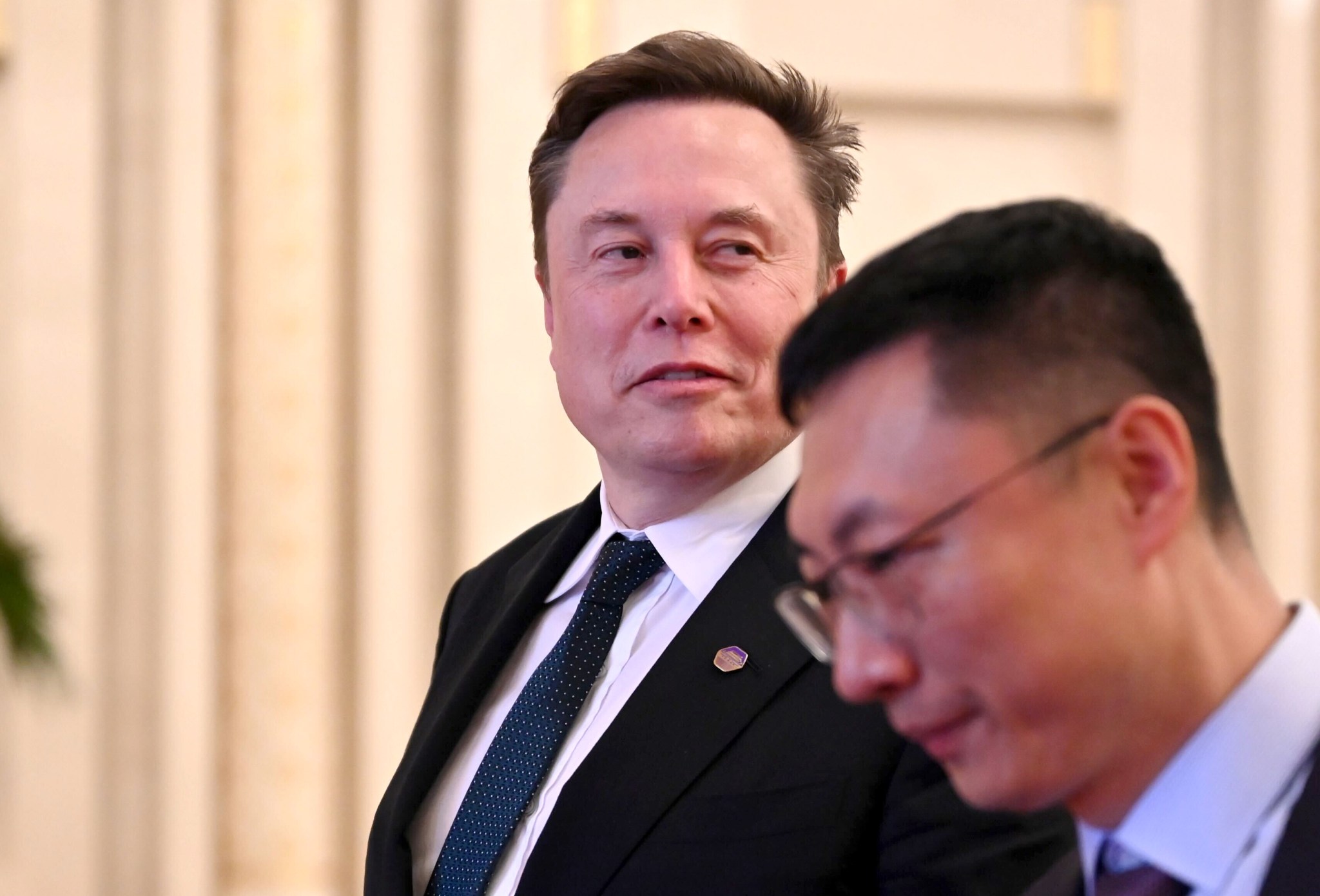
Image via Fortune
One line in a SpaceX filing revives Tesla-merger talk — and the stakes are enormous
A single new sentence in an amended SpaceX IPO filing is fueling speculation about a potential SpaceX-Tesla combination — a scenario that, if pursued, could rank among the largest mergers ever. The filing change, while not a deal announcement, is being read as a legal and strategic breadcrumb: language that can be used to keep future options open around related-party transactions, corporate structure, or potential consolidation.
The logic investors see is straightforward: Elon Musk’s companies share talent, suppliers, and an ecosystem of technology and capital. Bulls argue a merger could streamline financing, align long-term R&D across batteries, manufacturing, communications, and robotics, and create a vertically integrated industrial powerhouse. Skeptics counter that combining them would be a governance and antitrust minefield, with major conflicts-of-interest questions, valuation challenges, and the risk of dragging one company’s volatility into the other’s shareholder base.
Even if no merger is imminent, the episode highlights how markets parse filings for signals — and how Musk-linked corporate strategy often blends engineering ambition with financial optionality. The key tell going forward won’t be a vague sentence; it will be board actions, related-party disclosures, and whether regulators and large shareholders would tolerate consolidation at this scale.
Read the full story at Fortune →
That’s the file for today. We’ll be watching whether markets treat the chip selloff as a wobble or a reset — and whether today’s security flashpoints harden into longer crises by week’s end.
— Brief Updates Editorial