Today’s Sponsor
A rare momentum indicator just fired — and it's pointing at a small-cap stock that's still flying completely under the radar. Historically, when this signal triggers, real movement tends to follow before the crowd ever catches on.
Trading Ideas has put together the full briefing: company name, chart data, and the exact signal they're watching — all in one free report. This is the kind of early setup that doesn't stay quiet for long.
Access the Free Report Now*We encourage readers to perform their own research and due diligence on any information we provide. By clicking the link you will automatically be subscribed to the Trading Ideas Newsletter. View our Privacy Policy.

Monday, July 20, 2026: A fresh round of U.S. strikes and rising energy prices sharpen the economic and security picture; chipmakers buoy stocks; a high-profile voter ID claim gets corrected on-air; and AMD moves up the AI hardware stack with a rack-scale system and a major new buyer.

Image via Axios
U.S. launches new strikes on Iran after troop deaths tied to Jordan incident
The U.S. military carried out additional strikes against Iran on Sunday evening, a move that followed the Pentagon’s announcement that one American service member died and another’s remains were recovered after an earlier incident connected to Jordan. The latest action signals Washington is leaning further into deterrence after a period in which Iran-backed attacks and regional escalation have repeatedly tested U.S. red lines.
The strategic logic is familiar: reduce the near-term threat to U.S. forces and raise the cost to Tehran (or its network) for future attacks. The risks are just as familiar, too. Each strike cycle can prompt retaliation through proxies, spur attacks on shipping lanes, and draw in partners who’d prefer de-escalation but can’t ignore threats to regional stability. Domestically, the politics are also tightening as casualties put pressure on the administration to respond decisively while avoiding a broader war.
Source: Axios
Read the full story at Axios →

Image via The Hill
Gas hits $4 a gallon as U.S.-Iran conflict drives risk premiums back into oil
The national average price for gasoline reached $4 per gallon on Monday, according to AAA, as renewed U.S.-Iran conflict pushed energy markets to price in higher geopolitical risk. Even when physical supply has not yet been disrupted, traders tend to add a “risk premium” when the Gulf looks unstable, and that can flow quickly into wholesale gasoline and then to the pump.
For households, the timing is punishing: gasoline is a visible, weekly cost that hits lower- and middle-income consumers hardest and can ripple into broader inflation via shipping and services. For policymakers, the immediate levers are limited. Strategic releases can smooth shocks, and regulators can scrutinize market conduct, but the biggest variable remains whether the conflict expands to threaten production or transit routes, especially the Strait of Hormuz and adjacent shipping corridors.
Source: The Hill
Read the full story at The Hill →
Chipmakers lift stocks while markets price a new maritime threat from the Houthis
U.S. stocks got support from strength in chip-related names, underscoring how heavily market sentiment still leans on AI infrastructure spending and the companies that supply it. Even on days when geopolitics dominates headlines, investors have repeatedly treated semiconductors as the market’s growth engine, particularly when earnings expectations and near-term demand signals hold up.
At the same time, traders are watching fresh reports about Houthi plans for a maritime blockade, a reminder that shipping risks can quickly become an economic story. Any credible threat to key sea lanes raises the odds of higher insurance costs, longer routes, delayed deliveries, and renewed energy volatility. The net effect is a market tug-of-war: optimism about AI-led growth versus the possibility that security disruptions spill into prices, supply chains, and global demand.
Source: Bloomberg
Read the full story at Bloomberg →
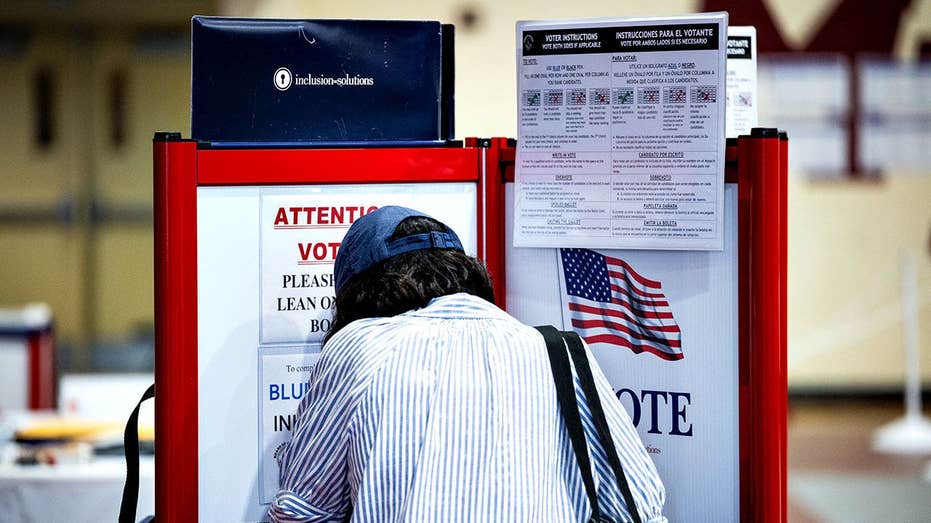
Image via Fox News
Warner’s voter ID comments get corrected on-air as SAVE Act debate stays heated
Sen. Mark Warner faced pushback during an ABC interview after making claims about voter ID requirements that were challenged as inaccurate, with the interviewer pressing him on the specifics of Virginia’s rules. The exchange comes as Democrats and Republicans clash over the SAVE America Act and related election integrity proposals, with supporters framing them as basic verification measures and opponents warning about disenfranchisement risks.
The underlying policy dispute is real, but it’s also highly fact-dependent. Many states already require some form of ID or verification, while the hard questions are about implementation: what counts as acceptable identification, how exceptions work, whether free IDs are accessible, and what happens to eligible voters who lack paperwork. In that context, misstatements matter because they shift the debate from practical tradeoffs to talking points, and the public ends up less informed about what a given bill would actually change.
Source: Fox News
Read the full story at Fox News →
AMD moves beyond chips with Helios AI racks, landing Microsoft in a direct Nvidia challenge
AMD announced Helios, its first rack-scale AI system aimed squarely at competing with Nvidia’s end-to-end data center platforms. The company also disclosed Microsoft as its newest buyer, adding to a customer list that includes Meta, OpenAI, and Oracle. The message is that AMD doesn’t just want to sell accelerators; it wants to sell a full, integrated solution that can be deployed quickly at hyperscale.
This is a significant strategic step because the AI infrastructure market is increasingly about systems, not components: networking, memory, cooling, software stacks, and deployment support all influence total cost and performance. Nvidia has benefited from tight integration and a mature software ecosystem, so AMD’s challenge is execution as much as silicon. Microsoft signing on is notable not only for revenue potential, but as a signal to the broader market that large buyers are actively seeking a credible second supplier to reduce cost, risk, and dependency.
Source: CNBC
That’s the file for Monday. We’ll be watching for two things next: whether the Iran flare-up starts touching shipping and energy flows in a sustained way, and whether AI infrastructure spending keeps overpowering the market’s growing list of geopolitical risks.
— Brief Updates Editorial