Today’s Sponsor
Palantir, Micron, SanDisk — stocks like these move fast, but the real opportunity is catching them before the crowd does. We've identified 7 under-the-radar stocks worth putting on your radar right now — no mega-cap hype, just names that could be next to move.
This premium report is still free — but that won't last. If you're looking for what the market may notice next, see the full list now before it's gone.
Get the Free Report NowBy clicking the link above you agree to receive emails from StockEarnings and our affiliates. You can opt out at any time. Privacy Policy.

A compact on AI safety meets enforcement reality, a new third-country deportation partner raises human-rights questions, inflation re-accelerates, defense demand in Europe nears an inflection point, and a regional airline diversion highlights aviation risk management.
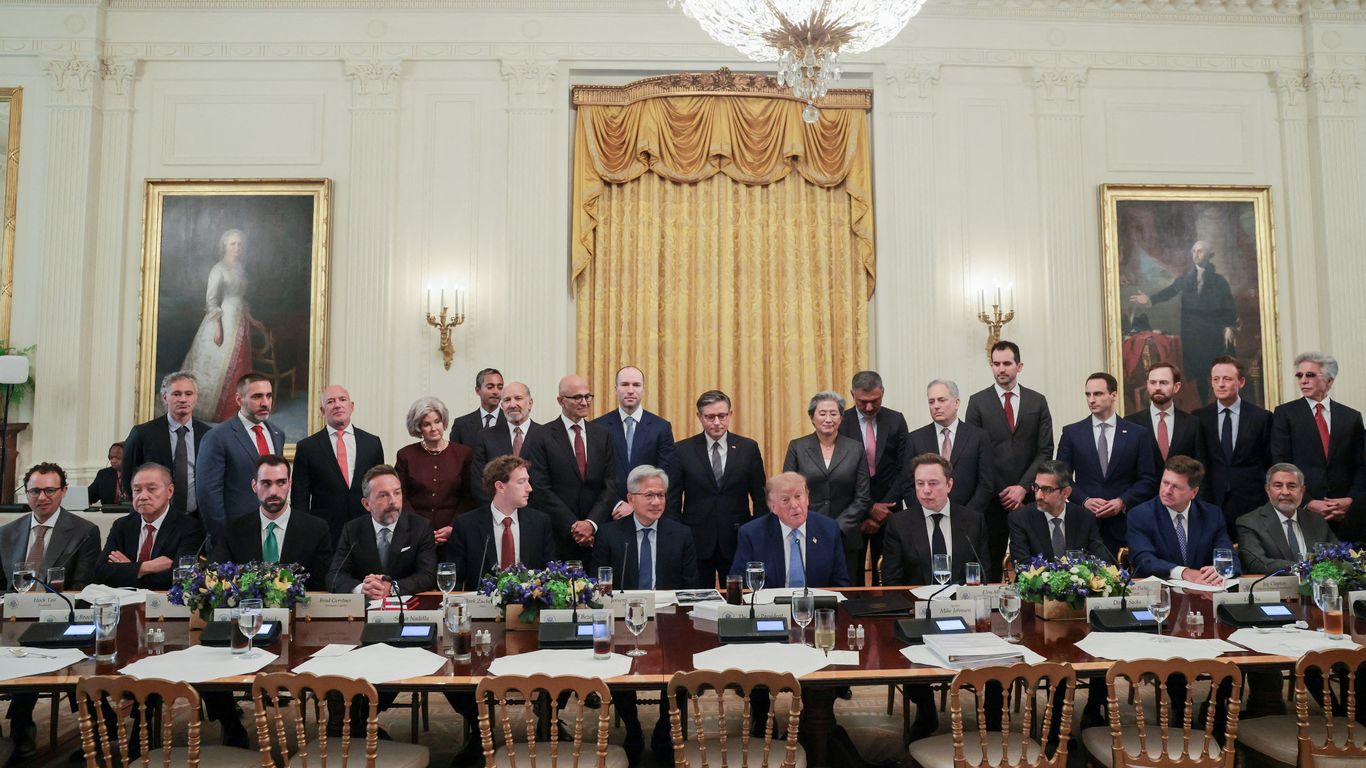
Image via Axios
Trump’s AI “constitution” aims for safety standards, but leaves enforcement hazy
President Trump convened major U.S. tech leaders at the White House and announced what he framed as a “morally binding” AI “constitution,” pitched as a shared commitment to safety practices as capabilities accelerate. The optics were unmistakable: industry heavyweights, a single table, and a public show of alignment amid rising public anxiety about deepfakes, job disruption, and national-security risks.
The immediate question is what, concretely, changes. Voluntary compacts can move faster than legislation and can help standardize baseline practices like model testing, red-teaming, and disclosure norms. But “morally binding” is not legally binding, and it’s unclear how compliance will be measured, audited, or enforced, especially when commercial incentives reward speed and scale. The White House can nudge through procurement standards and agency guidance, but durable guardrails typically require either regulation with teeth or liability rules that reward caution.
This is also about power: an administration signaling it can set the terms of the AI conversation, and companies signaling they’d rather shape rules at the table than face rules written without them. The public will judge it not by signatures, but by whether it reduces real-world harms: fraud, manipulated media, unsafe autonomous behavior, and the use of AI tools by hostile actors.
✓ The Bottom Line: Voluntary pledges are fine as a first step, but the country is past the point where promises are a substitute for verifiable standards. If the White House wants credibility here, it should pair any “constitution” with clear benchmarks, independent auditing pathways, and procurement leverage that rewards compliance. Otherwise, this risks becoming performative regulation: impressive visuals, thin follow-through.
📎 Axios

Image via The Guardian
Burundi to take U.S. ‘third-country’ deportees, widening Trump’s removal pipeline
Burundi has agreed to accept migrants deported from the United States under a “third-country” arrangement, adding to a growing list of countries participating in the administration’s hardline immigration strategy. The basic idea: when the U.S. cannot easily return someone to their home country, it seeks another government willing to receive the person instead.
Supporters argue these deals restore deterrence and operational control by reducing bottlenecks in the removal system. They also say third-country transfers can prevent extended detention and cut through diplomatic stalemates, especially when origin countries refuse repatriation or identity verification drags on.
Critics counter that shipping people to countries where they have no ties raises serious due-process and humanitarian concerns, including the risk of onward removal, poor conditions, or limited access to legal resources. Burundi, in particular, draws scrutiny from human-rights advocates over governance, political freedoms, and the ability to guarantee safety and stable integration for newcomers. The administration’s challenge is demonstrating that these transfers meet legal obligations, including protections against refoulement and meaningful access to asylum processes where applicable.
✓ The Bottom Line: The U.S. has a legitimate interest in enforcing immigration law, but third-country deportations are a sharp tool that can become abusive fast if safeguards are weak. If the administration is going to expand this pipeline, it needs transparent standards, case-by-case due process, and post-transfer monitoring that is more than a press release. Tough enforcement is defensible; outsourcing risk to fragile systems is not.

Image via MarketWatch
Inflation re-accelerates, narrowing the Fed’s path to rate relief
A key inflation gauge rose sharply in August, keeping pressure on the Federal Reserve after its earlier rate increase this month. The data complicates the “last mile” story: even if headline inflation has eased from prior peaks, the underlying pace is still too warm for comfort, especially if services inflation and wage-sensitive categories refuse to cool.
For households, the lived reality is simple: price levels remain high even when the rate of increase slows, and renewed acceleration hits budgets that have already absorbed years of sticker shock. For markets, hotter inflation pushes out the timeline for rate cuts and keeps borrowing costs elevated across mortgages, autos, and business credit.
For the Fed, credibility is the constraint. If inflation shows signs of re-embedding, policymakers have to lean hawkish, even at the risk of slowing growth. The flip side is the lag effect: monetary policy bites with delay, and over-tightening remains a real danger if the economy weakens quickly. The next few prints on inflation and labor will determine whether this is a bump or a trend.
✓ The Bottom Line: The evidence still points to a Fed that can’t declare victory yet, and pretending otherwise is how you get inflation sticking around. Rate cuts should be earned, not wished into existence, and this kind of upside surprise is exactly why. The Fed doesn’t need to panic, but it does need to stay disciplined until the data consistently cooperates.
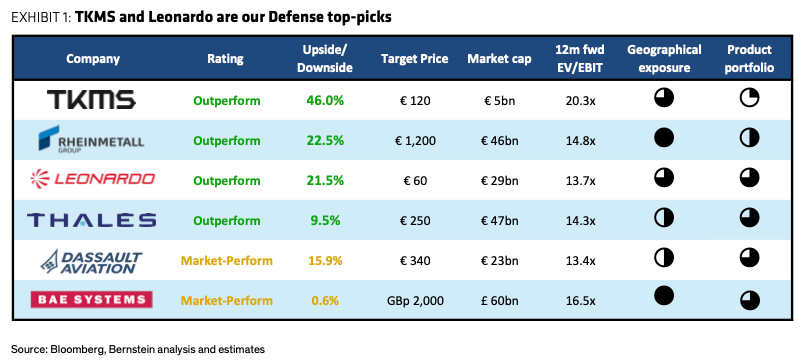
Image via ZeroHedge
Analysts see Europe’s rearmament cycle nearing a breakout moment
A new analysis argues the EU’s rearmament “supercycle” is approaching a point where orders and production capacity could accelerate meaningfully. The underlying drivers are familiar: the war in Ukraine, depleted stockpiles, a renewed focus on territorial defense, and political recognition that Europe can’t outsource hard-power readiness indefinitely.
The central constraint is industrial, not rhetorical. Defense procurement moves slowly, supply chains are specialized, and expanding capacity takes time, skilled labor, and multi-year commitments that survive elections. If the anticipated “boom” arrives, it would likely show up in larger, longer-duration contracts, joint procurement frameworks, and capex by prime contractors and key suppliers.
The economic and political implications are mixed. More defense spending can mean more manufacturing investment and innovation spillovers, but it also competes with other fiscal priorities and tests public tolerance for higher budgets. Strategically, a stronger European defense industrial base could reduce dependence on the U.S., but it can also trigger procurement friction among allies if “buy European” policies harden.
✓ The Bottom Line: Europe’s direction of travel is clear: more spending, more production, more seriousness. The question is execution, and Europe has a track record of announcing ambitions faster than it signs contracts and breaks ground on factories. If the cycle truly “goes boom,” it will be because governments lock in multi-year demand and accept the political cost of prioritizing defense over nicer-to-have programs.

Image via BBC
Dubai-to-Israel diversion: injuries reported, questions turn to cockpit safety and contingency planning
A FlyDubai flight bound for Israel was diverted to a Saudi Arabian airport, where officials said the captain and first officer were injured. The BBC reports the diversion drew immediate attention because of the sensitive regional route and the unusual detail that both pilots were hurt, raising questions about what happened onboard and how the aircraft was managed operationally.
Early reporting in these cases is often incomplete, and responsible coverage depends on verified updates from aviation authorities and the airline. What can be said now is that diversions are a standard tool when safety, medical, technical, or security concerns arise, and crews train for them. When cockpit injuries are involved, attention naturally turns to the chain of command, the presence and readiness of relief crew if any, and the procedures for maintaining safe operation through landing and ground handling.
The incident also underscores how aviation routes in and around the Gulf and Israel can face layered complexity: airspace constraints, diplomatic sensitivities, and heightened security posture. Still, commercial aviation safety is built on redundancy and procedure, and investigators will focus on the proximate cause of the injuries and whether protocols performed as designed.
✓ The Bottom Line: It’s wise to resist speculation until investigators establish why both pilots were injured, because the range of possibilities is wide. But the fact pattern makes one thing clear: redundancy in training and procedures matters, and airlines operating sensitive routes need airtight contingency planning. The public deserves prompt, factual disclosure once confirmed details are available, not rumor filling the vacuum.
📎 BBC
That’s the brief: big promises on AI, hard edges on immigration, stubborn inflation, a shifting European defense posture, and an aviation incident that will hinge on verified facts.
— Brief Updates Editorial