Today’s Sponsor
AI is leaving the screen and entering the real world—robots, factories, vehicles, intelligent machines. A new wave of market leaders is forming right now, and the investors who move early could have a serious edge. Wait for the headlines, and you'll be buying into Wall Street's next crowded trade.
We put together a free report revealing 5 stocks positioned at the center of the Physical AI revolution—including the technologies, growth drivers, and risks you need to know. Your copy is available now, but not indefinitely.
Get the Free Report NowBy clicking the link above you agree to receive emails from StockEarnings and our affiliates. You can opt out at any time. Privacy Policy.

Wednesday’s brief: A high-stakes Washington summit, a UK sovereignty rethink, a U.S.-Ukraine drone pact taking shape, Denmark’s growth forecast rewritten by one company, and UiPath’s bid to keep automation enterprise-grade.
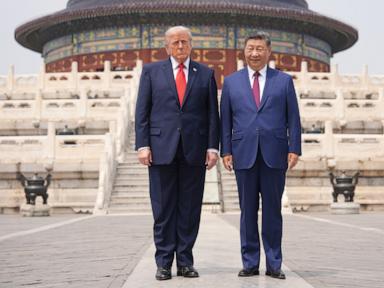
Image via ABC News
Trump-Xi summit: Iran, Taiwan, and trade collide in a single room
President Donald Trump is set to host Chinese leader Xi Jinping at the White House for a state visit that arrives with three live wires: Iran, Taiwan, and the trading relationship. Expectations are calibrated less around a sweeping reset and more around establishing red lines, extracting limited concessions, and keeping channels open as both countries posture for advantage.
On Iran, Washington is weighing deterrence and sanctions enforcement while Beijing balances energy interests and its preference for non-U.S.-led security frameworks. Taiwan remains the core strategic flashpoint: any U.S. signals on arms, deterrence posture, or diplomatic framing will be scrutinized in Beijing, while any Chinese pressure campaign around the island tests U.S. credibility with allies. Trade is the most negotiable lane, but still thorny, with disputes over market access, export controls, and supply-chain de-risking now embedded into national security policy.
The meeting also plays to domestic politics on both sides. Trump wants visible “wins” he can describe as toughness with results; Xi wants stability without appearing to bend under pressure, particularly on sovereignty. The likely deliverables, if any, look incremental: working groups, partial tariff or licensing adjustments, or a narrow agreement on crisis communications and guardrails to reduce the risk of accidental escalation.
✓ The Bottom Line: The smart objective here is risk reduction, not a grand bargain. Beijing has few incentives to concede on Taiwan, and Washington is not going to trade away deterrence for short-term commercial relief. If there’s a success metric, it’s clearer crisis channels and modest trade friction relief that doesn’t compromise export-control strategy.
📎 ABC News

Image via BBC
UK reopens Chagos deal questions as U.S. backing looks thinner
The UK government is reviewing its approach to the Chagos Islands deal amid questions about U.S. support, with Defence Secretary Wes Streeting confirming the review in comments to the BBC. The issue touches an unusually sensitive intersection of sovereignty, alliance management, and basing rights: the U.S. and UK operate strategically important military facilities on Diego Garcia, and any change in sovereignty or legal framework reverberates far beyond the Indian Ocean.
The immediate political spark is President Trump’s reported criticism of the deal as “terrible,” relayed in a conversation with Manchester Mayor Andy Burnham, sharpening concerns that Washington may not be willing to provide diplomatic cover or security assurances if London proceeds as planned. For the UK, the dilemma is familiar: honoring international legal and political pressures to resolve a long-running dispute while protecting the operational certainty that the U.S.-UK defense relationship depends on.
A review does not automatically mean reversal, but it signals that Downing Street is recalculating the cost of proceeding without firm U.S. alignment. Opponents argue a bad deal could jeopardize basing stability; supporters argue delay prolongs a contentious legacy issue and weakens Britain’s claim to be a rules-based actor. Either way, the timeline and terms now look more negotiable than they did a few months ago.
✓ The Bottom Line: If the U.S. won’t stand behind the arrangement, the UK is right to pause and renegotiate rather than rush into a legally neat but strategically messy outcome. Diego Garcia is not a symbolic asset; it is hard power infrastructure. A serious deal should lock in basing certainty first, then settle sovereignty and compensation with fewer ambiguities.
📎 BBC
U.S.-Ukraine drone defense pact nears signature, with lessons from the Middle East
Ukraine is ready to sign a landmark drone defense deal with the United States, according to sources cited by CBS News, as Washington looks to harden bases and forces against the kind of drone and loitering-munition threats now common in modern conflict zones. The reporting underscores a shift: Ukraine is not only a recipient of aid but also a source of battlefield-tested technology, tactics, and rapid iteration in counter-drone systems.
The deal comes amid new details about Ukrainian technology helping defend U.S. bases in the Middle East, where drone attacks and air defense saturation have become persistent risks. Ukraine’s experience is uniquely relevant: it has had to build layered defenses under constant pressure, combining electronic warfare, sensors, kinetic interceptors, and low-cost improvisation at scale.
For Washington, the attraction is twofold: speed and realism. Traditional procurement cycles struggle to match the pace of drone innovation, while Ukraine’s war-driven feedback loop produces practical solutions. For Kyiv, a formalized defense-industrial relationship can mean funding, production capacity, and political reinforcement at a time when sustaining military support remains a live debate in the U.S.
✓ The Bottom Line: This is the kind of partnership that makes strategic sense: the U.S. gets proven counter-drone capabilities faster, and Ukraine gains deeper industrial integration that’s harder to unwind politically. The key is accountability and scalability, not just flashy demonstrations. If the systems can be produced, maintained, and upgraded on predictable timelines, it’s a win for U.S. force protection and for Ukraine’s long-term defense capacity.
📎 CBS News

Image via Fortune
The Ozempic economy: Denmark’s growth forecast jumps on U.S. demand
U.S. demand for Novo Nordisk’s weight loss drugs is so strong that Denmark’s central bank doubled the country’s growth forecast, according to Fortune. The bank attributed the upgrade largely to Novo’s sales and production tied to the U.S. market earlier this year, a striking illustration of how a single globally dominant company can meaningfully move a national macroeconomic outlook.
The story is bigger than one pharmaceutical success. The weight loss drug boom is reshaping healthcare spending, employer benefit design, and investor expectations, while raising questions about long-term pricing, supply constraints, and outcomes-based coverage. For Denmark, it’s a windfall: jobs, tax revenues, export strength, and a strong currency narrative all pull in the same direction.
But concentration is a double-edged sword. When one firm becomes the growth engine, policy planners have to think about exposure to regulatory shifts, patent cliffs, safety findings, and the inevitable entry of competitors. The U.S. market’s appetite can supercharge growth, but it can also swing quickly as insurers, lawmakers, and consumers push back on costs.
✓ The Bottom Line: Denmark’s forecast jump is a reminder that innovation can still deliver real, broad economic gains, not just paper wealth. But it’s also a warning about dependency: when your GDP story leans heavily on one product line and one foreign market, you’re one policy change away from a rude surprise. The U.S. should take note too: if demand is this explosive, the pressure for smarter coverage rules and price discipline is only going to intensify.
📎 Fortune

Image via Investing.com
UiPath refreshes its automation platform as enterprises demand control, not hype
UiPath announced platform updates aimed at enterprise automation customers, according to Investing.com, as the company positions itself for the next phase of automation beyond basic task bots. The emphasis is on expanding capabilities across larger workflows, improving how automation is built and governed, and keeping the platform relevant as companies fold more AI features into operational processes.
In the enterprise, automation is no longer a novelty purchase; it is judged by reliability, security, auditability, and measurable return on investment. Firms want automation that can be deployed at scale, maintained without constant firefighting, and governed with clear permissions and compliance guardrails. Vendors that can’t demonstrate disciplined rollout and oversight risk getting labeled as expensive experiments.
UiPath’s timing matters because competitive pressure has increased from cloud suites, systems integrators, and AI-first tools that promise more natural-language-driven automation. The differentiator now is less about flashy demos and more about integration depth, orchestration, and the ability to prove outcomes in real environments where data is messy and rules change.
✓ The Bottom Line: Automation is entering a maturity phase: buyers want fewer promises and more controls, logging, and dependable integration. UiPath’s path forward depends on showing it can deliver enterprise-grade governance while still making automation faster to build and cheaper to run. If these updates reduce complexity for IT and risk teams, that’s more valuable than another round of headline-grabbing AI features.
That’s the day’s file. We’ll be watching for any concrete deliverables out of the Trump-Xi meeting and whether the UK’s Chagos review hardens into a renegotiation or a pause.
— Brief Updates Editorial