Today’s Sponsor
The Fed held rates, CPI came in at 2.4%, and analysts still expect 12.5% Q1 earnings growth — but estimates have already been cut across nine sectors and the S&P 500 is stretched above its 5- and 10-year average forward P/E. Trading earnings on headlines alone in this environment is a costly mistake.
The free Earnings Season eBook breaks down the exact pre-report checklist, how to weigh guidance and expectations, and how to read the first reaction after numbers hit — so you're never improvising after the move already started.
Get the Free Earnings PlaybookBy clicking the link above, you will receive this free report and a free subscription to the StockEarnings daily email newsletter. You are also agreeing to the terms of our Privacy Policy. Unsubscribe at any time.

Friday, August 28, 2026: The U.S. claims tactical gains near Hormuz as markets watch oil risk; Kevin Warsh steps onto the Jackson Hole stage; a new barrier lake threatens Himalayan communities; Trump picks a fresh fight with Canada over a map label; and inflation’s quiet toll shows up in how Americans actually get paid.
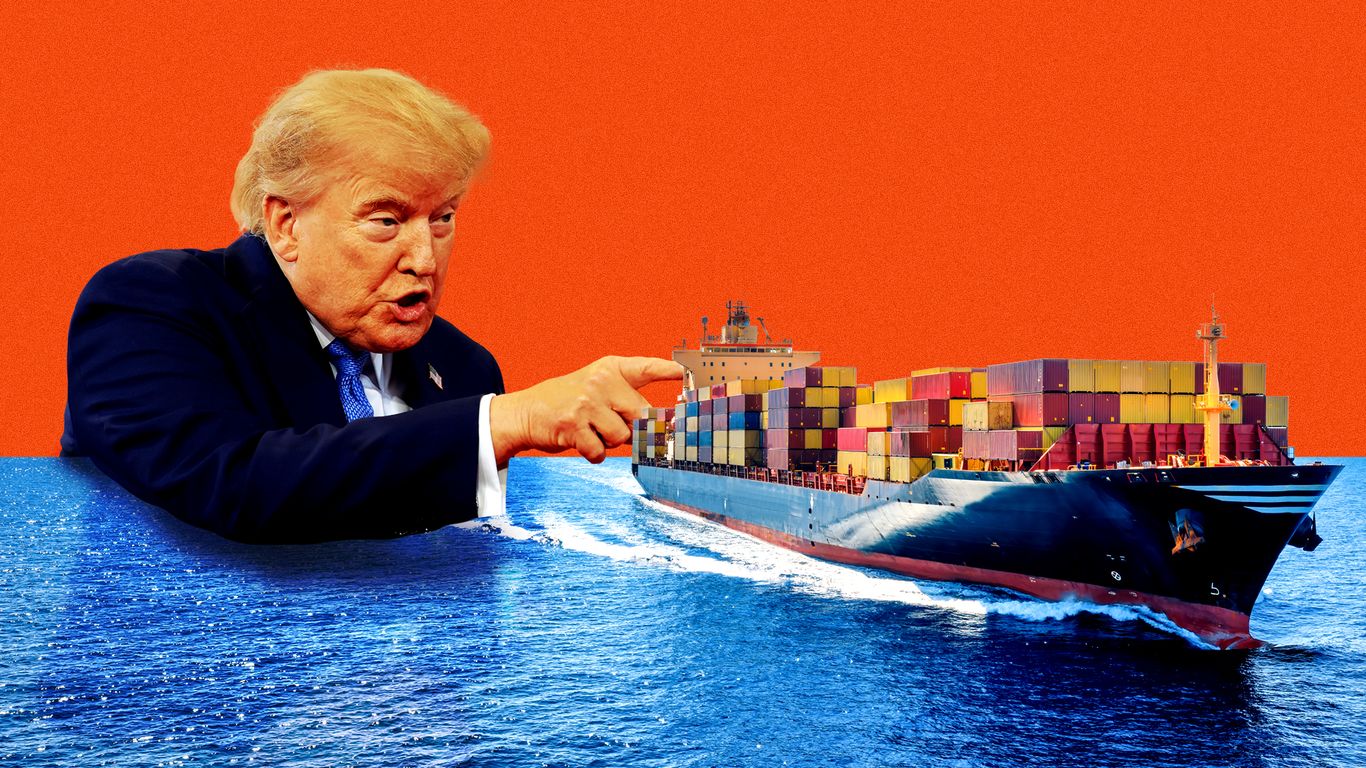
Image via Axios
U.S. officials say Iran’s Hormuz leverage is slipping as American forces tighten control
For months, the Strait of Hormuz has been Iran’s most potent pressure point: threaten shipping, spike global oil prices, and force Washington and allies to negotiate on Tehran’s terms. U.S. officials now say that advantage is fading. According to Axios, American forces have steadily improved their ability to keep the chokepoint open, with the implication that Iranian attempts to disrupt traffic are being deterred, intercepted, or made less effective.
The strategic logic is simple: if the U.S. can credibly guarantee flow through Hormuz, Iran loses its quickest route to global economic pain, and any escalation becomes more costly for Tehran than for the coalition. That doesn’t mean risk is gone. Even limited attacks, mining attempts, or miscalculation can still roil energy markets and insurance rates, and Iran can shift pressure to other tools, including proxies, cyber operations, and harassment elsewhere in the region.
The immediate question for policymakers and investors is whether this is a durable shift or a temporary edge. A sustained U.S. upper hand would reduce the “Hormuz premium” embedded in crude prices, but only if shipping confidence holds and partners keep assets in place long enough to make deterrence believable.
✓ The Bottom Line: If the U.S. truly has the operational upper hand at Hormuz, it’s a meaningful strategic win: it narrows Iran’s ability to hold the global economy hostage. But Washington shouldn’t confuse tactical control with political resolution. The real test is whether the U.S. can keep the lane open at acceptable cost while avoiding a wider war that turns a chokepoint victory into a regional quagmire.
📎 Axios
All eyes on Kevin Warsh at Jackson Hole: inflation credibility, rate path, and what “higher for longer” really means
Fed Chairman Kevin Warsh delivers his marquee Jackson Hole speech Friday, an annual venue where central bankers often lay out not just the next meeting’s posture but the framework guiding it. CNBC notes that past chairs have used the moment to clarify how they weigh inflation risks versus labor-market cooling, and markets will parse Warsh’s language for whether the Fed is preparing to cut, hold, or re-tighten.
The context is tricky: inflation has cooled from its highs but remains politically and economically sensitive, while households still feel elevated prices in essentials and interest-rate costs remain a real constraint. Investors will be looking for signals on how Warsh views “restrictive” policy today, the bar for declaring victory on inflation, and whether the Fed is more worried about entrenching price pressures or unnecessarily squeezing growth.
Expect heavy focus on credibility and expectations. If Warsh emphasizes the Fed’s willingness to keep policy tight until inflation is convincingly back to target, that could push yields up and financial conditions tighter. If he leans toward acknowledging disinflation progress and the lagged effects of policy, markets may price a faster glide path toward cuts.
✓ The Bottom Line: Warsh’s safest and most responsible message is disciplined patience: don’t declare victory because a few prints look good, and don’t let politics bully the Fed into premature easing. If inflation expectations stay anchored, the Fed can afford to be methodical, but credibility is hard to rebuild once lost. The evidence still argues for caution over celebration.
📎 CNBC

Image via BBC News
A new barrier lake near the Nepal-Tibet border raises fears of another sudden flood
Rescuers are watching a newly formed barrier lake near the Nepal-Tibet border after a landslide blocked a river and created a growing pool of water upstream. BBC reporting highlights a familiar and dangerous pattern in mountainous disaster zones: natural dams can fail with little warning, sending a destructive wall of water downstream and overwhelming communities that have limited evacuation routes.
The threat is not theoretical. The region has experienced deadly flooding linked to landslides and glacial dynamics, and responders worry the lake could trigger a second major surge if the blockage collapses or overtops. Managing the risk often requires difficult logistics: surveying unstable terrain, installing monitoring equipment, coordinating cross-border information, and, when possible, controlled drainage.
This is also a climate-and-development story as much as an emergency story. Warmer temperatures and shifting precipitation can destabilize slopes and ice, while more people and infrastructure in vulnerable valleys raise the stakes when nature’s “temporary engineering” fails.
✓ The Bottom Line: The hard truth is that early warning and monitoring save lives, but only if governments treat them as core infrastructure, not optional add-ons after the fact. The evidence from repeated Himalayan flood events points to the same lesson: invest in sensors, mapping, and evacuation planning before the next breach, not after the funerals. Cross-border coordination here isn’t diplomacy; it’s basic risk management.
📎 BBC News

Image via France 24
Trump’s ‘Lake America’ order sparks Canada spat, but the world’s maps won’t change overnight
President Donald Trump signed an executive order renaming Lake Ontario as “Lake America,” saying the change takes effect immediately, according to France 24. The move is tailor-made for domestic messaging: a symbolic assertion of national branding that plays well with a segment of voters and media, while inviting predictable pushback from Canada and plenty of confusion for agencies, educators, and businesses that rely on standardized geographic names.
In practice, naming authority is fragmented. The U.S. government can direct federal usage, but international recognition, binational bodies, and common usage don’t update on command. Canada is unlikely to adopt the term, and global mapping platforms, scientific references, and treaties tend to follow established naming conventions and formal geographic boards rather than political declarations.
The larger risk is not cartography; it’s diplomacy and bandwidth. Even small symbolic fights can sour cross-border cooperation on trade, energy, security, and the Great Lakes’ shared environmental management, where both countries have real interests that extend far beyond a label.
✓ The Bottom Line: This is mostly performative politics, and it’s not a good trade. A president’s time and leverage are finite, and burning it on symbolic renames creates friction with an ally while accomplishing little that’s tangible. The evidence suggests the name won’t stick internationally, but the irritant in the relationship could.
Inflation’s aftershock shows up in the paycheck mix: more income, less breathing room
Wolf Street breaks down how Americans earned income from major sources other than capital gains, including wages and salaries, small businesses, rental income, dividends, interest, and government transfers. The key point is that nominal income can rise across categories while households still feel squeezed, because inflation quietly eats purchasing power and pushes up the cost of necessities, borrowing, and insurance.
A compositional view matters because it shows how different groups experience the economy. Wage income may be up, but if rent, food, and financing costs rise faster, families don’t experience “growth” as prosperity. Higher interest income can help savers, but it tends to be unevenly distributed and can be offset by higher debt servicing for borrowers. Government transfers can stabilize downturns, but sustained reliance also raises questions about fiscal discipline and long-run incentives.
The bigger implication is political: when official aggregates say income is rising but household sentiment stays sour, it’s often because inflation has turned the economy into a treadmill. People run faster and still don’t feel ahead, and that gap between statistics and lived experience becomes a trust problem for institutions.
✓ The Bottom Line: The evidence supports what voters have been saying for years: nominal gains don’t count if the cost of living outruns them. Policymakers should treat inflation control as a first-order priority, not an academic variable, because it distorts everything from family budgets to public trust. And fiscal and regulatory choices that keep basic costs high only deepen the squeeze.
That’s the file for today. We’ll be watching Warsh’s wording at Jackson Hole and any real-world indicators on Hormuz shipping risk as markets digest the weekend.
— Brief Updates Editorial