Today’s Sponsor
Nuclear energy stocks surged 40%+ this year as the next buildout cycle accelerates toward 2026. One uranium producer just generated nearly $200 million in quarterly free cash flow, while other nuclear companies locked in massive government contracts—all driven by real earnings and exploding demand as U.S. capacity is projected to triple.
Our analysts identified 7 nuclear stocks positioned to capitalize on this trend right now. Some offer explosive upside tied to uranium prices, others provide steady growth from infrastructure contracts. Get the complete list with names and tickers free today—but this report moves behind the paywall soon.
Get the Free ReportBy clicking the link above, you will get this free report and a free subscription to MarketBeat's daily email newsletter. You are also agreeing to the terms of our privacy policy. Unsubscribe at any time.

Google's AI chief wants global oversight, Congress mourns Lindsey Graham, and Trump's Hormuz toll plan rattles shipping

Image via Axios
Google's Hassabis Pushes for U.S.-Led Global AI Watchdog
Demis Hassabis, the co-founder and CEO of Google DeepMind, is urging the United States to establish an international AI regulatory body with authority to screen the world's most advanced artificial intelligence models. The proposed watchdog would coordinate oversight across borders as AI systems grow increasingly powerful and potentially destabilizing.
The call comes as global powers struggle to balance innovation with safety in the rapidly advancing AI sector. Hassabis, whose company developed breakthrough systems like AlphaFold and Gemini, argues that voluntary industry commitments aren't sufficient given the stakes involved. His proposal would give the body real enforcement powers, not just advisory functions — a significant departure from current approaches that rely heavily on self-regulation and national frameworks that vary widely in stringency.
The timing is notable as both the U.S. and EU have recently moved forward with their own regulatory frameworks, while China operates under a different model entirely. Whether Washington has the appetite to lead a new multilateral institution, particularly one that might constrain American tech leadership, remains an open question. Critics worry such a body could either lack teeth or become a bureaucratic impediment to necessary innovation.
Read the full story at Axios →

Image via The Hill
Congress Eyes Quick Passage of Graham-Authored Russia Sanctions Bill
Ukraine's congressional allies are pushing for swift approval of a bipartisan Russia sanctions package authored by the late Sen. Lindsey Graham as a tribute to the South Carolina Republican. Graham announced the legislation shortly before his unexpected death, making it one of his final policy initiatives after decades championing a hawkish foreign policy stance.
The bill would tighten existing sanctions and potentially add new restrictions on Russian energy exports and financial institutions. Supporters from both parties view passage as both substantively important for Ukraine's ongoing war effort and symbolically meaningful as a memorial to Graham's legacy. The senator had been one of Kyiv's most vocal supporters in Congress, making multiple wartime visits to Ukraine and consistently pushing for increased military aid.
The measure faces a more favorable landscape than similar proposals might have in recent months, with Graham's death generating genuine bipartisan goodwill on Capitol Hill. However, the bill's specifics still matter — some Republicans remain wary of sanctions that could affect global energy markets or further strain diplomatic channels, while progressives question whether additional economic warfare achieves strategic objectives. The question is whether sentiment can override lingering policy disagreements.
Read the full story at The Hill →

Image via Politico
Graham's Sister Named to Fill Senate Seat, Setting Up GOP Primary Battle
South Carolina Governor Henry McMaster has appointed Darline Graham, sister of the late Sen. Lindsey Graham, to serve as interim caretaker for the remainder of his term. The appointment allows Graham's family a ceremonial role while triggering what promises to be a wide-open and potentially bruising Republican primary for the full Senate term.
Darline Graham will not seek election to a full term, making her a true placeholder appointment. This approach avoids the incumbent advantage that appointed senators often carry into special elections while giving the Graham family a brief moment in the Senate chamber. The decision means South Carolina Republicans will face an uncommon scenario: no incumbent in a seat the party has held since 2003.
The likely primary field includes several House members, state legislators, and potentially Trump-aligned figures looking to claim Graham's seat despite the late senator's occasionally rocky relationship with the former president. Graham's complex legacy — defense hawk, immigration deal-maker, Trump critic turned ally — means candidates may struggle to position themselves as his natural successor. Expect a crowded and expensive race in a safely Republican state where the primary effectively determines the outcome.
Read the full story at Politico →
Shipping Giants Balk at Trump's Proposed Strait of Hormuz Toll System
The global shipping industry is pushing back hard against former President Trump's proposal to charge tolls for naval protection through the Strait of Hormuz, with major carriers calling the plan both legally dubious and operationally disastrous. Hapag-Lloyd, one of the world's largest container shipping companies, stated it is "fundamentally wrong" to charge passage fees through international waters regardless of which nation provides security.
Trump has argued that the U.S. Navy effectively subsidizes global commerce by keeping the strait open and safe from Iranian interference, and that beneficiary nations — particularly in Asia and Europe — should pay for the service. The strait handles roughly one-fifth of the world's petroleum and petroleum products, making it among the most strategically vital waterways. His proposal would establish a toll system for commercial vessels transiting under U.S. naval protection.
Beyond the industry opposition, the plan faces serious legal questions under international maritime law, which generally prohibits charging fees for passage through international straits. There are also practical concerns: Would the U.S. deny passage to non-paying vessels? How would tolls be collected and enforced? What happens when other nations reject the premise? The proposal reflects Trump's transactional approach to alliances and global commons, but implementation would require either international agreement or unilateral action that could trigger serious diplomatic and trade repercussions.
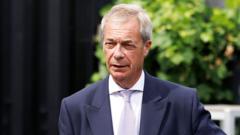
Image via BBC
Farage Donor's Crypto Ties Raise Questions About Tether Backing
A major donor to Nigel Farage and his Reform UK party has significant financial connections to Tether, the controversial cryptocurrency firm that issues a so-called stablecoin pegged to the U.S. dollar. The revelations come as Farage actively promotes Britain's adoption of crypto-friendly regulations, arguing the UK is missing economic opportunities by maintaining stricter oversight than some competitors.
Tether is one of the giants of the cryptocurrency world, with its USDT token serving as a crucial piece of digital asset infrastructure — essentially functioning as the dollar substitute for crypto trading. But the company has faced persistent questions about whether it actually holds sufficient reserves to back the billions in tokens it has issued, and about the opacity of its operations and ownership structure. Critics call it a systemic risk to crypto markets; defenders say it provides essential liquidity.
The connection between Farage's donor and Tether doesn't necessarily indicate wrongdoing, but it does raise questions about whose interests are being served by the push for lighter UK crypto regulation. Britain's financial regulators have taken a more cautious approach than Farage advocates, citing consumer protection and financial stability concerns. Whether the UK should race to become a crypto hub or maintain stricter guardrails remains a legitimate policy debate — one where the financial interests behind various positions deserve scrutiny.
That's your Brief Update for Tuesday, July 14, 2026. We'll be back tomorrow with the news that matters.
— Brief Updates Editorial