Today’s Sponsor
JP Morgan just quietly put a $8,000 price target on gold — and they don't publish numbers like this without ironclad data. Gold is already up roughly 80% since the start of 2025, hitting $5,500 while stocks, bonds, real estate, and Bitcoin all stumbled. Central banks now hold more gold than at any point since 1971, and gold has officially overtaken U.S. Treasuries as the world's #1 reserve asset — at the fastest pace in 50 years.
Most Americans are waiting for a pullback, waiting for confirmation, waiting for cable news to say it's safe — while the gap between those who moved first and those who waited keeps widening. You're making a decision today whether you realize it or not. Position before $8,000 prints, or scramble after every news anchor in America is already talking about it.
Get the Free Wealth Preservation GuideThis is an advertisement. If you no longer wish to receive promotional emails for this promotion, please unsubscribe here. Or write to: 5005 Lyndon B. Johnson Fwy. Suite 350, Dallas, TX 75244.

Washington’s pressure campaign on Iran sharpens, Canada’s trade clash with the U.S. turns cultural, and the UK signals a deeper bet on Ukraine’s defense industry.

Image via The Hill
Iran threatens retaliation as U.S. widens sanctions and economic isolation push
Iran’s government is warning it will retaliate after the Trump administration rolled out a broadened sanctions package aimed at tightening Iran’s access to global finance, shipping, and trade. The new move is framed in Washington as an escalation of economic pressure to force changes in Tehran’s behavior, with officials signaling a more aggressive posture toward third-country enablers and networks that help Iran move oil and money.
Tehran’s retaliation threat is familiar, but the mechanics matter: Iran’s most immediate options typically range from calibrated regional pressure through partner militias to maritime harassment near key shipping lanes, along with stepped-up nuclear activities meant to raise diplomatic costs. For the U.S. and allies, the near-term question is enforcement: sanctions only bite as hard as the coalition behind them, and the biggest risk is miscalculation in the Gulf or another regional flashpoint that turns economic coercion into a security crisis.
Source: The Hill
Read the full story at The Hill →
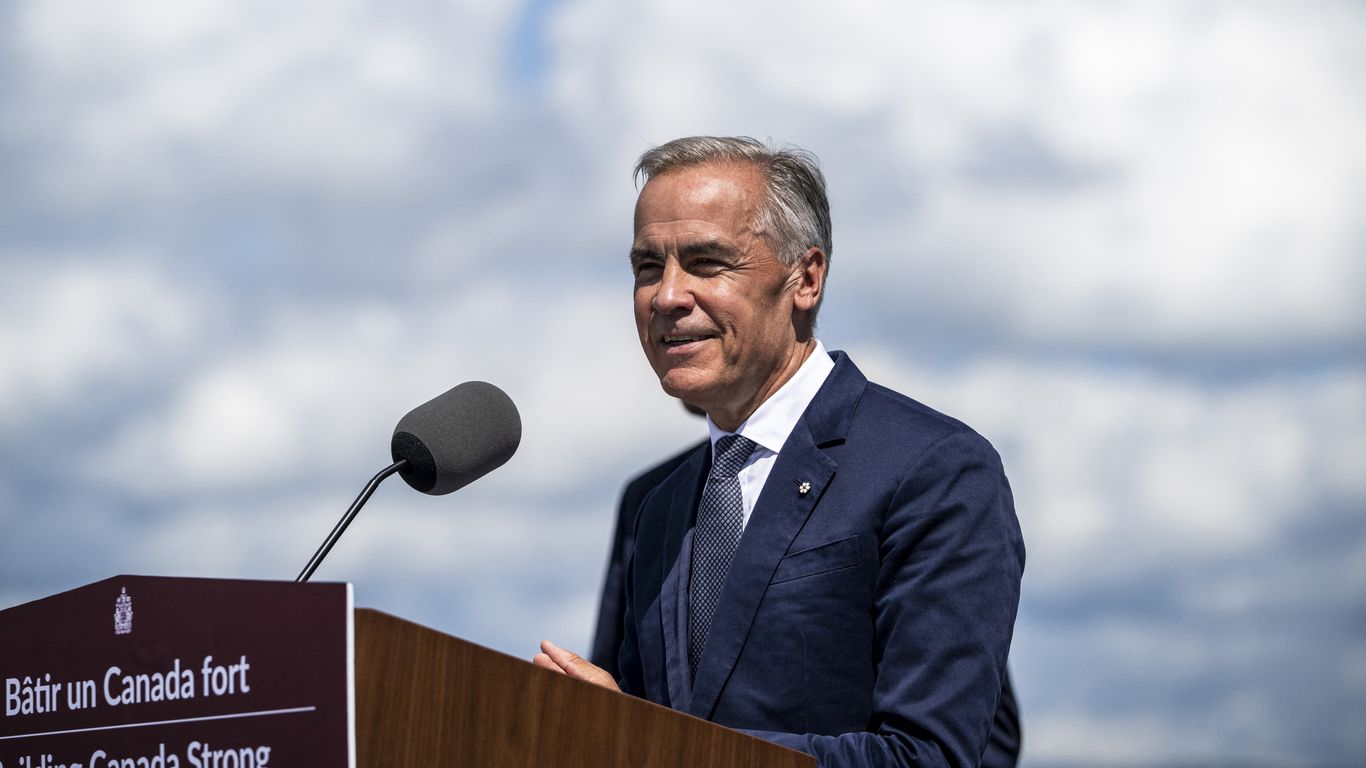
Image via Axios
Carney turns Trump tariff pressure into a political tailwind at home
Canadian Prime Minister Mark Carney is leaning into a defiant posture against President Trump’s tariff threats, casting the dispute as a test of sovereignty and economic resilience. The stance is resonating domestically, with Carney’s team presenting firmness as the only viable negotiating position while the trade clash escalates and public attention stays high.
Canada’s political upside comes with real economic exposure: the U.S. remains Canada’s dominant trade partner, and prolonged tariff brinkmanship can quickly bleed into investment decisions, supply chains, and consumer prices on both sides of the border. The central calculation for Ottawa is to maintain unity at home and credibility abroad while leaving enough room for a negotiated off-ramp, especially if affected industries begin pressing for targeted relief rather than symbolic toughness.
Source: Axios
Read the full story at Axios →
Trump’s ‘Lake America’ riff adds cultural fuel to a hot U.S.-Canada trade fight
President Trump floated renaming Lake Ontario as “Lake America,” a remark that landed as part provocation, part branding exercise as the U.S.-Canada trade war continues to intensify. The comment drew swift attention because it turns a serious economic dispute into a broader contest over national pride, a familiar tactic in modern trade politics where messaging can be as consequential as tariff schedules.
While the renaming idea is unlikely to translate into policy, it illustrates the deeper dynamic: as trade fights become identity-laden, compromise gets harder. Canada’s leaders can’t be seen as yielding to ridicule, and U.S. negotiators may face domestic incentives to keep the conflict performative. That can delay practical solutions on market access and sector-specific disputes, raising the odds that businesses absorb uncertainty for longer than markets expect.
Source: Associated Press
Read the full story at Associated Press →
UK pledges cruise missile blueprints to Ukraine, signaling a deeper industrial bet
UK Prime Minister Andy Burnham, on his first foreign trip, visited Kyiv and pledged to provide Ukraine with cruise missile design information, according to reporting on the announcement. The commitment comes amid continued Russian-Ukrainian strikes, and it signals London’s interest in helping Ukraine expand domestic production capacity rather than relying solely on deliveries of finished weapons.
Providing blueprints is a consequential step because it shifts support from shipments to capability transfer, potentially shortening Ukraine’s long-term dependence on foreign stockpiles. The likely Russian response is diplomatic escalation and intensified strikes on production and logistics sites. For Western backers, the policy tradeoff is clear: empowering Ukraine’s defense industry can improve deterrence, but it also raises the stakes around technology transfer, proliferation safeguards, and the timeline for Ukraine’s integration with European defense supply chains.
Source: Al Jazeera
Read the full story at Al Jazeera →
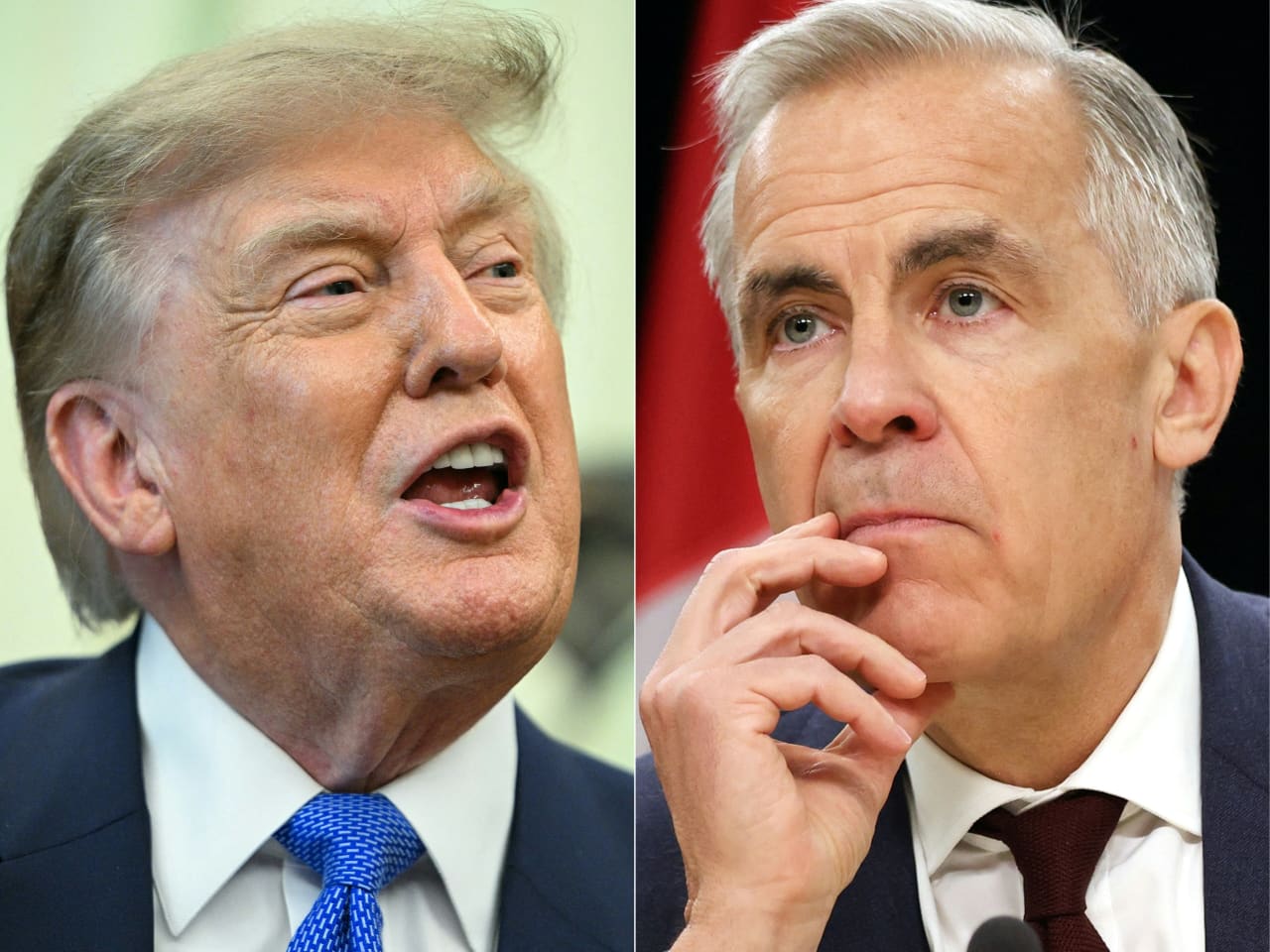
Image via MarketWatch
MarketWatch: Canada trade war risks a growth shock that could revive QE talk in the U.S.
MarketWatch argues that an extended U.S.-Canada trade war could create enough economic drag to push the Federal Reserve back toward quantitative easing, even if that’s not the base case today. The thesis is that tariffs and countermeasures can tighten financial conditions indirectly by lifting input costs, distorting supply chains, and weighing on business confidence, potentially forcing policymakers to offset the damage if growth slows sharply.
The market implications, as outlined, would be familiar from prior QE eras: support for long-duration bonds, a tailwind for gold, and risk-asset sensitivity to any signal that the Fed is turning more accommodative. The important caveat is timing and causality: the Fed typically moves toward balance-sheet expansion only when conventional tools are constrained or a downturn is material. Still, the article highlights a real point often missed in tariff debates: trade policy can function like a self-imposed shock that eventually shows up at the central bank’s doorstep.
Source: MarketWatch
Read the full story at MarketWatch →
That’s the file for Tuesday. We’ll be watching for any concrete tariff timelines, enforcement details on Iran sanctions, and whether the UK blueprint pledge translates into rapid on-the-ground production.
— Brief Updates Editorial