Today’s Sponsor
Oil markets are shifting as Venezuela's disruption removes critical barrels while spare capacity shrinks. Supply pressure is building before headlines catch up — and smart traders are positioning now.
Our exclusive briefing reveals three energy stocks emerging from this supply shock, plus the key signals to monitor as this setup evolves. This is about preparation, not prediction.
Get the Free Oil Trading ReportBy following the links above, you're opting in to receive valuable updates from Wealthiest Investor News plus 2 bonus subscriptions. Your privacy is important to us. You can unsubscribe anytime. See our privacy policy for details.

Canada and the US trade blows, piracy returns off Somalia, Gulf diplomacy pushes on Hormuz, Europe tightens the screws on West Bank settlement goods, and Amazon-AT&T takes aim at SpaceX from orbit.
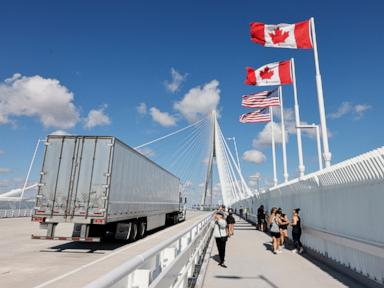
Image via ABC News
Canada’s Retaliatory Tariffs Land as Trump Signals a Wider Trade Fight
Canada’s retaliatory tariffs on a range of US products are set to take effect, sharpening a trade dispute that accelerated after negotiations broke down last month. The move formalizes what had been a fast-moving standoff of threats and deadlines, with Ottawa framing its measures as a response to US actions and Washington warning that further escalation is on the table.
The immediate risk is that targeted tariffs spread into a broader economic confrontation that outlives the political moment. Even when tariff lists are designed to be “surgical,” they can still ripple through supply chains, especially in sectors where the US and Canada are deeply integrated and alternatives are limited. Businesses tend to react quickly by delaying shipments, re-routing sourcing, or building higher costs into contracts—effects that often show up as price pressure for consumers and uncertainty for exporters.
If both sides stay on a tit-for-tat path, the bigger question becomes what the off-ramp looks like: renewed talks, narrower carve-outs, or a more structural reset in North American trade rules. For now, the message from Washington appears to be leverage first, diplomacy second—an approach that can produce concessions, but also has a track record of leaving allies looking for hedges.
Source: ABC News
Read the full story at ABC News →
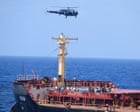
Image via The Guardian
Somali Piracy Resurfaces, Fueled by Conflict Spillover and Local Instability
Hijacking pirates are returning to the waters off Somalia, exploiting the combination of regional conflict and renewed fragility inside Somalia to target commercial shipping. After years in which international naval patrols, armed security teams, and better industry practices sharply reduced incidents, the latest reports indicate a revival of the old playbook: opportunistic boarding attempts, ransom-driven seizures, and attacks timed for moments when enforcement is distracted.
The broader geopolitical backdrop matters. When major powers and regional actors concentrate assets elsewhere—whether to protect other sea lanes, respond to conflict, or manage domestic pressures—criminal networks tend to test the seams. At the same time, persistent governance problems onshore can provide the enabling environment piracy has always needed: financing, safe haven, local intermediaries, and a labor pool of young men for whom the risk can look worth it.
For global trade, the practical implications are familiar and costly: higher insurance premiums, re-routing around the Horn of Africa, and renewed demand for private armed security on ships. Even a modest uptick in successful hijackings can change shipping behavior, and that can compound existing stresses on maritime logistics if multiple chokepoints remain tense at once.
Source: The Guardian
Read the full story at The Guardian →
Qatar Pushes ‘Unconditional’ Hormuz Reopening as Diplomacy Competes With War Realities
Qatar says reopening the Strait of Hormuz “unconditionally” is a priority, positioning Doha as a diplomatic advocate for restoring stable passage through one of the world’s most important energy corridors. The Qatari Foreign Ministry said it is working toward diplomatic solutions tied to ending the US war on Iran—an unusually direct linkage that underscores how closely the strait’s status is bound to the conflict’s trajectory.
Hormuz is not just a regional concern; it is a global economic pressure point. Disruption—even the threat of disruption—can push up energy prices, complicate LNG deliveries, and raise shipping costs far beyond the Gulf. Qatar’s call for an “unconditional” reopening also signals worry that any return to normal could become hostage to political bargaining, inspections, or retaliatory restrictions, which would keep markets on edge.
Still, diplomatic language does not override military facts on the water. Reopening and keeping lanes reliably safe requires de-escalation, credible security arrangements, and some measure of compliance from the parties with the ability to threaten shipping. Doha’s role may be to widen the channel for talks, but the durability of any reopening will depend on whether the war’s incentives are shifting toward containment rather than expansion.
Source: Al Jazeera
Read the full story at Al Jazeera →

Image via France 24
France and UK Move to Ban West Bank Settlement Goods, Raising Stakes With Israel and Allies
France and the United Kingdom are set to join a growing group of countries moving to ban goods produced in Israeli settlements in the occupied West Bank, with France’s foreign minister indicating Paris is preparing to introduce a ban. The step aligns these governments with others that argue settlement commerce should not enjoy normal market access given the legal and political status of the territory.
Supporters of the ban frame it as a targeted measure: a way to distinguish between Israel proper and settlements they consider illegal under international law, while applying economic pressure short of broader sanctions. Critics—including many in Israel and some allied governments—counter that such bans politicize trade, risk selective enforcement, and can harden positions rather than encourage negotiations. There is also a practical challenge: defining origin and ensuring compliance across complex supply chains.
The policy shift adds friction to already strained diplomatic relationships, especially as Middle East tensions remain elevated. It also reflects a wider European trend toward using trade tools to signal foreign-policy red lines. Whether it changes facts on the ground is uncertain; what is more certain is that it will intensify debates over proportionality, consistency, and the line between legitimate differentiation and economic warfare.
Source: France 24
Read the full story at France 24 →

Image via MarketWatch
Amazon and AT&T Join Forces to Take On SpaceX’s Lead in Satellites
Amazon and AT&T have announced a partnership aimed at expanding satellite-enabled connectivity, positioning AT&T as the first wireless carrier to leverage technology tied to Amazon’s low-Earth-orbit satellite effort. The strategic goal is straightforward: challenge SpaceX’s dominance in satellite communications by pairing a major telecom’s customer base and network experience with a deep-pocketed tech company’s space ambitions.
For consumers and enterprises, the competitive promise is broader coverage, more redundancy during outages, and improved connectivity in rural and hard-to-reach areas. For the industry, it is another sign that the next phase of telecom competition will be hybrid: terrestrial networks supplemented by space-based capacity. That said, SpaceX has a sizeable head start in deployment scale, operational learning, and brand recognition, which is difficult to erase quickly even with strong partners.
Regulatory approvals, spectrum coordination, and execution will determine how real the challenge becomes. The partnership also raises a policy question Washington will increasingly face: how to encourage competition and resilience in critical communications infrastructure without creating a fragmented, subsidy-driven race that duplicates capacity inefficiently. In the near term, markets will watch for timelines, service quality, and whether this deal translates into tangible coverage improvements rather than a headline.
Source: MarketWatch
Read the full story at MarketWatch →
That’s the file for Tuesday. We’ll be watching for any tariff carve-outs, confirmed piracy incidents and rerouting decisions, and concrete timelines for both Hormuz access and the new satellite rollout.
— Brief Updates Editorial