Today’s Sponsor
Oil markets are shifting as Venezuela's disruption removes critical barrels while spare capacity shrinks. Supply pressure is building before headlines catch up — and smart traders are positioning now.
Our exclusive briefing reveals three energy stocks emerging from this supply shock, plus the key signals to monitor as this setup evolves. This is about preparation, not prediction.
Get the Free Oil Trading ReportBy following the links above, you're opting in to receive valuable updates from Wealthiest Investor News plus 2 bonus subscriptions. Your privacy is important to us. You can unsubscribe anytime. See our privacy policy for details.

Ukraine says it hit a key Russian refinery again as Europe tightens trade defenses; the White House claims momentum with Iran; automakers brace for a USMCA cliff; and the Supreme Court sides with state bans on transgender participation in women’s sports.
Image via AP
Zelenskyy says Ukraine struck a Russian refinery again, underscoring a widening energy war
Ukrainian President Volodymyr Zelenskyy said Ukraine hit a Russian oil refinery for the second time in a week, a claim that—if accurate—highlights Kyiv’s continued emphasis on long-range strikes aimed at degrading Russia’s fuel supply chain and military logistics. Repeated attacks on the same facility are notable: they signal either persistent Ukrainian reach or persistent Russian vulnerability in air defenses around key industrial sites.
Moscow’s public messaging has generally downplayed damage while emphasizing air-defense interceptions, but even limited disruptions can matter. Refineries and fuel depots sit at the intersection of economic resilience and battlefield endurance—feeding everything from civilian transport to military vehicles and aviation. For Ukraine, striking refining capacity also carries a strategic communications angle: it demonstrates continued capability as the war grinds on and as partners debate the pace and scale of military aid.
The broader risk is escalation and spillover into global energy markets. While oil prices have not moved on every individual incident, sustained pressure on Russian energy infrastructure raises the odds of tighter supply assumptions, retaliatory strikes on Ukrainian infrastructure, and a deeper tit-for-tat campaign that targets the economic backbone of both countries.
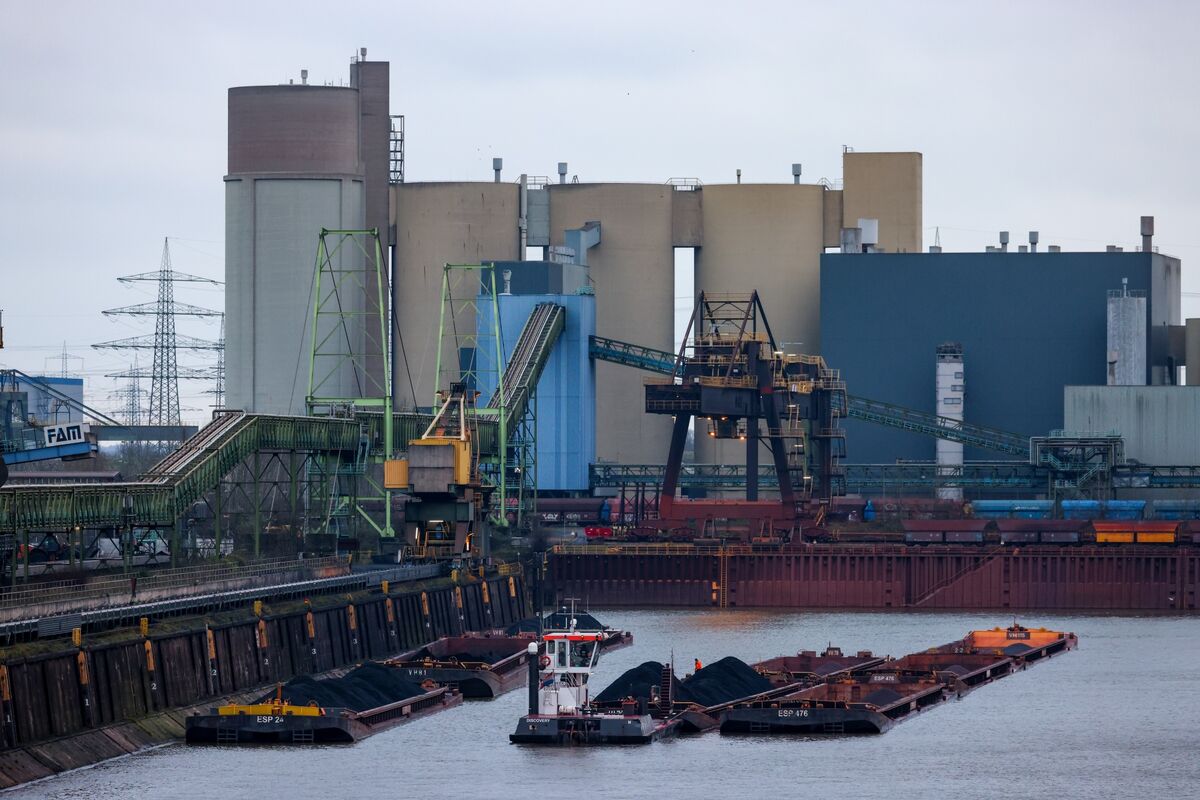
Image via Bloomberg
Europe tightens steel quotas as it braces for China’s overcapacity—and its own political stress test
The European Union is moving to toughen its steel import regime, leaning more heavily on quota rules designed to limit surges of foreign steel into the bloc. The policy direction reflects a familiar EU instinct: when global markets are distorted—particularly by state-backed overproduction—Brussels tends to answer with managed trade tools meant to protect domestic industry without fully embracing across-the-board protectionism.
At the center of the debate is China’s industrial overcapacity, which European producers argue pushes artificially cheap steel into world markets. For EU policymakers, steel is also strategic: it is foundational for defense supply chains, infrastructure, autos, and the energy transition. The bloc is trying to thread a needle—defend industrial capacity and jobs while staying aligned with World Trade Organization rules and avoiding a full-scale trade war that could ricochet across other sectors.
Still, quotas can shift pain rather than eliminate it. Downstream manufacturers worry about higher input costs and less flexibility, while climate policy adds another layer: Europe wants cleaner steel, but the transition requires massive investment. The result is a more interventionist EU industrial posture—less about ideology, more about hard math in a world where competitors subsidize at scale.
Read the full story at Bloomberg →

Image via Fox News
Vance claims U.S. has met its "core mission" with Iran, as diplomacy and deterrence collide
Vice President JD Vance said the U.S. is in a "great position" with Iran and has accomplished its "core mission," arguing that Washington holds leverage in ongoing Middle East negotiations. The comments project confidence that the administration’s combination of pressure, regional posture, and diplomacy has improved the U.S. hand—framing the situation as a "win-win" for Americans.
The challenge is that Iran policy rarely stays tidy. Tehran’s nuclear program, regional proxy networks, maritime harassment, and missile capabilities each move on separate tracks, and progress in one channel can coincide with setbacks in another. U.S. officials have historically judged success by measurable outcomes—limits on enrichment, verified compliance mechanisms, deterrence of attacks on U.S. forces and partners, and reduced risk to shipping lanes and energy infrastructure.
Politically, strong messaging plays well domestically, but it also sets a high bar. If the U.S. claims the "core mission" is achieved, critics will ask what metrics define that mission—and whether the administration is prepared for the next predictable cycle of escalation, backchannel talks, and partial understandings that can unravel under pressure.
Read the full story at Fox News →
Automakers face a USMCA countdown, with rules-of-origin back in the crosshairs
U.S. automakers and suppliers are confronting renewed uncertainty as the clock ticks on the U.S.-Mexico-Canada Agreement’s next phase without clarity on an extension or on how key provisions will be interpreted. A central fault line is rules of origin—complex requirements that determine whether a vehicle or component qualifies for preferential tariff treatment based on where it is made and how much regional content it contains.
For an industry built on long planning cycles, ambiguity is expensive. Automakers design platforms years ahead, lock in supplier contracts, and build multi-country supply chains to balance cost, resilience, and regulatory compliance. If qualifying thresholds tighten in practice—or if companies fear they might—firms may accelerate North American sourcing, retool production, or, in a worst case, absorb higher costs that ultimately flow to consumers.
The policy trade-offs are real. Supporters of stricter enforcement argue it protects North American jobs and discourages backdoor access for non-regional content. Skeptics warn that sudden shifts can disrupt investment and raise prices in a market still sensitive to affordability. The bottom line: absent predictable trade rules, the auto sector’s North American integration becomes less a competitive advantage and more a rolling risk.

Image via NBC News
Supreme Court upholds state bans on transgender participation in girls’ and women’s sports
The Supreme Court upheld state laws restricting transgender girls and women from participating in girls’ and women’s sports, ruling against two students who challenged bans in West Virginia and Idaho. The decision cements a major legal win for states arguing that sex-based categories in athletics are necessary to preserve competitive fairness and opportunities for female athletes.
Supporters of the bans have framed the issue around physiological differences and the integrity of women’s sports—particularly where scholarships, championships, and roster spots are limited. Opponents argue the laws are broad-brush exclusions that single out transgender students, raising equal protection concerns and potentially conflicting with federal civil rights interpretations that treat discrimination based on transgender status as sex discrimination.
The practical effect is likely a patchwork that increasingly tilts toward state discretion, with schools, leagues, and families navigating compliance while broader fights continue over medical privacy, eligibility standards, and how to balance inclusion with fairness in competition. The ruling also signals the Court’s willingness to let states set the rules in a highly charged cultural arena, even as the national debate remains unsettled.
Read the full story at NBC News →
That’s the file for Wednesday. We’ll keep tracking where policy meets markets—and where courts and conflict redraw the lines.
— Brief Updates Editorial