Today’s Sponsor
As copper breaks records, smart money is moving fast — and one under-the-radar Canadian copper stock, still trading below $2, is sitting on a historic Yukon copper belt being explored as a unified system for the very first time. High-grade results are confirmed, multiple rigs are already turning, and the company is fully funded through 2027 for its biggest drill campaign yet.
We've put together a FREE report covering the high-grade results, the district-scale opportunity, and where the 2026–27 drill program goes next — including an exclusive CEO interview. Drill results are coming. Get the full story now, before the next catalyst hits.
Get the Free Report NowBy clicking the link above, you are opting in to receive emails from Resource Stock Digest. You are also agreeing to the terms of our privacy policy. Unsubscribe at any time.

Wednesday, October 28, 2026 | Brief Updates — Five developments worth your time: a deadly high-speed rail collision in Spain, a streamer’s remarks that reignited the ICE debate, cruise passengers stuck in Cambodia amid fuel shocks, Israelis awaiting election clarity, and a notable board change at T-Mobile.
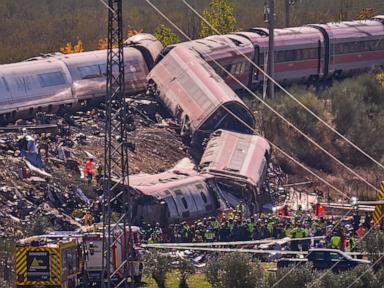
Image via ABC News
Dozens Dead After High-Speed Train Collision in Spain
At least 64 people were killed when two trains collided on Spain’s Madrid-Andalucía high-speed line, according to a spokeswoman for the Castilla-La Mancha regional government. Emergency crews rushed to the scene as officials began accounting for passengers and assessing the scale of the derailment and damage.
Authorities have not publicly finalized the cause, but high-speed corridors are typically built around layered safety systems meant to prevent exactly this kind of catastrophe. The coming days will likely focus on whether this was a signaling failure, a human-error chain, or a systems-level breakdown, as well as how quickly Spain can restore service on a critical national route.
For travelers and the public, the immediate implications are familiar after major transport disasters: scrutiny of safety oversight, questions about maintenance and staffing, and pressure for a transparent timeline of what went wrong and when.
✓ The Bottom Line: High-speed rail earns public trust by being relentlessly boring: predictable, redundant, and safe. A death toll of this magnitude strongly suggests multiple safeguards failed or were bypassed, and Spain should resist the temptation to settle for a narrow explanation that minimizes institutional responsibility. The only credible path forward is full transparency, independent investigation, and specific fixes that are verified, not merely promised.
📎 ABC News
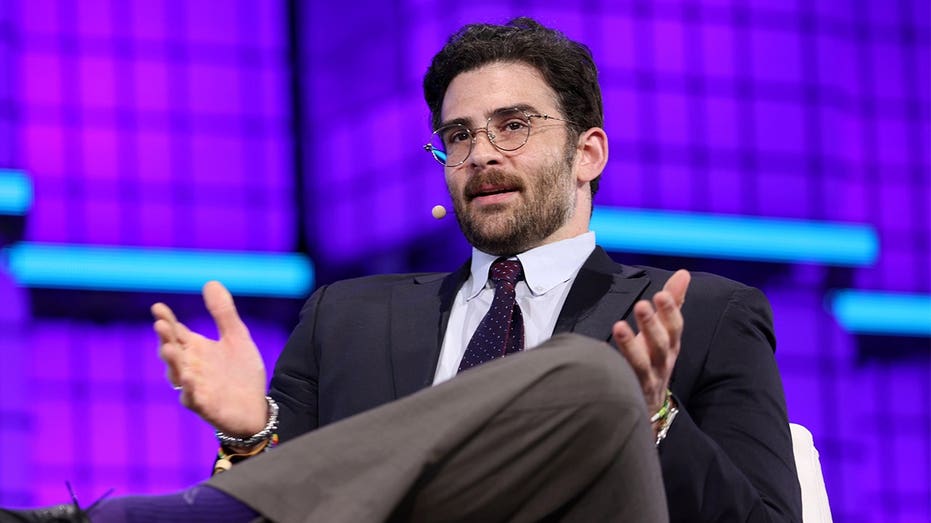
Image via Fox News
Streamer Backlash After Mocking Injured ICE Agents at Omar Event
Left-wing political streamer Hasan Piker drew a wave of condemnation after joking about injuries sustained by Immigration and Customs Enforcement agents during a Minneapolis campaign event featuring Rep. Ilhan Omar, according to Fox News. Conservatives and immigration hawks argued the comments were dehumanizing and amounted to celebrating harm against law enforcement.
Supporters and some aligned commentators have framed the controversy as another example of online speech being clipped, amplified, and weaponized for partisan purposes. But the underlying issue is less about editing and more about the substance: treating injuries as entertainment in a hyper-polarized climate where threats and harassment are already commonplace.
The episode lands in the middle of a broader argument about ICE itself, with critics calling the agency abusive and defenders insisting it enforces democratically enacted laws and bears the brunt of political dysfunction in Washington. That tension doesn’t excuse cheering violence or normalizing it as a punchline.
✓ The Bottom Line: Mocking injuries to federal agents is morally unserious and politically corrosive, regardless of what you think about ICE as an institution. If public figures want to criticize immigration enforcement, they should do it with facts, not cruelty. The evidence from recent years is clear: online glorification of harm lowers the temperature in exactly the wrong direction.
📎 Fox News

Image via BBC News
Luxury Cruise Passengers Stranded in Cambodia as Fuel Costs Upend Voyage
Passengers aboard the Villa Vie Odyssey have been left stranded in Cambodia after the ship’s voyage was suspended, with the operator citing soaring fuel costs and working on “temporary living arrangements,” the BBC reports. What was marketed as a long-duration luxury experience has, for some travelers, turned into an unplanned relocation with uncertain next steps.
Fuel is among the largest operating costs in maritime travel, and when prices spike, routes and schedules can unravel quickly. But the business model matters here: long-haul cruise concepts rely on stable financing, predictable logistics, and clear contingencies when disruptions hit. When those assumptions fail, the burden shifts abruptly to passengers, local authorities, and consular services.
Beyond the personal inconvenience, this is a reputational stress test for niche cruise offerings that promise extended “live aboard” lifestyles. Regulators and consumer advocates will likely ask what safeguards exist to ensure housing, refunds, and repatriation plans when a voyage stops being viable.
✓ The Bottom Line: If a company sells a floating lifestyle, it owes customers more than apologies when the spreadsheet breaks. Fuel volatility is not a surprise; it is a foreseeable risk that should be baked into contracts, capital reserves, and contingency planning. The fairest outcome now is prompt, transparent options: refunds, paid accommodations, and clear timelines, not vague reassurances.
📎 BBC News
Israel Awaits Results as Voters Weigh Hope Against Exhaustion
As ballots were counted following Israel’s election, voters in Tel Aviv voiced sharply mixed emotions, oscillating between hope for change and despair over persistent instability, according to Al Jazeera’s on-the-ground reporting. The mood reflects a society that has cycled through intense security concerns, economic pressures, and repeated political tests.
Israel’s elections rarely hinge on a single issue; coalitions, personalities, and security realities collide in ways that produce fragile governing arrangements. Even when a “winner” emerges, the harder question is whether the next coalition can actually govern coherently, pass budgets, and make durable decisions on security and domestic policy.
For allies and adversaries alike, the result will be read as a signal about Israel’s posture toward conflict management, internal cohesion, and relations with key partners. Markets, military planners, and regional capitals will watch less for rhetoric and more for who controls the most consequential ministries.
✓ The Bottom Line: Israel needs a government that can do the basics: govern steadily, maintain credible deterrence, and reduce internal political chaos that weakens national resilience. Whatever one’s preferred party, constant brinkmanship and short-lived coalitions are a strategic liability in a dangerous neighborhood. The evidence over multiple cycles is that stability itself is now a core security interest.

Image via Investing.com
T-Mobile Board Change: Vice Chair G. Michael Sievert Set to Step Down
T-Mobile US disclosed that Vice Chair G. Michael Sievert will resign from the company’s board and committees, according to a filing reported by Investing.com. Sievert has been a central figure in T-Mobile’s modern era, closely associated with the company’s strategy and post-merger trajectory.
Board transitions can be routine, but they also matter because they shape oversight, executive accountability, and strategic continuity. Investors typically look for clarity on timing, the stated rationale, and whether the departure signals a broader governance reshuffle or simply a planned handoff.
In the near term, the key questions are succession planning at the board level and what this means for priorities like network investment, pricing strategy, and competitive posture against AT&T and Verizon. Governance stability is especially important in telecom, where capital expenditures and regulatory scrutiny are constant.
✓ The Bottom Line: This kind of move is not automatically a red flag, but shareholders deserve more than boilerplate explanations when a high-profile vice chair exits. The telecom sector is too capital-intensive for “trust us” governance; continuity and independence on the board directly affect long-term performance. The most credible next step is clear disclosure on the transition plan and the skill set being added to replace it.
That’s the file for today. We’ll be watching for investigative findings from Spain, any further accountability around the ICE remarks, consumer-protection angles in Cambodia, the coalition math in Israel, and what T-Mobile’s board shift signals about its next chapter.
— Brief Updates Editorial