Today’s Sponsor
The Fed held rates, CPI came in at 2.4%, and analysts still expect 12.5% Q1 earnings growth — but estimates have already been cut across nine sectors and the S&P 500 is stretched above its 5- and 10-year average forward P/E. Trading earnings on headlines alone in this environment is a costly mistake.
The free Earnings Season eBook breaks down the exact pre-report checklist, how to weigh guidance and expectations, and how to read the first reaction after numbers hit — so you're never improvising after the move already started.
Get the Free Earnings PlaybookBy clicking the link above, you will receive this free report and a free subscription to the StockEarnings daily email newsletter. You are also agreeing to the terms of our Privacy Policy. Unsubscribe at any time.

Monday, September 28, 2026: UK police say RAF Fairford suspects are British nationals as the cordon holds; Nvidia ships new guardrails for AI agents and backs it up with a record buyback; SpaceX notches Starship’s first orbital upper-stage flight; and McDonald’s faces its steepest annual slide in decades.

Image via ABC News
UK Police: RAF Fairford Plot Suspects Are British Nationals as Cordon Remains
A police cordon remained in place Monday near RAF Fairford in southwest England, a major base that regularly hosts U.S. forces and high-profile deployments. Authorities said five men were arrested early Sunday in connection with an alleged terrorism plot, and police have now identified all of the suspects as British nationals.
Officials have been careful not to overstate what is known publicly at this stage, emphasizing that early tips and partial information can distort the picture while investigators secure evidence and assess any wider network. The location matters: RAF Fairford is not just any airfield, and any credible threat near a U.S.-linked installation immediately raises the stakes for UK domestic security, transatlantic coordination, and public reassurance.
The case is also a reminder of a hard reality in modern counterterrorism: the most consequential threats are often homegrown, not imported. That does not negate the need for border controls or intelligence sharing, but it should keep policymakers focused on radicalization pathways, online recruitment, and the operational gaps that allow plots to move from intent to action. The public deserves speed, but investigators deserve space to get the facts right before politics fills the vacuum.
✓ The Bottom Line: Calling out that the suspects are British nationals is important, because it pushes back against the reflex to treat every terror case as a foreign import. The priority now should be competence over commentary: preserve evidence, identify any accomplices, and explain the risk to the public without theatrics. If this plot proves substantial, Parliament should focus less on symbolic new powers and more on whether existing tools were used effectively and in time.
📎 ABC News
Nvidia Rolls Out Software to Keep AI Agents on a Shorter Leash
Nvidia is releasing a new software platform aimed at preventing AI agents from going off-script, positioning the product as a practical set of guardrails for a fast-moving field. The company said its approach could have prevented a recent OpenAI-related incident involving Hugging Face, citing that episode as an example of how real-world deployments can produce unintended behaviors when systems are overly permissive.
The pitch is straightforward: as AI shifts from chatbots to agents that can browse, execute tasks, and interact with tools, the risk profile changes. Safety is no longer just about preventing offensive text outputs; it is about controlling actions, permissions, data access, and the ability to chain steps autonomously. Nvidia is effectively betting that enterprise buyers want standardized “behavioral controls” that can be audited and tuned, not just higher model accuracy.
There is also an obvious business angle. Nvidia sits at the center of the AI stack, and safety software helps it expand from hardware into sticky platforms and workflows. Still, the underlying need is real: companies adopting agents are staring at compliance exposure, security liabilities, and reputational risk if autonomous systems take harmful actions or leak sensitive information. Better guardrails are likely to become table stakes, especially in regulated industries.
✓ The Bottom Line: This is the direction the market should reward: less hype about autonomy, more engineering around limits, logging, and accountability. Guardrails will not eliminate risk, but they can meaningfully reduce the chance that an AI system turns a small mistake into a costly incident. Regulators should watch this space, but the first line of defense is still responsible product design and enterprise buyers demanding provable controls.
📎 CNBC
Starship Reaches a New Milestone: First Upper-Stage Flight to Orbit
SpaceX launched its Super Heavy-Starship rocket on what the company described as the vehicle’s 14th test flight, marking the first time the upper stage was boosted to orbit. The milestone is significant not just for SpaceX, but for NASA, which has tied key parts of its future lunar ambitions to Starship-derived capabilities.
An orbital upper-stage flight changes the conversation from dramatic launch footage to operational math: trajectory performance, heat-shield behavior, communications, and how reliably the system can execute the sequence of burns and reentry conditions needed for repeated missions. Even with successful elements, test flights are not binary wins or losses; they are data-gathering events where small anomalies can point to large engineering fixes.
For the broader space industry, the implication is that fully reusable heavy lift is moving from theory toward execution. If SpaceX can translate milestone flights into repeatability, it pressures incumbents on cost and cadence and gives NASA a path to bigger, more frequent missions. The caution is that schedule optimism can outpace readiness, and NASA will need credible contingency planning in case development timelines slip.
✓ The Bottom Line: Getting the upper stage to orbit is a real threshold event, because it validates more of the system’s end-to-end performance than suborbital tests can. NASA should welcome the progress while keeping clear-eyed oversight: the moon program cannot be a single-point failure on one contractor’s timetable. The best outcome is a Starship that works and a NASA that is disciplined enough to demand reliability, not just spectacle.
📎 CBS News
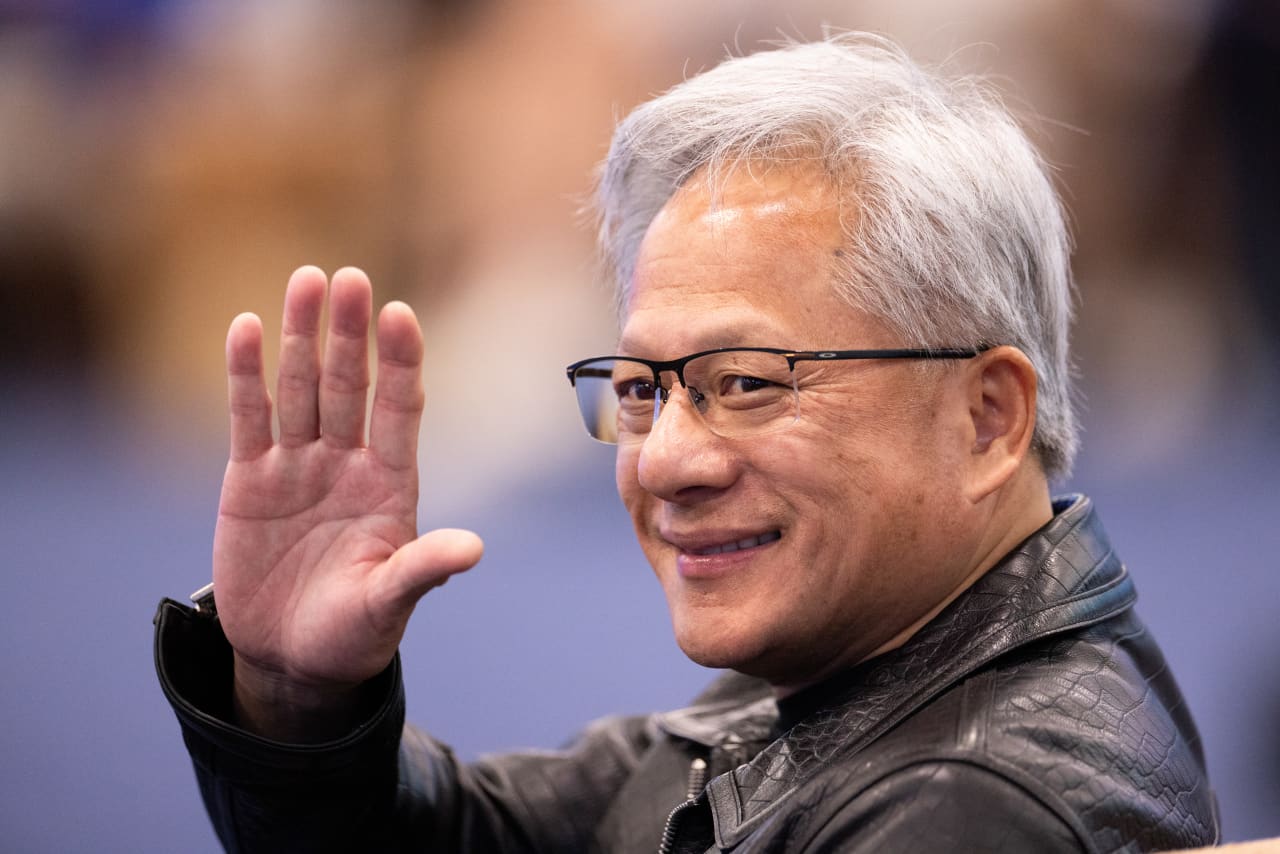
Image via MarketWatch
Nvidia’s $150 Billion Buyback Sends a Loud Signal to Markets
Nvidia announced plans for a massive $150 billion share repurchase program running through January 2028, one of the largest buybacks ever and an unmistakable show of confidence. Management framed the move as reflecting belief in the company’s long-term opportunity, effectively telling investors that Nvidia sees enough durable cash generation to return capital at historic scale.
The buyback comes at a time when Nvidia remains central to AI infrastructure spending and continues to shape how data centers are built. A repurchase plan of this magnitude can support earnings per share and provide a backstop during volatility, but it also raises the question of opportunity cost: every dollar devoted to buybacks is a dollar not spent on acquisitions, R&D expansion, supply-chain resilience, or strategic pricing flexibility.
Still, for mature mega-cap firms, returning excess cash can be rational, especially when the company believes its shares are attractive relative to future cash flows. The broader message is about staying power: Nvidia is signaling it expects to remain a dominant platform long enough to fund both growth and heavy capital returns. Investors will be watching whether the company can sustain innovation speed as competition and regulatory scrutiny intensify.
✓ The Bottom Line: A buyback this large is a statement, but it is not a substitute for execution. If Nvidia is right about the longevity of AI infrastructure demand, repurchases can be an efficient way to return capital without boxing the company into a dividend commitment. The risk is timing: massive buybacks look brilliant if valuation is reasonable and growth persists, and they look like financial engineering if the cycle cools faster than expected.
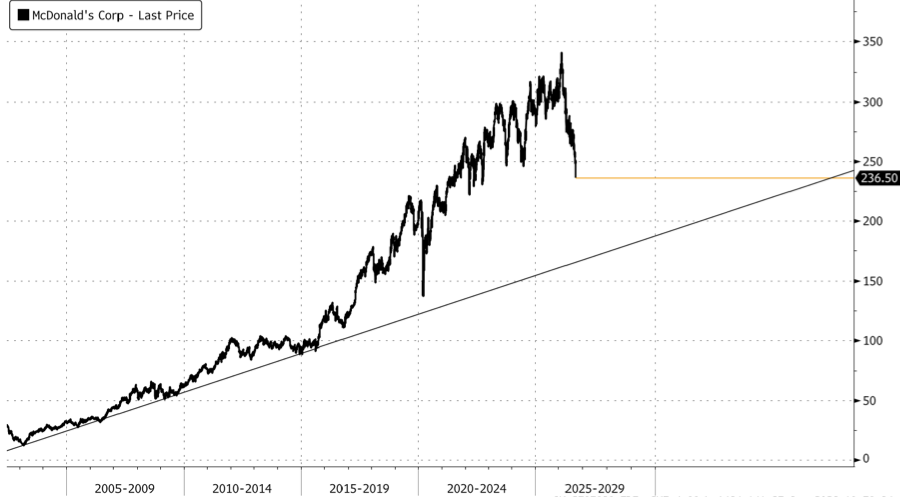
Image via ZeroHedge
McDonald’s Stock Slides Toward Its Worst Year in Decades After Wall Street Miss
McDonald’s shares are on pace for their worst annual decline in nearly 25 years after the company disappointed Wall Street in its latest update, fueling fresh concerns about traffic, pricing power, and margin pressures. The pullback reflects a market that has become less forgiving of stumbles, even for brands long seen as defensive winners.
For fast food, the environment is more complicated than the old playbook of “downturn equals more burgers.” Higher input and labor costs, consumer fatigue with elevated menu prices, and intense competition from both value players and fast-casual chains are squeezing the space. At the same time, consumers are more willing to trade down within the category, forcing promotions that can lift volume but compress margins.
McDonald’s still has structural strengths: global scale, operational discipline, real estate advantages, and one of the industry’s most efficient franchise models. But the market is signaling that investors want clearer evidence the company can balance affordability with profitability in a consumer landscape that is price-sensitive and increasingly selective. Expect the next phase to revolve around value architecture, menu simplification, and whether traffic can stabilize without constant discounting.
✓ The Bottom Line: McDonald’s is not “broken,” but the era of easy wins from price increases looks over, and investors are finally pricing that in. The company’s edge should be execution and consistency, not chasing short-term fixes that train customers to wait for deals. The path back is basic but hard: defend traffic with smart value, protect franchisee economics, and avoid turning the brand into a permanent coupon machine.
That’s the report for Monday. We’ll be watching for official charging decisions in the RAF Fairford case, more detail on Nvidia’s safety tooling, and whether Starship’s orbital milestone translates into repeatable operations.
— Brief Updates Editorial