Today’s Sponsor
A stock trading at $3.55 is paying a near-10% yield — and raising it. The company behind it owns a library of factual programming, licenses it to streaming platforms, and just posted record quarterly net income of $8.9 million with 73% gross margins. Licensing revenue is up 48% year over year. At a $209 million market cap, it flies completely under the radar of most dividend investors.
It's one of five sub-$5 stocks in a free report from Trading Tips — each picked from real filings, across five different sectors. The list includes a uranium producer mining at ~$40/lb and selling near $67, plus two names that are already profitable today. Five stocks, every number sourced. No fluff.
Get the Free ReportBy clicking this link you agree to receive emails from Trading Tips and our affiliates. You can opt out at any time. — Privacy Policy

Energy markets are flashing geopolitical risk again, private equity is professionalizing its playbook, Missouri redistricting is stuck between courts, dead malls test local politics, and real yields may have further to run.

Image via The Hill
Oil Pops Back Above $100 as Middle East Risk Premium Returns
Crude prices pushed past $100 a barrel on Wednesday, the first time since July, as renewed attacks in the Middle East revived fears of supply disruptions and shipping insecurity. Even when physical flows are not immediately cut, energy markets tend to reprice quickly when traders see a non-trivial chance of escalation around key producing regions or transit routes.
The move matters beyond the pump. Higher oil acts like a tax on consumers, complicates the inflation outlook, and can delay or dilute any near-term shift toward easier monetary policy. It also pressures energy-importing allies and gives energy exporters added fiscal breathing room, which can reshape diplomatic incentives at the margins.
✓ The Bottom Line: The lesson from the last few years is that energy prices don’t need an actual shortage to do economic damage; they just need persistent uncertainty. Policymakers can’t “jawbone” oil down when the risk is geopolitical and the market is pricing tail events. If the security situation doesn’t stabilize quickly, expect inflation expectations to stay sticky and rate-cut optimism to fade.
📎 The Hill
At CD&R, the Ex-CEO Bench Becomes a Deal Engine
Clayton, Dubilier & Rice is building what amounts to a standing roster of former chief executives to help source transactions and guide portfolio companies. The model is increasingly common in private equity: recruit operators who know specific industries, can open doors to management teams, and can quickly pressure-test whether an acquisition thesis is realistic.
For investors, the pitch is that deep operational talent can reduce execution risk and improve outcomes after the deal closes. For the market, it signals how competitive buyouts remain: firms are differentiating not just with capital, but with relationships, expertise, and the ability to move faster than rivals when an asset comes to market.
✓ The Bottom Line: This is private equity adapting to a world where cheap leverage is no longer a given and value creation has to be earned operationally. A serious CEO network can be a real advantage, but it also raises the bar for transparency: limited partners should ask how these executives are compensated, how conflicts are managed, and whether advice is truly independent. The firms that treat this like a disciplined governance layer will outperform the ones treating it like branding.
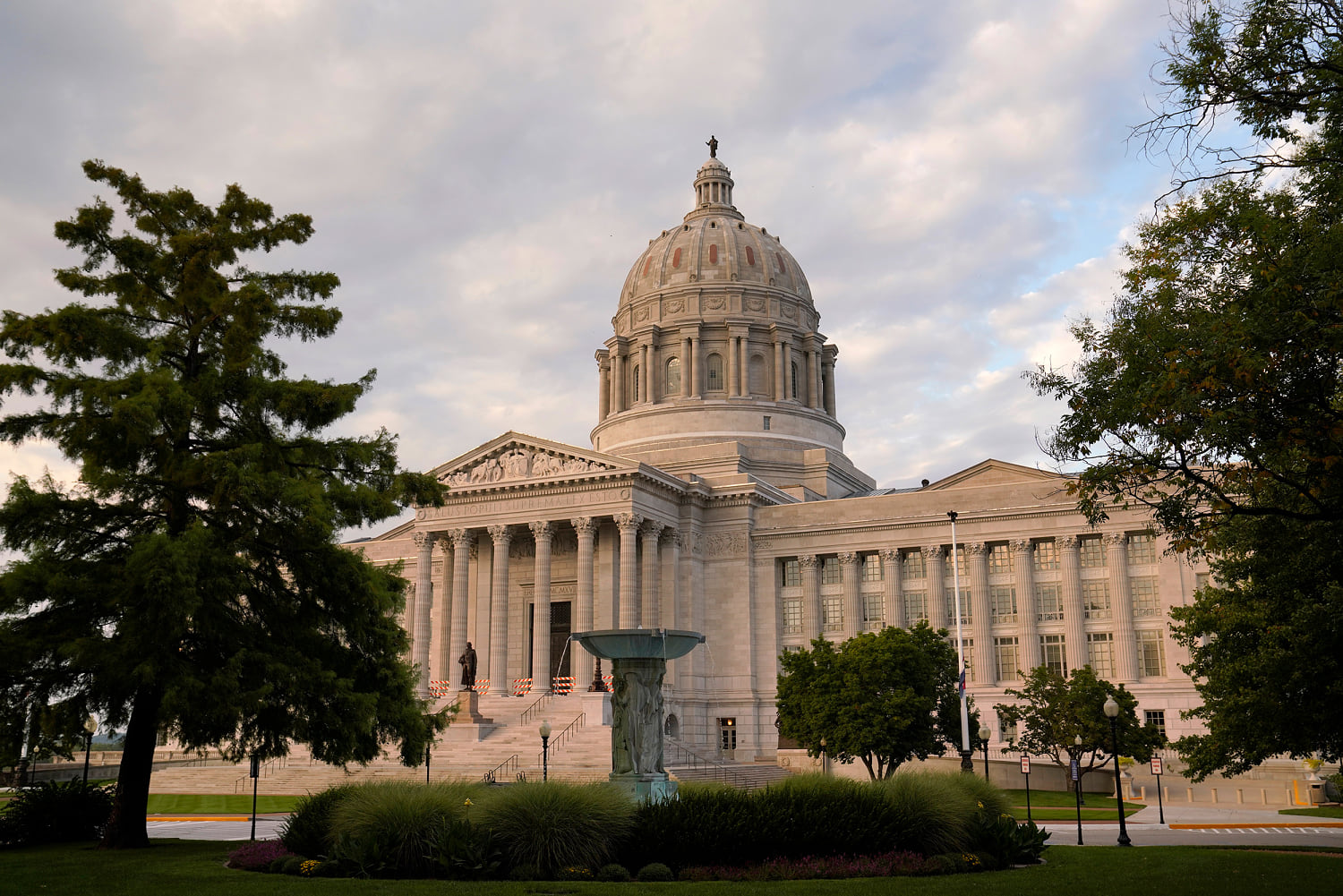
Image via NBC News
Missouri’s Congressional Map Gets Tangled in Conflicting Rulings
Missouri’s effort to use a newly redrawn congressional map remains unsettled after competing court decisions left the state’s lines in legal limbo. Republicans sought to move quickly, including an emergency bid to the U.S. Supreme Court, after the Missouri Supreme Court blocked use of the revised map that aimed to eliminate a Democratic-held seat.
The fight underscores how redistricting disputes are increasingly decided on procedural timing as much as on the merits. With election calendars and candidate filing deadlines in play, courts often end up weighing what is administratively workable alongside what is legally permissible, and those judgments can diverge across state and federal systems.
✓ The Bottom Line: Redistricting should not be a recurring emergency project run through courts at the last minute, regardless of which party benefits. If lawmakers want maps to survive scrutiny, they need a process that is transparent, rule-bound, and insulated from obvious incumbent self-dealing. When courts are the de facto map-drawers of final resort, voters are the ones who lose clarity and confidence.
📎 NBC News

Image via RealClearMarkets
Dead Malls Are a Policy Choice, Not Just a Retail Trend
A growing number of American malls sit half-empty or abandoned, and the debate is shifting from nostalgia to land-use reality: what should communities do with large, well-located properties that no longer function as retail hubs? Reformers argue that many dead malls persist because local rules and incentives make redevelopment slow, legally complex, or financially unattractive, even when demand exists for housing, mixed-use projects, logistics, or civic space.
The stakes are practical. Blighted properties drag down nearby values, reduce local tax revenue, and can become public-safety headaches. Yet tearing down or dramatically repurposing a mall is politically hard: neighbors worry about traffic and schools, local officials fear controversy, and developers face permitting risk that can kill projects before they start.
✓ The Bottom Line: Communities should stop treating dead malls as a temporary downturn problem and start treating them as a zoning and governance problem. If a property is economically obsolete, the public interest is served by clear, predictable rules that allow redevelopment, not by years of hearings designed to satisfy every veto point. The best outcomes will come from simplifying permitting, allowing more housing where infrastructure already exists, and demanding real accountability for property owners who let prime land rot.
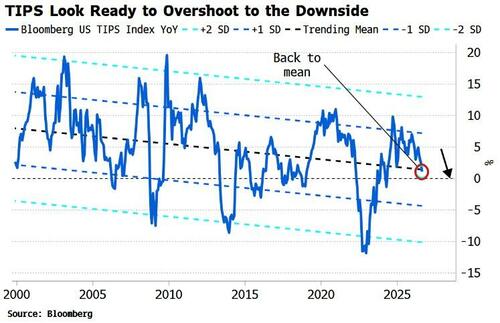
Image via ZeroHedge
The Bond Market Isn’t Done Repricing: The Case for Higher Real Yields
A new market note argues that real yields, as reflected in inflation-protected Treasuries, still have room to rise as they mean-revert and potentially overshoot. The core idea is that the post-pandemic era has reset what investors demand in inflation-adjusted return, especially amid large fiscal deficits, heavy government borrowing needs, and a more uncertain inflation backdrop.
If real yields continue higher, the implications ripple across markets: equity valuations face a tougher discount rate, long-duration assets take the hit, and financial conditions tighten even without additional central bank action. At the same time, higher real yields can signal healthier price discovery in capital markets, forcing projects and policymakers alike to confront the true cost of money.
✓ The Bottom Line: The “higher for longer” conversation is too often framed only in terms of nominal rates, but real yields are the more honest constraint on risk-taking and fiscal complacency. With deficits persistent and inflation risks not fully extinguished, it’s plausible that markets will demand more real compensation than investors got used to in the 2010s. The danger isn’t just volatility; it’s a slow squeeze on overvalued assets and overpromised budgets that were built for a cheaper world.
That’s the day: geopolitics is back in your inflation data, lawyers are back in your election map, and markets are still relearning the price of risk. See you next issue.
— Brief Updates Editorial