Today’s Sponsor
Policy is already moving markets in 2026 — trade enforcement, regulatory shifts, and tax positioning are redirecting capital right now. Institutions reposition before the headlines catch up, and the window to act early is closing fast.
Our analysts identified 5 stocks showing real momentum tied directly to current administration policy themes — including the sectors benefiting most from domestic investment trends and regulatory tailwinds. Don't get left behind.
Get the Free Report Now(By following any of the links above, you're choosing to opt in to receive insightful updates from The Investment News Daily + 2 free bonus subscriptions! Your privacy is important to us. You can unsubscribe anytime. See our privacy policy for details.)

A centrist win in key primaries raises questions about party direction and the real power of endorsements, while a cooler CPI print reshapes the Fed conversation. Abroad, a deadly Houthi-linked strike hits Pakistani nationals at sea. In Washington, Democrats press for answers on a secretive Trump travel move. And in tech, Anthropic’s text watermarks open a new chapter in AI detection and compliance.

Image via ABC News
Primary night: A centrist win, and an endorsement test for Trump-world
Tuesday’s primary results offered a mixed but revealing snapshot of where both parties are headed: Democrats saw a notable centrist-friendly win that underscores continuing voter appetite for pragmatism over ideological purity, even as activists and donors debate what the party should look like in 2026 and beyond.
On the Republican side, the night doubled as another real-world test of President Donald Trump’s endorsement power. Some backed candidates performed strongly, but the broader takeaway wasn’t simply “Trump still rules” or “Trump is slipping.” It was more complicated: endorsements appear to matter most in crowded fields with low-information voters, and less when local issues, candidate quality, or well-funded opposition define the race.
The implications are immediate. Democrats may read the results as permission to lean into center-left governance and candidate recruitment in competitive districts. Republicans, meanwhile, are watching for evidence that the party’s future is best served by candidates who pair Trump-aligned branding with discipline and electability, rather than assuming national loyalty alone will carry them.
Read the full story at ABC News →
Pakistan reports three citizens killed in Houthi attack on commercial ship
Pakistan says three of its citizens were killed in a Houthi attack on a commercial ship, underscoring how maritime violence tied to Yemen’s conflict continues to spill into global trade routes. The incident adds fresh diplomatic pressure on regional actors as shipping firms and governments weigh risk in waters linked to Red Sea and Gulf transit.
While details of the vessel, its route, and the victims’ roles aboard the ship were still emerging, Pakistan’s statement reflects a recurring reality for merchant crews: multinational staffing means attacks can quickly become international incidents. Islamabad’s response is also closely watched at home, where public attention often rises sharply when overseas Pakistanis are harmed.
The broader context is the continued pattern of Houthi-linked strikes and threats against shipping, which has periodically drawn U.S. and allied naval involvement and raised insurance and rerouting costs for carriers. Each casualty report raises the stakes for escalation management, even when governments prefer to avoid a wider regional conflict.
Read the full story at AP News →
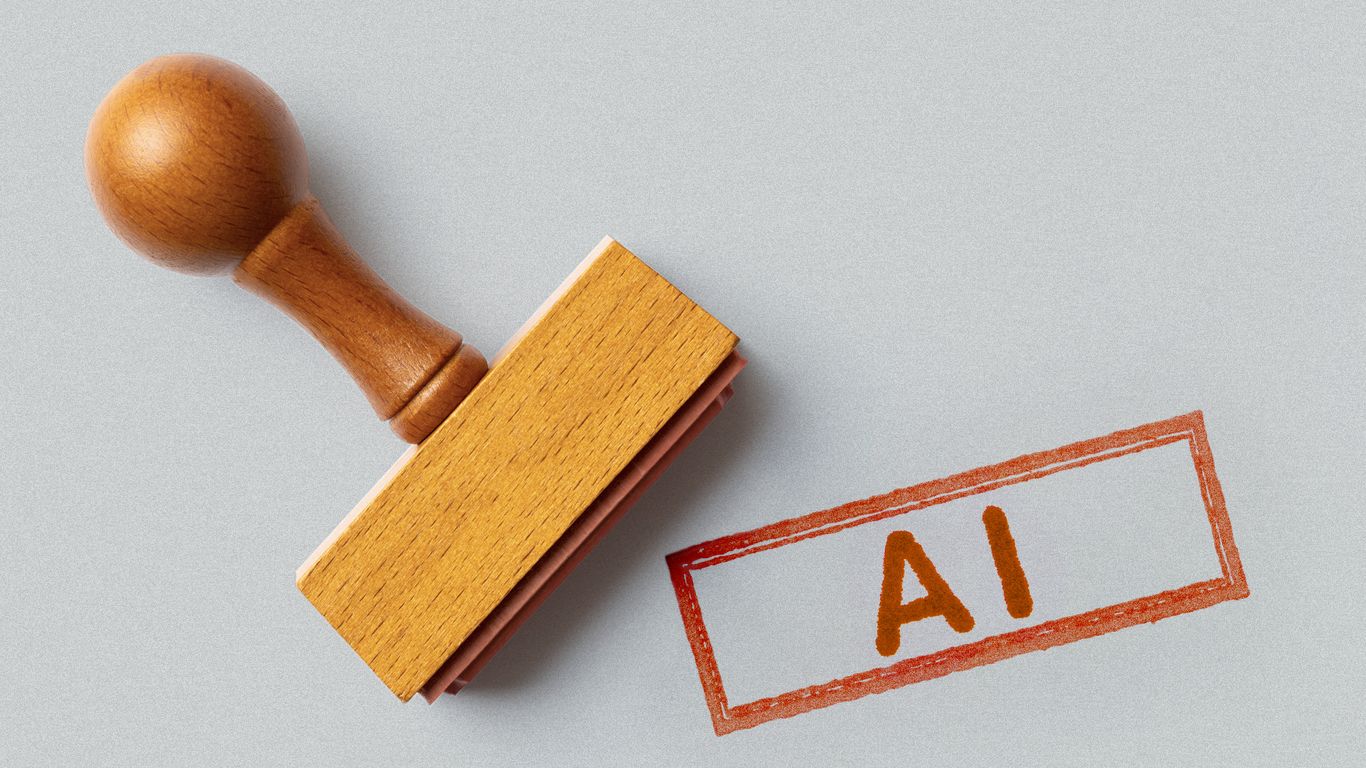
Image via Axios
Anthropic adds machine-readable watermarks, putting AI detection on a new footing
Anthropic says newer versions of its Claude models will embed machine-readable “watermarks” into Claude-generated text and files, a step aimed at meeting European Union transparency rules and helping organizations identify AI-generated material more reliably.
The move matters because the AI detection problem has been messy in practice. Traditional “AI detectors” have produced false positives and false negatives, and they often struggle when text is edited, translated, or mixed with human writing. Watermarking shifts the approach from trying to guess whether something looks AI-like to verifying whether a system intentionally left a detectable signature.
Still, watermarking is not a silver bullet. It depends on widespread adoption, consistent implementation across tools, and clear governance about who can read or verify the watermark and under what conditions. It also raises policy questions: will regulators treat missing watermarks as suspicious, and how will enforcement work when content passes through multiple platforms and edits? For companies navigating EU compliance, though, this is a concrete step toward auditable provenance rather than vibes-based detection.
Read the full story at Axios →

Image via The Hill
Schumer demands answers on Secret Service’s secret Trump flight from Turkey
Senate Democratic Leader Chuck Schumer is demanding a briefing from the Trump administration over a report that the Secret Service arranged a discreet flight to bring President Trump back from Turkey, a move Schumer suggests warrants congressional scrutiny.
According to the reporting, the episode involved unusual operational steps that have fueled questions about transparency, cost, and whether standard protocols were followed. While presidential security routinely involves classified logistics, lawmakers often argue that extraordinary measures and interagency coordination still require after-the-fact oversight, especially if assets or authorities were used in atypical ways.
The dispute lands in a familiar Washington tension: the executive branch’s instinct to keep protective details tightly held versus Congress’s role in accountability, spending, and lawful process. The key question is not whether protective travel should be secret in real time, but whether the administration can credibly explain the rationale and guardrails without compromising security.
Read the full story at The Hill →
Inflation eases again: July CPI cools to 3.4% as Fed watch intensifies
Consumer prices rose at a 3.4% annual pace in July, a second straight month of cooler inflation that matched economists’ expectations. The latest Consumer Price Index reading suggests price pressures are continuing to moderate, even as households still feel the sting of higher costs compared with pre-pandemic baselines.
For the Federal Reserve, the report adds evidence that disinflation is progressing without an obvious re-acceleration. That said, Fed officials typically focus on both headline and underlying measures, including services inflation and wage dynamics, to judge whether progress is durable. A couple of cooler prints can shift market expectations, but policymakers often want a longer run of confirmation before changing course.
For consumers and businesses, the near-term implication is less about “prices going down” and more about the rate of increase slowing. If inflation continues to cool, the conversation may shift from how long rates stay restrictive to when, and how carefully, the Fed can begin easing without reigniting price pressures.
Read the full story at CBS News →
That’s the report for Wednesday. We’ll be watching how primary-night lessons shape candidate strategy, whether the administration answers key questions on presidential travel logistics, and whether cooler inflation holds long enough to change the Fed’s path.
— Brief Updates Editorial