Today’s Sponsor
The Fed held rates, inflation is still above target, and uncertainty is rising — that means the "buy anything AI" trade is over. Smart money is rotating fast toward the companies actually building AI infrastructure: chips, cloud capacity, and mission-critical data tools. Big Tech alone is projected to spend $635B–$665B on AI in 2026 — and not all of it is going where most investors are looking.
We've identified 9 AI stocks worth watching right now — including a lesser-known chip name tied to U.S. AI infrastructure, a cloud player with improving setup, and a data analytics company with government exposure. This isn't hype. It's about following where capital is actually being deployed.
Get the Free Report NowBy clicking the link above, you will receive this free report and a free subscription to the StockEarnings daily email newsletter. You are also agreeing to the terms of our Privacy Policy. Unsubscribe at any time.

Monday, November 9, 2026: Wall Street weighs an Nvidia investigation, NASA opens the lunar contract floodgates, an Iraqi gas field attack raises energy-security alarms, Trump signals restraint on Iran escalation, and Congress returns with shutdown math and an impeachment threat.

Image via MarketWatch
Wall Street Downgrades the Narrative as Nvidia Faces a Jensen Huang Investigation
Nvidia shares slid as investors digested news of a board-led investigation tied to allegations involving CEO Jensen Huang and alleged spying claims. Analysts quoted by MarketWatch framed the risk less as an immediate revenue hit and more as a credibility and governance problem: once a marquee company is forced to litigate trust, the market tends to demand a higher risk premium.
The near-term focus is on what exactly the investigation is examining, whether outside counsel is involved, and whether any regulators or law enforcement agencies take interest. On earnings mechanics, analysts are watching for disruption to customer relationships and the company’s ability to keep its AI roadmap and supply commitments on track while senior leadership is pulled into damage control.
Nvidia’s bull case has long been about execution and strategic positioning in AI infrastructure; this episode tests something different: institutional confidence in oversight and disclosure. If the company can provide clean, specific answers quickly, the stock can stabilize. If details drip out over weeks, the headline risk could linger well beyond the typical news cycle.
✓ The Bottom Line: Markets can live with bad quarters; they struggle with uncertainty and reputational fog. Nvidia should treat this as a governance emergency: independent review, clear timelines, and real transparency, not PR fog. If the facts ultimately show a minor issue, a fast, disciplined process is how you keep it minor.

Image via Fox Business
NASA Puts $10 Billion on the Table, and the Lunar Supply Chain Gets Real
NASA unveiled a $10 billion moon base contract framework that sets up SpaceX, Blue Origin, and six other companies to compete for future lunar delivery missions. The Fox Business report describes the program as a flexible contracting approach aimed at building out the logistics and infrastructure needed for sustained lunar operations, not just one-off stunts.
The policy bet is that competition and commercial capability can bend the cost curve while accelerating timelines. NASA wants redundancy in launch and delivery options, plus a broader industrial base that can keep critical systems moving even if one provider slips. For the companies, it’s also an early stake in what could become a durable market: transportation, power, habitats, and eventually resource extraction and on-site manufacturing.
Skeptics will point to past cost overruns and the risk of writing big checks before requirements are fully baked. Supporters argue that the alternative is worse: single-vendor dependency and slow-walked innovation. Either way, this is Washington signaling that the moon is moving from aspiration to procurement reality.
✓ The Bottom Line: This is the right direction, but only if NASA enforces hard performance metrics and doesn’t treat contracts as political trophies. Competition works when losers actually lose and deadlines matter. The public interest here is resilient capability at a reasonable cost, not a subsidized space-race vanity project.

Image via ZeroHedge
Drone Strike Knocks Out Kurdistan’s Khor Mor Gas Field, Exposing a Fragile Energy Artery
A drone strike shut down the Khor Mor gas field in northern Iraq’s Kurdish region, a major supplier that supports electricity generation and industrial activity. ZeroHedge reports the outage contributed to widespread power disruptions, underscoring how quickly a single attack can cascade into economic and humanitarian stress when grids are already stretched.
The immediate questions are operational and political: how long the field remains offline, whether storage and alternative fuels can bridge the gap, and who is being blamed behind the scenes. In Iraq’s north, energy infrastructure is both essential and politically contested, sitting at the intersection of regional rivalries, militia influence, and disputed authority between Baghdad and the Kurdistan Regional Government.
For global markets, the direct volume impact may be limited compared with major Gulf disruptions, but the signal matters. Cheap drones and loosely governed airspace make energy targets easier to hit, and repeated attacks can create a risk premium that shows up in investment decisions, insurance costs, and long-term production planning.
✓ The Bottom Line: This is a reminder that energy security is national security, even when the barrels and BTUs are local. Hardening infrastructure and improving air-defense and counter-drone capacity isn’t optional anymore; it’s the baseline. The longer Iraq’s politics stay fragmented, the easier it is for armed actors to turn power generation into leverage.
Trump Signals No Appetite for Escalation With Iran, Even as He Defends the War’s Rationale
President Trump said he sees no reason to escalate the war with Iran, according to CBS News reporting tied to remarks in a 60 Minutes interview. He characterized the conflict as a "good decision" in the long term, while acknowledging near-term consequences and disruption.
The comments point to an administration trying to hold two messages at once: deterrence and restraint. On the one hand, Trump is defending the strategic logic of military action; on the other, he is signaling limits to avoid a wider regional conflagration and the political blowback that follows protracted conflict.
What markets and allies will watch now is whether the rhetoric matches operational posture: force levels, rules of engagement, and back-channel diplomacy. If there is a diplomatic off-ramp, it will likely require quiet verification steps and credible commitments, because neither side can publicly appear to be backing down.
✓ The Bottom Line: Avoiding escalation is prudent, but it has to be backed by disciplined strategy, not just television reassurance. The U.S. should define achievable objectives, communicate them to the public, and align military actions to those objectives with clear thresholds. Open-ended conflict is how you lose both deterrence and domestic support.
📎 CBS News
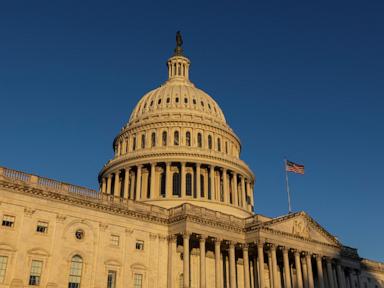
Image via ABC News
Lame Duck, Real Stakes: Shutdown Deadlines and an Impeachment Cloud Over the Pentagon
Congress returns to a crowded lame-duck session facing a familiar pileup: funding to avert a government shutdown, a farm bill, FISA reform, and the annual National Defense Authorization Act. ABC News reports that impeachment pressure is also looming over Defense Secretary Pete Hegseth, adding partisan volatility to an already tight calendar.
The procedural reality is that deadlines are unforgiving and floor time is scarce. Shutdown brinkmanship collides with national security legislative must-dos, while surveillance authorities and defense policy debates tend to attract crosscutting coalitions that don’t map neatly onto party leadership plans.
An impeachment drive, even if it doesn’t ultimately remove anyone, can still freeze cooperation, consume oxygen, and distort priorities. The risk is that Congress punts core governance tasks into short-term patches, leaving agencies, farmers, contractors, and allies operating on uncertainty precisely when strategic competitors benefit from American dysfunction.
✓ The Bottom Line: If Congress can’t pass basic funding and the NDAA on time, it’s a self-inflicted wound with real operational consequences. Impeachment may be warranted or not, but it should not become an excuse to neglect the governing work that only Congress can do. The public deserves votes, timelines, and accountability, not permanent emergency legislating.
📎 ABC News
That’s the day’s map: credibility risk in markets, contracting reality in space, vulnerability in energy, restraint signals in foreign policy, and a Washington calendar that won’t forgive grandstanding.
— Brief Updates Editorial