Today’s Sponsor
Trump declared "I'm a gold person" — and set off a chain of events most Americans are completely unprepared for. Gold just overtook U.S. Treasuries as the world's #1 reserve asset for the first time in 30 years. Central banks are buying at double the pace of the previous decade. And with the Treasury now expanding long-dated bond purchases, one top fund manager says bluntly: "That sounds like QE to me — and gold likes that too."
What does this mean for your retirement account? The rules of the next economy are being written right now — and if you don't know what's coming, you could be left behind. Get the full details before this window closes.
Get the Free ReportIf you would like to unsubscribe from receiving offers for Anchor Point Research, please click here. Or write to: 351 Paseo Nuevo, Floor 2, Santa Barbara, CA, US 93101.

Five developments to watch: an Alaska Senate intrigue pulls in Trump and the governor, a practical guide to election-night timing, a major delivery-industry merger, stronger Q3 growth, and a high-profile firing at the Defense Department.
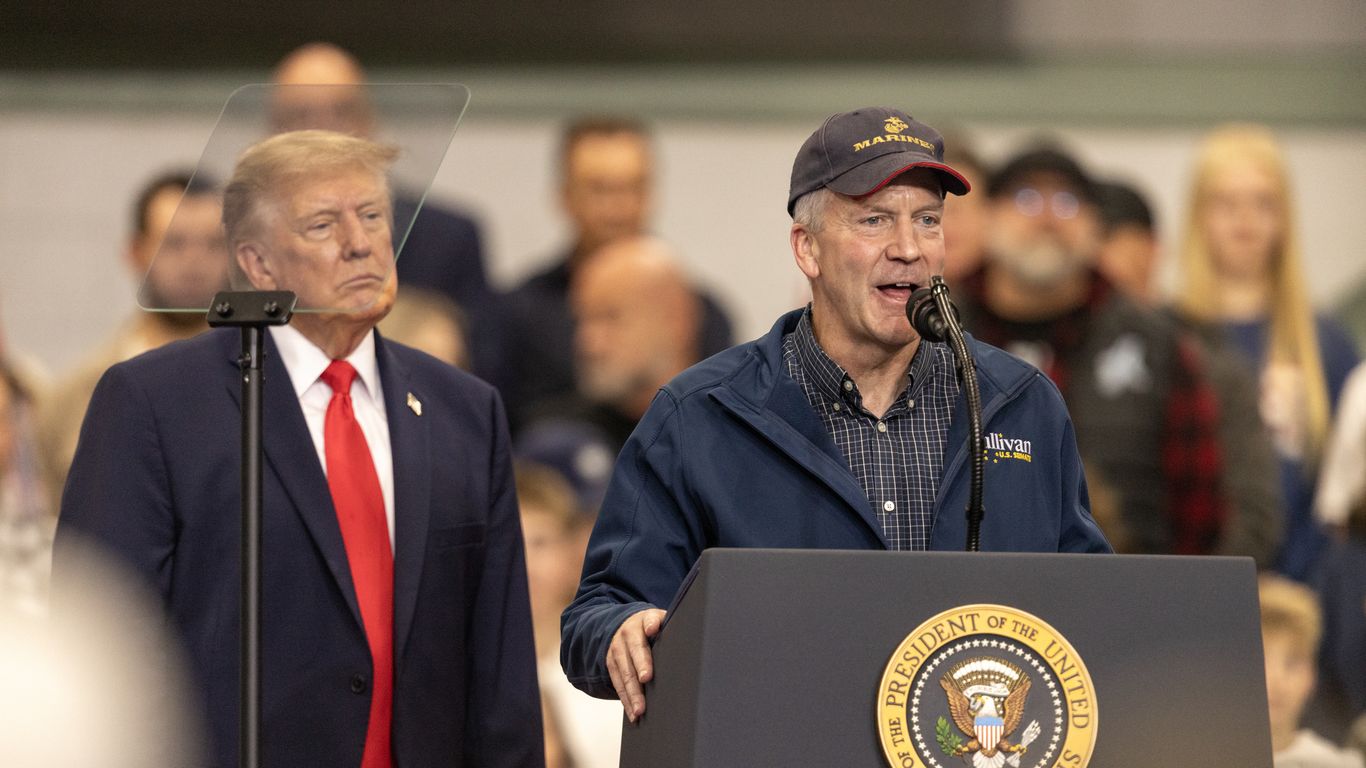
Image via Axios
Trump Alleges Perjury in Alaska Senate 'Spoiler' Effort as Governor Orders Probe
President Trump is accusing Democrats and Rep. Mary Peltola’s political operation of fraud and perjury after a New York Times report said Peltola aides helped recruit another candidate in Alaska’s U.S. Senate race involving incumbent Sen. Dan Sullivan. The allegation centers on whether the recruitment effort was part of a coordinated attempt to shape the field and whether any required disclosures, filings, or sworn statements were falsified.
Alaska’s governor has ordered a probe, raising the stakes in a state where election administration and campaign conduct already draw outsized scrutiny. Democrats argue that candidate recruitment is ordinary politics and that accusations of criminality require hard evidence, not insinuation. Republicans see a broader pattern: tactical ballot maneuvering and opaque coordination that, if proven, could violate campaign rules and undermine confidence in the contest.
This is landing at the worst possible time for everyone involved: late-cycle investigations can harden partisan narratives before facts are established, and Alaska’s unique electoral dynamics mean small shifts can matter. Expect dueling legal teams, rapid-response messaging, and pressure on investigators to move quickly without cutting corners.
✓ The Bottom Line: If there’s evidence of coordination that crossed legal lines, investigate it promptly and publicly, with receipts. But perjury is a serious allegation, and the standard can’t be “a report says” or “it feels like a scheme.” The governor’s probe is appropriate, and the public should demand a clean, documented conclusion either way before anyone treats this as settled fact.
📎 Axios

Image via The Hill
Midterms Timing: When Polls Close, and Why Results Will Arrive in Waves
With Election Day a week away, attention is shifting from persuasion to process: when polls close across the country, and when the public should realistically expect meaningful results. The basic rule remains that closures roll in by time zone and sometimes by state-specific variations, so early calls tend to come from the East, with later clarity developing as the Midwest and West report.
The bigger story is not the clock, but the counting pipeline. Early voting and vote-by-mail continue to make election night less decisive in some states, especially where verification and tabulation rules delay when certain ballots can be processed. That means some high-profile Senate, House, and governor races could remain unsettled well past midnight, and in a few places, beyond the next day.
The practical advice for viewers is to focus on what is known and what is not: outstanding counties, the share of ballots left, and whether those ballots are likely to lean one way based on prior patterns. A fast “call” can be accurate, but so can patience; the danger is treating partial returns as final, then assuming wrongdoing when late-counted ballots shift margins.
✓ The Bottom Line: Election-night impatience is one of the easiest ways to get manipulated. The responsible posture is simple: demand transparency about what’s left to count and why, and judge claims of irregularities against documented procedures, not vibes. If either side tries to pre-bunk legitimate outcomes or delegitimize routine counting, viewers should treat it as a tell.
📎 The Hill

Image via TODAY
DoorDash Moves to Buy Instacart in $17 Billion Bet on the ‘Delivery Everything’ Future
DoorDash plans to acquire Instacart in a deal valued at roughly $17 billion, a move that would merge two major players in on-demand delivery: restaurant meals on one side, grocery fulfillment on the other. The timeline is long by consumer-tech standards, with expectations that the transaction would close around late 2027 or the first half of 2028, reflecting the regulatory and operational complexity of combining these platforms.
Strategically, the logic is clear: grocery has been a growth battleground with thinner margins, while restaurant delivery faces maturing demand and persistent questions about fees and profitability. A combined company could push cross-selling, unified memberships, and more efficient logistics, while using scale to negotiate with merchants and advertisers. The risks are equally clear: integration headaches, merchant backlash, and heightened scrutiny from regulators concerned about market power, pricing, and worker classification.
For consumers, outcomes typically hinge on whether scale leads to better service and lower friction or simply higher fees over time. For restaurants and grocers, the worry is dependency on a larger gatekeeper with more leverage over placement, promotions, and data.
✓ The Bottom Line: This looks like a classic consolidation play dressed up as “convenience,” and regulators should interrogate the fee stack and competitive effects with real rigor. Still, the market is crowded enough that a deal isn’t automatically anti-competitive; the question is whether the merged platform can squeeze merchants and consumers once alternatives thin out. If approval comes, policymakers should push for transparency on pricing and fair dealing, not just promises of innovation.
📎 TODAY
Image via ABC News
Q3 GDP Comes In Strong: Economy Expands at 3.4% Annualized Pace Ahead of Midterms
The U.S. economy grew at a 3.4% annualized rate in the third quarter, according to government data reported Thursday, a notably solid reading as voters head into the final stretch before the midterms. The headline number suggests continued momentum in overall output through September, even as households and businesses navigate high borrowing costs and ongoing debates over the direction of inflation.
As always, the details matter: growth can be driven by consumer spending, business investment, government outlays, or trade, and not all mixes are equally durable. A strong quarter can also coexist with pockets of softness, including interest-rate-sensitive sectors and regional labor market variations. Markets and policymakers will watch how this report interacts with the Federal Reserve’s next moves and whether inflation indicators support keeping rates higher for longer.
Politically, both parties will try to claim the number. Incumbents will argue the economy is sturdier than critics admit; challengers will counter that GDP doesn’t capture affordability stress and that growth today can be a lagging reflection of earlier dynamics.
✓ The Bottom Line: A 3.4% GDP print is real good news, and it undercuts the idea that the economy is on the edge of recession. But voters aren’t irrational for focusing on prices, rents, and interest payments; GDP is not the same thing as living-cost relief. The most honest read is: the macro picture looks resilient, while the household balance sheet still feels squeezed for a lot of people.
📎 ABC News
Hegseth Fires Joint Staff General Amid Leak Allegations, Signaling a Hard Line on Classified Disclosures
Defense Secretary Pete Hegseth has fired Army Lt. Gen. Brett Sylvia, who served as head of strategy, plans, and policy on the Joint Chiefs of Staff, over apparent misconduct involving classified information and media leaks. The move underscores how seriously the Pentagon leadership is treating unauthorized disclosures, especially in a period of heightened geopolitical tensions and constant pressure for insider narratives.
Supporters of the decision argue that leaks corrode civilian control and operational security, can distort public understanding, and may endanger service members and sources. Critics worry about politicization: a leak probe can become a pretext for removing officials viewed as insufficiently aligned with leadership, and firing a senior officer without transparent, publicly releasable details can invite skepticism even if the underlying evidence is strong.
The key questions now are procedural: what investigative steps were taken, whether criminal referrals are involved, and what safeguards exist to distinguish genuine national security breaches from routine policy disputes. The Pentagon will also have to reassure Congress and allies that continuity and professionalism remain intact at the top of the Joint Staff.
✓ The Bottom Line: If a senior official mishandled classified information, removal is not only justified but overdue; clear rules are the backbone of deterrence and trust. But the department should pair toughness with process, because “leak” can’t become a label that ends careers without a credible record. The right balance is aggressive enforcement plus transparent oversight, especially when the firing reaches the Joint Staff level.
📎 CBS News
That’s the file for today. We’ll be watching late-cycle legal fights, late-count ballots, and late-breaking economic data that can reshape next week’s narrative.
— Brief Updates Editorial