Today’s Sponsor
While other sectors stall, AI investment is accelerating — showing up in earnings calls, corporate budgets, and real-world deployment. Capital is quietly concentrating around companies with clear demand and long-term relevance, and selective opportunities are forming right now.
A new research brief identifies 2 AI stocks trading under $15 that may be positioned for the next phase of growth — including key developments that could move these names in the months ahead.
Get the Free AI Stocks ReportBy following the link above, you're choosing to opt in to receive insightful updates from Investing Ideas Daily + 2 free bonus subscriptions! Your privacy is important to us. You can unsubscribe anytime. See our privacy policy for details.

Wednesday, August 5, 2026 | A fair, well-rounded look at today’s news: election aftershocks in Michigan, a possible Strait reopening deal, Palantir’s stunning growth with tough questions attached, why EPA stopgaps won’t unlock data-center power, and OpenAI’s DOJ settlement over hiring practices.
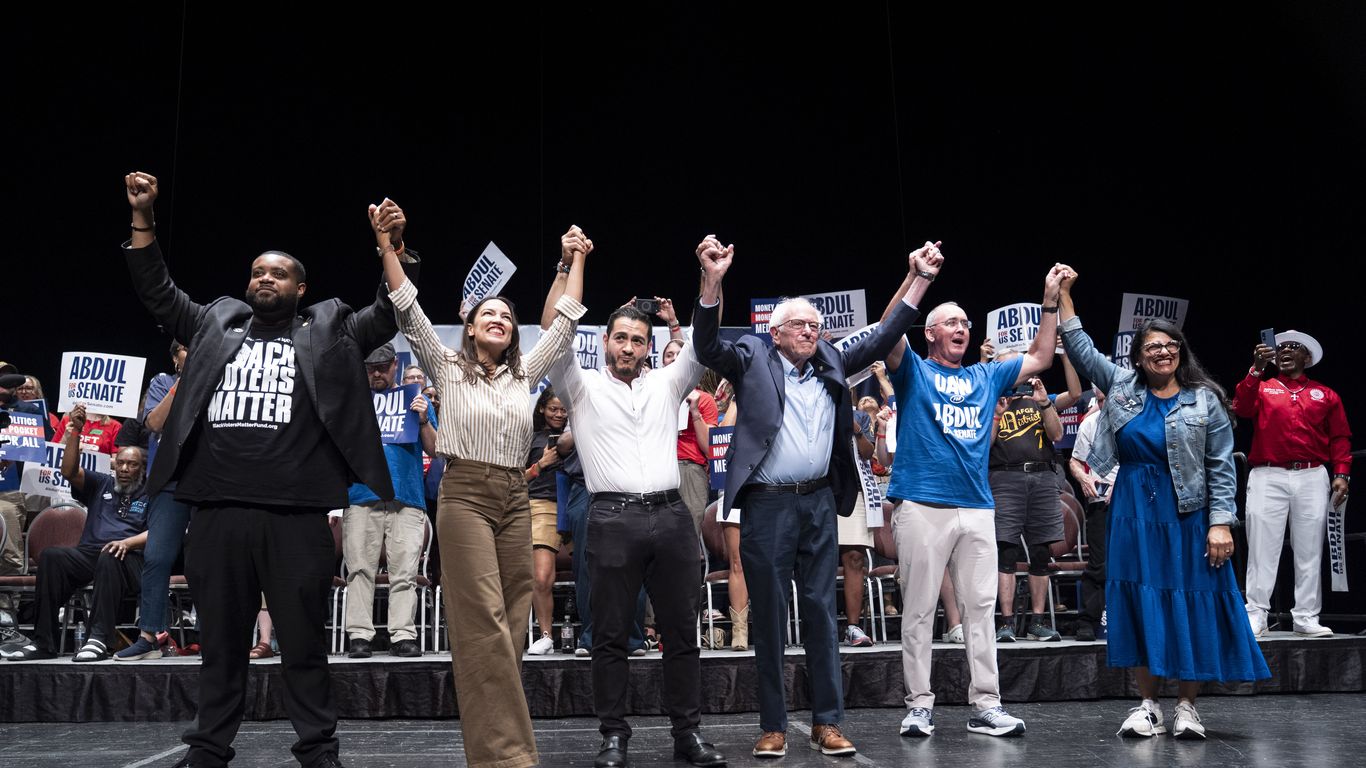
Image via Axios
Michigan’s progressive surge tests how far left energy can travel statewide
Michigan progressives woke up to a set of results that underscore both their organizational reach and the Democratic Party’s unsettled center of gravity. Abdul El-Sayed was leading an uncalled Democratic Senate primary, while Will Lawrence secured a House nomination in a battleground seat. The outcomes reflect a multi-front strategy: win marquee statewide contests, prove viability in swing districts, and build durable alliances with labor-aligned and movement groups.
The significance here is less about any single candidate and more about the coalition architecture behind them. Groups associated with the Democratic Socialists of America, Working Families Party-aligned networks, and labor energy in key pockets have been pushing to turn volunteer intensity into repeatable turnout operations. Critics inside the party argue that some progressive policy branding risks giving Republicans an easy attack line in general elections; supporters counter that the party’s base is demanding sharper contrasts on healthcare costs, housing, and corporate power.
Even with a banner night, the broader test is whether movement candidates can consistently win beyond friendly primaries and hold up under general-election messaging on taxes, policing, and economic competence. Michigan remains a national bellwether: if progressives can win statewide and remain competitive in battleground districts there, it strengthens the argument that the left flank is no longer just an urban phenomenon.
Source: Axios
Read the full story at Axios →

Image via NTD
Trump says Iran talks are going well as White House hints at a path to reopen the Strait
President Donald Trump said the U.S. and Iran are having “very good discussions,” and suggested a deal to reopen the Strait is close, remarks that come amid heightened concern over shipping disruptions and energy market volatility. While details were limited, the core claim points to a possible diplomatic off-ramp that could reduce immediate pressure on global supply chains and maritime insurance costs.
The immediate market and security implications are substantial. A reopened and reliably navigable chokepoint would calm oil and gas price spikes and reduce the risk of escalation involving U.S. naval forces and regional actors. But any arrangement that touches sanctions relief, prisoner issues, or enforcement mechanisms will draw scrutiny from Congress and U.S. partners, especially if the terms appear to trade long-term leverage for short-term calm.
Skeptics will note that optimistic talk has often outpaced durable agreements in prior U.S.-Iran episodes, and that implementation is where deals typically unravel. Still, even incremental confidence-building steps can be meaningful if they reduce miscalculation and restore predictable commercial traffic.
Source: NTD

Image via TheStreet
Palantir’s surge makes its valuation question harder, not easier
Palantir posted a blowout quarter that would make many high-multiple stocks look suddenly reasonable on operational performance alone. Revenue reportedly surged 93% year over year, with U.S. commercial sales also rising sharply, reinforcing the company’s argument that its software platform is becoming a default layer for enterprise AI deployment and government-adjacent analytics.
But the better the numbers get, the more the market’s focus shifts from “Can they grow?” to “How long can this pace last, and at what cost?” A near-triple-digit growth print raises expectations for repeat performances, which is difficult in lumpy, large-contract businesses. It also intensifies debate over how much of the acceleration is structural demand for AI-enabled tools versus timing effects, unusually large deals, or customer experimentation that may not translate into multi-year expansion.
For investors, the dangerous question isn’t whether Palantir is executing, but what the company has to prove next to justify premium pricing as growth inevitably normalizes. The next phase will be about margins, durability of commercial adoption, and whether the company’s story can hold up when the easy comps disappear.
Source: TheStreet
Read the full story at TheStreet →

Image via National Review
EPA stopgaps won’t solve the power crunch behind America’s data-center buildout
A temporary EPA “loophole” for data-center construction is being framed in some corners as a way to keep the AI boom on schedule, but the policy’s short-term nature may actually increase uncertainty. The central complaint from businesses is straightforward: patchwork guidance and temporary allowances don’t provide the multi-year clarity needed for permitting, financing, and grid interconnection planning.
The deeper constraint is physical and regulatory, not just environmental paperwork. Data centers need massive, reliable electricity, and the U.S. grid is already straining under rising demand, aging infrastructure, and slow build timelines for generation and transmission. A narrow EPA work-around doesn’t build gas plants, nuclear capacity, transmission corridors, or local acceptance for new infrastructure; it can also leave communities suspicious that rules are being bent for politically favored projects.
A more durable path would require clearer, stable rules and faster permitting across agencies, paired with realistic plans to expand firm power and transmission. If Washington wants AI competitiveness without constant emergency measures, it will need less improvisation and more long-horizon infrastructure governance.
Source: National Review
Read the full story at National Review →

Image via Fox Business
OpenAI settles DOJ claims over hiring process that allegedly sidelined U.S. applicants
OpenAI will pay $3.2 million to settle Justice Department allegations that it favored foreign workers over Americans in parts of its hiring process, according to the complaint. The DOJ allegations center on PERM-related roles that were allegedly not properly advertised on OpenAI’s careers site and required paper applications, a setup the government argues discouraged U.S. workers from applying.
The case lands amid a broader political and economic fight over what “skills shortages” really mean in the tech sector. Employers argue that specialized AI roles are hard to fill quickly and that immigration pathways are essential to staying competitive. Critics counter that some firms use process design and credential filtering to narrow the applicant pool, undercut wage pressure, and create a self-fulfilling narrative that domestic candidates aren’t available.
A settlement is not an admission of wrongdoing, but it is a warning flare for the industry: compliance and transparency in recruiting practices matter, especially when public trust in tech is already strained. For companies building frontier AI systems, the bar is higher, not lower, on demonstrating fair access to jobs and clean processes.
Source: Fox Business
Read the full story at Fox Business →
That’s the day’s split screen: politics tilting left in one battleground, diplomacy trying to unclog a global chokepoint, and an AI economy running into the unglamorous realities of power, permitting, valuation discipline, and hiring rules. We’ll be watching what holds up when the headlines fade.
— Brief Updates Editorial