Today’s Sponsor
Oil markets are shifting as Venezuela's disruption removes critical barrels while spare capacity shrinks. Supply pressure is building before headlines catch up — and smart traders are positioning now.
Our exclusive briefing reveals three energy stocks emerging from this supply shock, plus the key signals to monitor as this setup evolves. This is about preparation, not prediction.
Get the Free Oil Trading ReportBy following the links above, you're opting in to receive valuable updates from Wealthiest Investor News plus 2 bonus subscriptions. Your privacy is important to us. You can unsubscribe anytime. See our privacy policy for details.

Monday, July 13, 2026: A health-and-leadership moment for Senate Republicans, a jolt in Asian markets, a procedural fight over Congress’s calendar, and a dangerous escalation around the Strait of Hormuz.

Image via Axios
McConnell explains hospitalization after weeks offstage, questions about continuity remain
Sen. Mitch McConnell, the longtime Republican leader from Kentucky, addressed his recent hospitalization on Sunday, offering his first public explanation after a fall roughly four weeks ago that was followed by complications including pneumonia. His comments were aimed at tamping down speculation about the severity of the episode and the durability of his schedule in the weeks ahead.
The immediate political reality is that Senate leadership runs on predictability: floor timing, whip counts, and behind-the-scenes dealmaking suffer when the leader’s health status is unclear or communicated in fragments. Even if McConnell returns to full capacity quickly, the episode reinforces how closely the chamber’s day-to-day function is tied to a small number of senior figures, and how little formal redundancy exists when health events interrupt the chain of command.
✓ The Bottom Line: McConnell had to speak, and he did the right thing by putting a basic account on the record. But reassurance is not a substitute for transparency: the Senate is a governing institution, not a private board meeting, and prolonged ambiguity invites rumor and weakens public confidence. The practical fix is simple—clearer, regular disclosures about availability and delegation, so the work doesn’t hinge on guesswork.
📎 Axios

Image via The Hill
Medical examiner: Sen. Lindsey Graham died of aortic dissection tied to cardiovascular disease
Preliminary findings from the Washington, D.C., chief medical examiner’s office indicate Sen. Lindsey Graham died Saturday from an aortic dissection due to arteriosclerotic cardiovascular disease. The announcement provides an early medical explanation for a sudden death that quickly reverberated through the Senate and national politics.
Beyond the personal loss, Graham’s death sets in motion immediate institutional and political consequences: committee roles shift, a Senate seat vacancy triggers state succession procedures, and major national-security and judicial debates lose a prominent, long-serving voice. It also spotlights a reality Washington often skirts—this is an aging legislature operating under intense travel, stress, and schedule demands, and the public typically learns health details only after a crisis.
✓ The Bottom Line: The medical finding is a sober reminder that even well-connected public figures are not insulated from routine, preventable risk factors. Washington should treat this as more than a one-cycle headline: voters deserve clearer expectations about continuity, and lawmakers should normalize proactive health transparency rather than waiting for emergencies. The Senate, in particular, has an institutional interest in planning for the inevitable with more discipline.
📎 The Hill

Image via Bloomberg
South Korea’s stock swings hit crisis-era levels, rattling risk appetite across Asia
South Korean equities are experiencing their most extreme volatility since the 1998 Asian financial crisis, a notable escalation for one of the region’s key advanced markets. Big, fast price moves can be self-reinforcing: they tighten financial conditions, pressure leveraged investors, and raise the cost of capital just when companies need stability.
While the specific drivers can vary—rates, currency moves, geopolitics, sector concentration, and global growth fears—the signal is consistent: investors are reassessing risk, not just repricing a single stock or theme. For U.S. readers, Korea’s market is often an early barometer for global tech demand and cross-border capital flows, meaning the turbulence may show up in earnings guidance, supply-chain decisions, and broader market sentiment.
✓ The Bottom Line: Treat this as a real warning light, not a niche regional story. When volatility reaches historic highs, it usually reflects genuine uncertainty about growth and funding conditions—and those problems travel quickly through trade and finance. The sensible response for policymakers is steadier communication and for investors is tighter risk management, not heroic predictions about the exact bottom.
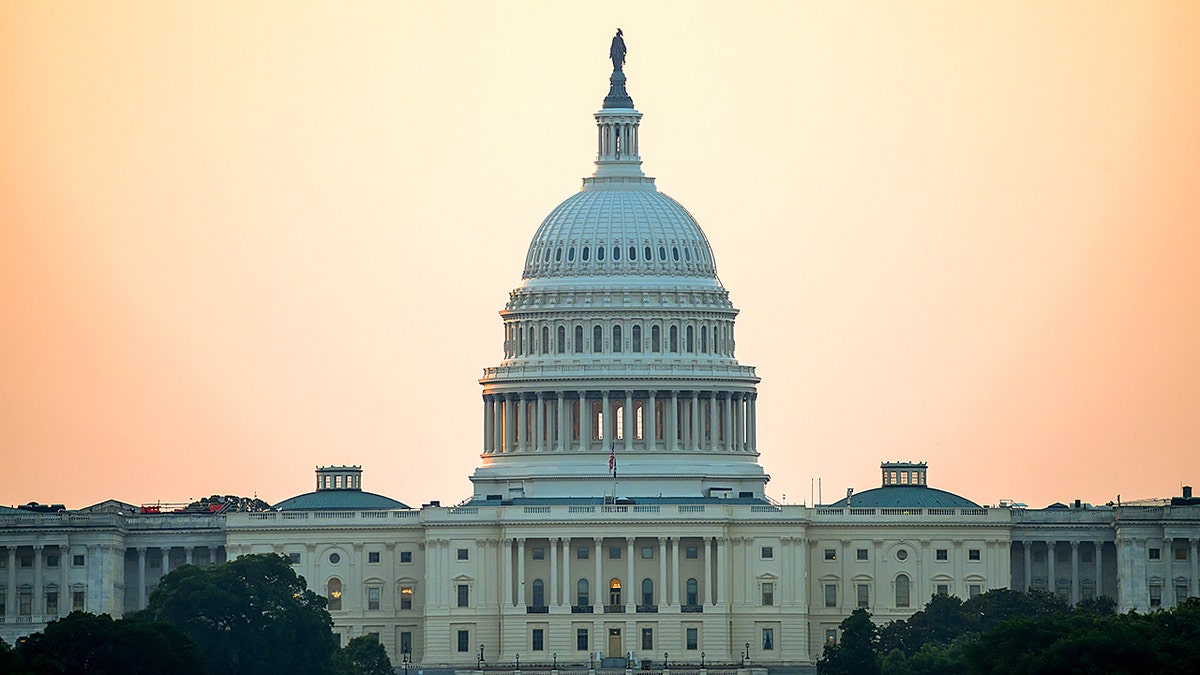
Image via Fox News
Rick Scott argues the Senate should work a full week as deadlines and voting rules collide
Sen. Rick Scott is pressing a familiar but politically pointed critique: Americans work five days a week, so the Senate should too—especially with major deadlines approaching and high-profile priorities like voter ID legislation still pending. He frames the issue as both fairness and urgency, arguing that a lighter Senate schedule contributes directly to rushed brinkmanship over funding and other must-pass items.
There’s a real structural tension here. Senators balance floor time, committee work, constituent travel, and fundraising, and leadership often uses limited floor days to control the agenda and manage intra-party disputes. But the public mostly experiences Congress through outcomes, and when deadlines are met through last-minute, unread omnibus deals, the “we weren’t in session” optics become a self-inflicted wound.
✓ The Bottom Line: Scott is right on the core point: fewer floor days too often means worse legislating—more crisis deadlines, less scrutiny, and bigger bills assembled behind closed doors. Still, more days only matter if they’re used for open amendment votes and genuine committee-to-floor work, not just procedural theater. If Congress wants trust, it should act like a full-time institution when the stakes are full-time.
📎 Fox News
U.S. and Iran trade strikes as Hormuz standoff raises the risk of a wider Gulf conflict
The U.S. and Iran exchanged new military strikes as tensions around the Strait of Hormuz intensified, with Iran launching attacks on American military bases in several Gulf states after a fresh wave of U.S. strikes. The escalation raises immediate concerns about force protection for U.S. personnel and the risk of miscalculation in a region where a single incident can trigger rapid, hard-to-control retaliation cycles.
The economic dimension is impossible to ignore: Hormuz is a critical chokepoint for global oil flows, and even limited disruptions can move prices quickly, feed inflation expectations, and complicate central-bank policy. Diplomatically, allies in the Gulf and Europe are likely to press for de-escalation pathways, but each additional strike makes off-ramps harder by elevating domestic political costs on all sides.
✓ The Bottom Line: The evidence suggests the most dangerous phase of this kind of confrontation is the middle—after initial strikes, before clear boundaries are established. The U.S. has a duty to defend its forces and deter attacks, but it also needs a credible, communicated objective beyond trading blows. Washington should pair military readiness with a visible diplomatic channel and clearer red lines, because energy markets and regional stability won’t wait for perfect messaging.
📎 CNBC
That’s the day’s essential mix: leadership and continuity at home, volatility abroad, and a Middle East escalation that can reach your gas bill fast. We’ll be watching for confirmation on Senate succession steps, any stabilization signals out of Seoul, and whether Hormuz sees de-escalation or a broader cycle of reprisals.
— Brief Updates Editorial