Today’s Sponsor
Fierce Investor's research team has spotted unusual activity on a NASDAQ stock flying under the radar — and their briefing drops in 48 hours. This could be one of the biggest potential breakout setups of the next 21 days.
Don't wait until it goes wide. Get the full briefing delivered straight to your inbox — before everyone else does.
Get the Free Briefing NowBy clicking the button above, you are automatically subscribing to Wealth Creation Investing in partnership with Fierce Investor. We respect your privacy. Unsubscribe at any time. Wealth Creation Investing Privacy Policy | Fierce Investor Privacy Policy
Neither Wealth Creation Investing nor Fierce Investor is a registered investment adviser or broker-dealer. This content is for informational purposes only and is not personalized investment advice. Past performance does not guarantee future results.

Wednesday, November 18, 2026: Consumers keep driving despite pricey fuel, the federal government faces fresh tech disruptions, Trump opens APEC with a high-stakes Putin-Xi meeting, Iran-linked attacks hit Gulf partners after US strikes, and Nvidia’s results steady jittery investors.
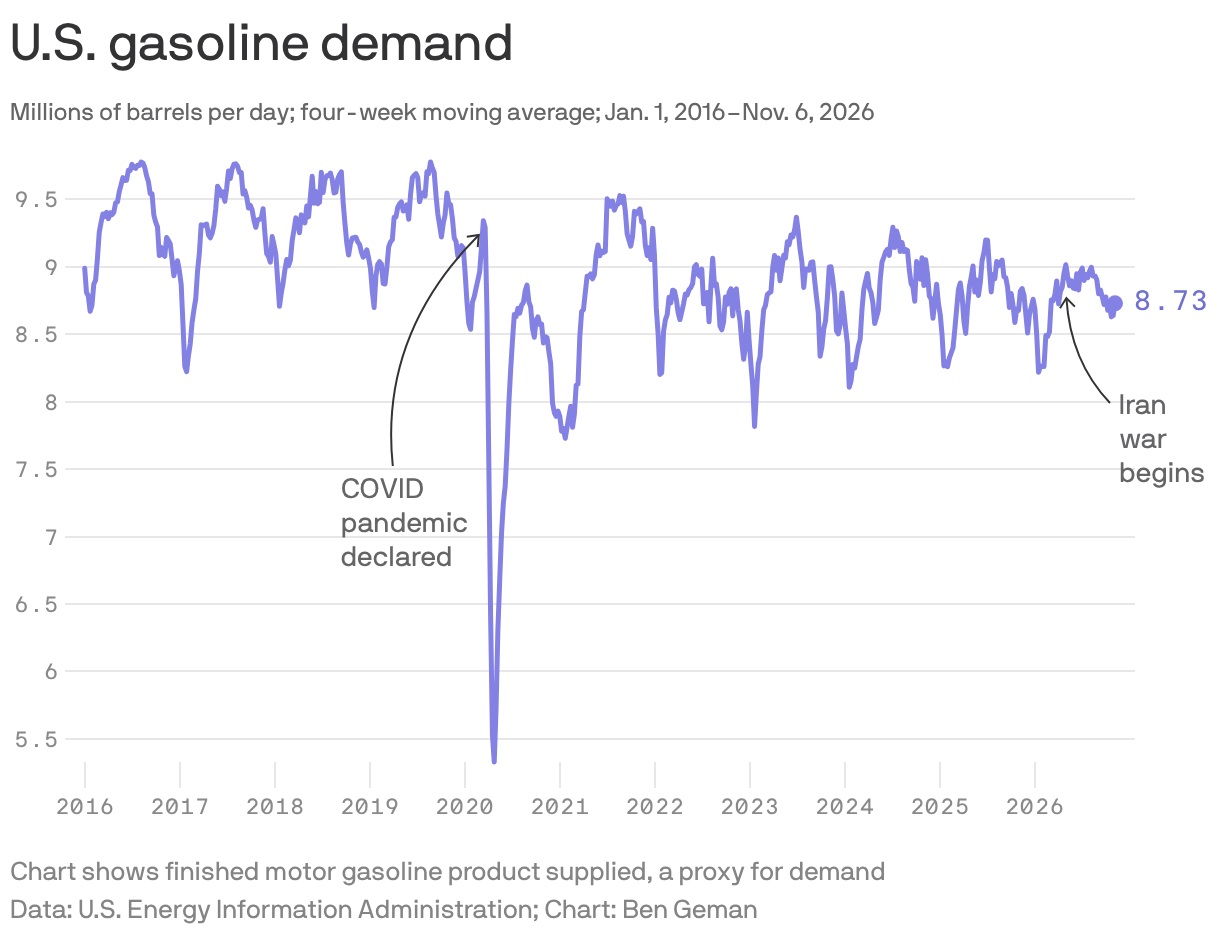
Image via Axios
Americans Keep Driving Even as Gas Stays High
Americans appear to be absorbing elevated gasoline prices rather than dramatically cutting back on driving. Recent demand trends suggest that, while high prices may sting household budgets and shape political attitudes, they are not translating into a broad pullback in miles traveled.
The practical reason is straightforward: a large share of driving is not optional. Commuting, school drop-offs, caregiving, and geographically spread-out errands make fuel demand relatively “sticky,” especially in regions with limited public transit. The result is a familiar pattern: consumers complain, adjust at the margins, and then keep the car-dependent routines largely intact.
The bigger implication is that high prices alone may not deliver the policy outcomes some advocates expect, whether that means lower emissions or a faster shift in consumption patterns. If the goal is durable demand reduction, the constraints are structural: housing patterns, job locations, transit availability, and vehicle efficiency matter more than a few months of pain at the pump.
✓ The Bottom Line: This is what “inelastic demand” looks like in real life: families can’t spreadsheet their way out of a commute. Politically, it means gas prices can still inflict anger without producing the behavioral change that would relieve the pressure. Over time, the smarter play is policy and investment that expand options, not moralizing about people who can’t realistically stop driving.
📎 Axios
Outage Wave Hits US Government Systems as Trump Plays It Cool
A wave of technology outages has reached parts of the US government, disrupting services and raising fresh questions about resilience across federal IT systems. Details varied by agency, but the broader picture is a familiar one: legacy infrastructure, vendor dependencies, and complex interconnections that can turn a single failure into a wider cascade.
President Donald Trump publicly downplayed the situation, saying all is “fine.” The political instinct to project calm is understandable, but the operational question is whether agencies can quickly isolate failures, communicate clearly to the public, and restore critical services without compounding the disruption.
Beyond immediate fixes, outages of this kind spotlight a continuing federal challenge: modernizing systems while maintaining continuity. The government’s IT footprint is enormous, procurement can be slow, and cybersecurity requirements add cost and friction. When outages occur, the public cares less about root-cause jargon and more about whether benefits, travel systems, tax services, and public safety tools work reliably.
✓ The Bottom Line: Saying “fine” doesn’t make it fine; it just delays credibility until the systems come back online. The country needs a serious, sustained modernization push with accountability for vendors and agencies alike, not performative reassurance. Calm messaging is good, but transparency and measurable recovery timelines are better.
📎 Reuters
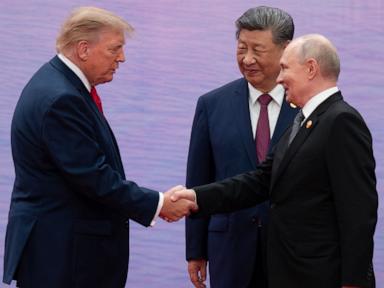
Image via ABC News
Trump Opens APEC With Putin and Xi in the Mix—and a Trilateral Ahead
President Trump arrived at the APEC summit and greeted Russia’s Vladimir Putin and China’s Xi Jinping as the gathering begins, setting the stage for unusually high-stakes diplomacy. Trump is scheduled to participate this week in what is being billed as the first-ever trilateral meeting with Putin and Xi, a format that will draw intense scrutiny from allies and adversaries alike.
APEC traditionally centers on trade, investment, and regional economic coordination, but the geopolitical overlay is unavoidable: the US-China rivalry, the ongoing Russia-West standoff, and the security architecture of the Indo-Pacific. For the administration, the optics of engagement can be a feature rather than a bug—especially if Trump believes personal diplomacy can unlock deals or de-escalation.
Still, the strategic risks are real. Any perceived concessions, mixed messages to partners, or signaling that weakens alliance cohesion could echo well beyond the summit. Even without formal agreements, what leaders say, what they don’t say, and how they frame “stability” can shift expectations in markets and capitals across Asia.
✓ The Bottom Line: Direct talks aren’t inherently bad; the US should be able to engage rivals without drama. But trilateral stagecraft with Putin and Xi is high-risk because symbolism can outrun substance, and adversaries often treat photo ops as strategic wins. If the administration wants credit, it should pair engagement with clear red lines and visible support for allies, not vague rhetoric about “great relationships.”
📎 ABC News

Image via BBC
Gulf Flashpoint: Kuwait Says It Repelled Iranian Attack After US Strike on Qeshm
Kuwait says it repelled what it described as the first Iranian attack in two months, coming after a US air strike on Iran’s island of Qeshm in the Gulf. Bahrain also reported it was attacked following the US strike, pointing to a widening set of retaliatory actions and counter-actions in a region where escalation can move fast.
The immediate concern is miscalculation. The Gulf’s tight geography—dense shipping lanes, critical energy infrastructure, and proximate military assets—means even limited strikes can trigger broader consequences, including threats to maritime traffic and energy markets. Regional states, many of which host US forces or cooperate closely with Washington, are often the first to absorb the blowback.
The strategic question is what comes next: whether the US and partners can deter further attacks without stumbling into a tit-for-tat cycle that hardens into a wider conflict. Diplomacy, defensive posture, and credible deterrence have to operate together, especially when domestic politics in multiple capitals can reward escalation over restraint.
✓ The Bottom Line: If Kuwait and Bahrain are taking fire after US action, that’s a sign the retaliation ladder is already in play. Deterrence can be necessary, but it has to be paired with a clear off-ramp and robust regional defense coordination, otherwise partners pay the price while Washington debates the next move. The priority should be protecting shipping and critical infrastructure while narrowing, not broadening, the target set.
📎 BBC
Tech Stocks Lift at the Open as Nvidia Reassures Investors
US tech stocks rose at the open after Nvidia’s latest results reassured investors, helping steady sentiment around a sector that has been living and dying by expectations. With AI spending and chip demand at the center of the market narrative, Nvidia’s performance tends to function as a proxy for broader confidence in enterprise investment and cloud buildouts.
The rally reflects relief as much as optimism. Investors have been watching for signs that AI-related capital expenditures could cool, that supply constraints could bite, or that competition could erode margins. Positive signals from Nvidia can temporarily quiet those worries, at least until the next batch of guidance and macro data resets the conversation.
Still, this is not a one-company economy, even if it sometimes trades like one. Concentration risk remains high across major indices, and a tech bounce does not erase questions about valuations, rates, and whether productivity gains will arrive fast enough to justify today’s multiples.
✓ The Bottom Line: Nvidia easing nerves is meaningful, but it’s not a permission slip to ignore valuation and concentration risk. Investors should treat these pops as data points, not destiny: strong results can coexist with an overheated trade. The healthiest outcome would be broader earnings growth beyond a handful of AI bellwethers.
That’s the file for today. We’ll be watching whether the Gulf situation stabilizes, what actually comes out of APEC beyond the optics, and whether the next round of outages forces Washington to move from patching to rebuilding.
— Brief Updates Editorial