Today’s Sponsor
Oil markets are shifting as Venezuela's disruption removes critical barrels while spare capacity shrinks. Supply pressure is building before headlines catch up — and smart traders are positioning now.
Our exclusive briefing reveals three energy stocks emerging from this supply shock, plus the key signals to monitor as this setup evolves. This is about preparation, not prediction.
Get the Free Oil Trading ReportBy following the links above, you're opting in to receive valuable updates from Wealthiest Investor News plus 2 bonus subscriptions. Your privacy is important to us. You can unsubscribe anytime. See our privacy policy for details.

Tuesday, July 7, 2026 — A fair, well-rounded look at today’s news, with the context that matters and the implications that last.
Image via AP News
Rahm Emanuel Plans Tel Aviv Broadside as U.S. Politics Tilt on Israel
Former Obama White House chief of staff Rahm Emanuel is set to deliver a speech in Tel Aviv that, according to reporting, will sharply criticize Israeli Prime Minister Benjamin Netanyahu—an unusually direct message from a prominent Democratic figure on Israeli soil. The moment is notable not because U.S.-Israel ties are suddenly collapsing, but because the political center of gravity in Washington—especially inside the Democratic coalition—has moved toward more open skepticism of Netanyahu’s government and its conduct of the war and broader regional policy.
Emanuel’s planned remarks land in a U.S. environment where support for Israel remains strong in many quarters (including among congressional leadership and much of the GOP), yet where debate has hardened over civilian harm, settlement policy, and whether Netanyahu’s coalition is steering Israel away from liberal democratic norms. That shift is now producing a clearer split: long-standing support for Israel’s security on one side, and growing willingness to publicly confront Israel’s sitting leadership on the other.
Source: AP News
Read the full story at AP News →
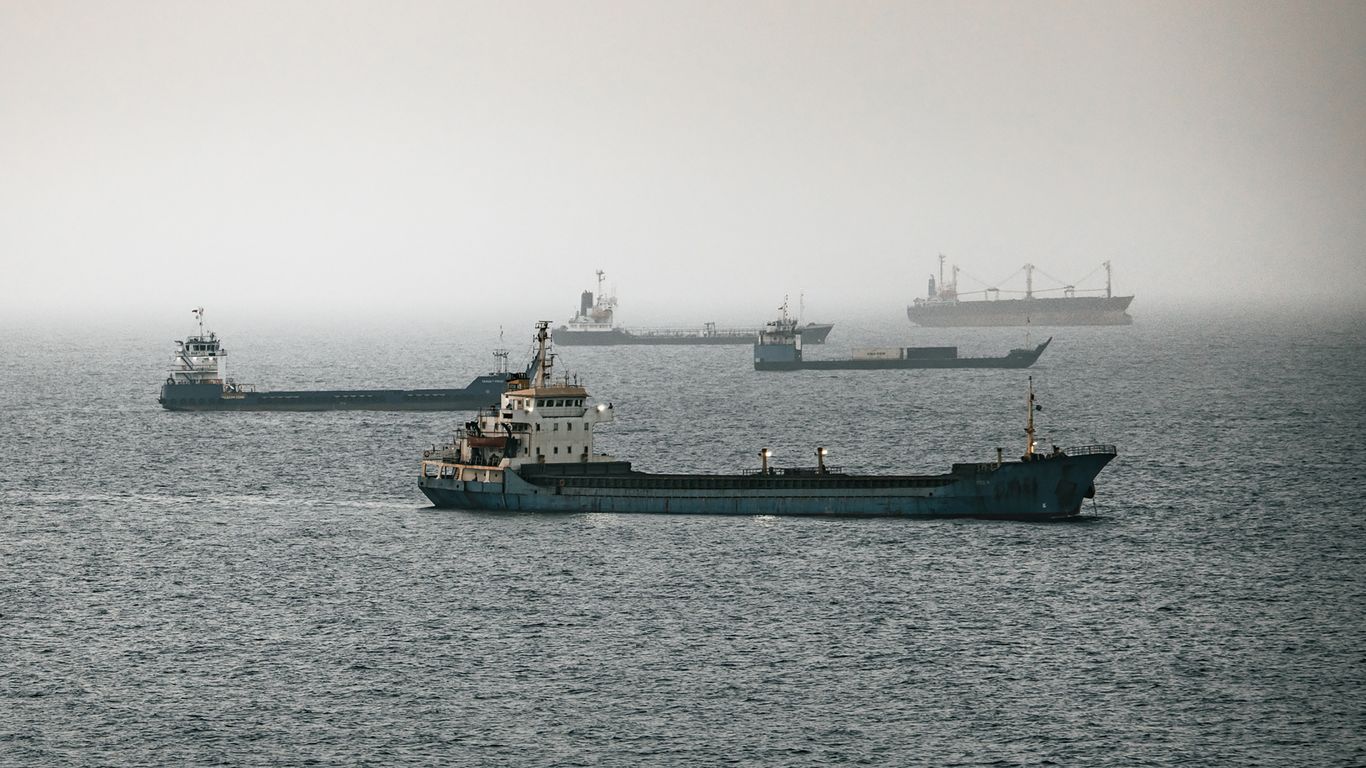
Image via Axios
Iran Reportedly Fires on Ships in Hormuz, Raising Energy and Escalation Risks
Iran’s military fired at least two missiles at commercial ships transiting the Strait of Hormuz Monday night, according to two U.S. officials cited by Axios, ending what had been described as a lull in activity. The alleged attacks underscore how quickly the world’s most important energy chokepoint can shift from “priced in” geopolitical risk to immediate market and military concern.
Hormuz is narrow, crowded, and strategically unforgiving: a large share of global seaborne oil and LNG moves through it, and even limited disruptions can trigger higher insurance costs, rerouting, and price spikes. For Washington and Gulf partners, the challenge is responding in a way that protects shipping and deters repeat strikes without stepping into a broader regional conflict spiral—especially when attribution, intent, and proportionality can be contested in real time.
Source: Axios
Read the full story at Axios →

Image via Bloomberg
Foreign Money Is Drifting Back to India—Partly Because It Didn’t Overplay the AI Boom
Foreign investors are warming again to India’s stock market, with Bloomberg arguing that India’s relative lack of heavy, AI-themed equity exposure has turned into a modest advantage. After global portfolios chased concentrated “AI winners” elsewhere, some investors now appear to be looking for markets where earnings narratives hinge more on domestic demand, manufacturing, services exports, and financial-sector depth than on a handful of expensive, momentum-driven tech names.
The pitch, in practice, is diversification with a macro tailwind: India’s growth story is still tied to infrastructure build-out, formalization, and consumption—and to whether reforms and investment keep pace with demographic expectations. The risk case hasn’t disappeared (valuation pockets, policy uncertainty, and sensitivity to global energy prices and U.S. rates), but the renewed interest suggests some managers prefer a broader earnings base over single-theme exposure as markets reassess what “AI-driven” profits can realistically deliver.
Source: Bloomberg
Read the full story at Bloomberg →
Trump Meets NATO Leaders in Turkey With Allies Watching His Commitments Closely
President Donald Trump is set to meet NATO counterparts in Turkey for a two-day summit, with discussions expected to include Iran, Ukraine, and other major security priorities, according to NBC’s TODAY. The gathering comes with a familiar undercurrent: allied leaders are weighing day-to-day cooperation against persistent questions about how durable U.S. commitments are under Trump’s “burden-sharing” approach.
For NATO, the immediate agenda—Ukraine support, deterrence posture, air and missile defense, and regional stability—runs into a political reality: the alliance functions best when Washington’s commitments are predictable and when European capitals can plan years ahead on spending and force posture. Trump’s team has repeatedly argued that firmer demands for allied defense spending strengthen NATO; critics counter that public doubt about Article 5 and U.S. staying power invites adversaries to test the alliance.
Source: TODAY (NBC)
Read the full story at TODAY (NBC) →

Image via ABC News
Blasts Reported in Damascus as Macron Makes High-Profile Syria Visit
Syrian state media reported explosions in Damascus during a visit by French President Emmanuel Macron, according to ABC News. Macron’s trip is diplomatically significant on its own: he is described as the first major Western leader to visit Syria since the fall of former President Bashar al-Assad in December 2024, a watershed event that reset the regional and international debate over recognition, reconstruction, and security guarantees.
The reported blasts highlight the central problem facing any post-Assad engagement strategy: a capital city appearance can project momentum, but it doesn’t erase fragmentation on the ground, unresolved militia networks, or the risk of high-visibility attacks meant to embarrass new authorities and deter foreign investment. For European governments, the question is how to balance outreach—potentially aimed at stability, counterterrorism, and refugee-return pathways—against the danger of legitimizing weak institutions that cannot reliably secure their own capital.
Source: ABC News
Read the full story at ABC News →
That’s the file for today. We’ll be watching Hormuz security developments, the NATO readout from Turkey, and any verified details on the Damascus explosions as they emerge.
— Brief Updates Editorial