Today’s Sponsor
History shows a clear pattern: the investors who recognized the exact inflection point in the dot-com boom pocketed 400–800% gains in 18 months. Those who spotted the same moment in cloud computing saw 300–600% returns. Based on 50 years of market data, that same moment is happening right now — and the acceleration phase has already begun.
This free 7-page report reveals where we are in the current megatrend cycle, why the next 18 months are critical, and how to position yourself before the window closes. Don't be the investor who enters too late.
Get the Free ReportBy clicking 'Get the Free Report' you are automatically subscribing to Darwin Investor Network and will receive a free subscription to the Chaikin PowerFeed newsletter. Unsubscribing is easy. Privacy Policy

A fast, fair tour of the day’s biggest developments: new unanswered questions after strikes in Iran, a controversial staffing move at a federal elections agency, fresh rhetoric about assassination threats, a mid-air safety scare, and Beijing’s plan to blunt AI-driven disruption.
Image via Associated Press
Unclaimed strikes hit Iran after US action, complicating an already explosive picture
A new round of airstrikes hit targets in Iran after earlier US attacks, but responsibility for the latest strikes was not immediately clear, injecting fresh uncertainty into a conflict already defined by rapid escalation and mixed signaling. The lack of a clear claim left analysts and officials parsing flight patterns, munitions effects, and public statements for clues, while markets and regional militaries watched for signs the confrontation could widen.
The strategic problem is straightforward: ambiguity can deter, but it can also mislead. If Tehran cannot confidently identify the actor, it may retaliate broadly or on imperfect assumptions, raising the risk of miscalculation. At the same time, any party seeking to pressure Iran while limiting blowback may see plausible deniability as useful, at least temporarily. Either way, the episode underscores how quickly the region can move from discrete strikes to a cycle of retaliation when attribution is murky and political incentives favor toughness.
Source: Associated Press
Read the full story at Associated Press →

Image via The Hill
Trump removes Democratic members of the Election Assistance Commission
President Trump fired the remaining Democratic members of the US Election Assistance Commission, according to the White House, a move that immediately raised questions about the agency’s independence and the practical impact on election administration ahead of upcoming contests. The EAC is a small federal body, but it plays an outsized role in setting voluntary voting system guidelines, administering certain election-related grants, and serving as a national reference point for best practices.
Supporters of the move argue the president should be able to align federal election policy leadership with his administration’s priorities, particularly on security, voter confidence, and administrative efficiency. Critics counter that the EAC was designed to be bipartisan for a reason, and that abrupt removal of commissioners risks turning technical election administration into a partisan battlefield. The bigger story here is less about one commission’s day-to-day work and more about the precedent: whether independent or quasi-independent governance structures can function as intended when staffing becomes a direct extension of presidential politics.
Source: The Hill
Read the full story at The Hill →
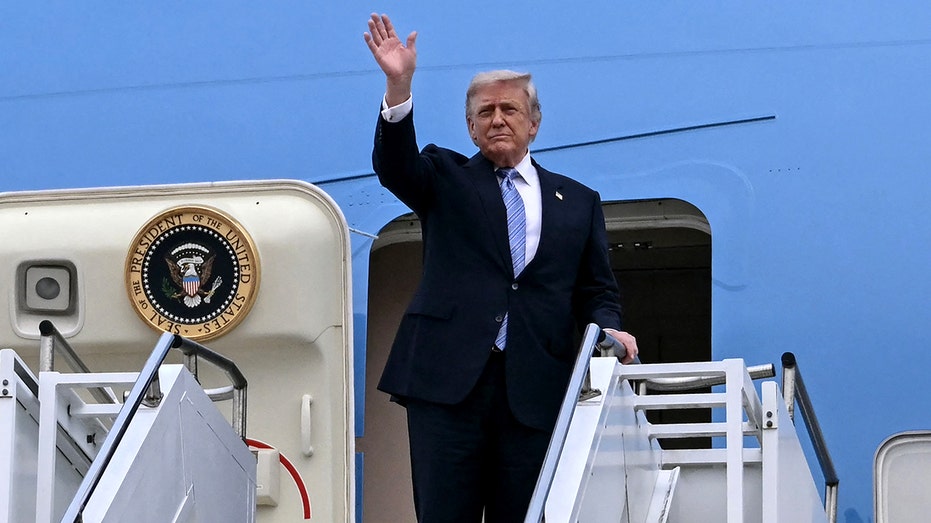
Image via Fox News
Trump says Iran has him in its sights as conflict talk revives assassination worries
President Trump said he is Iran’s “No. 1” target as renewed conflict and sharp rhetoric reignited concerns about assassination plots and retaliatory threats. The comments, delivered in the context of heightened tensions and ongoing security anxieties around senior US officials, reflect a persistent reality: when the US and Iran approach open confrontation, threats to prominent political figures become part of the strategic messaging on all sides.
There is a difference between credible, specific intelligence and broad, politically charged warnings, and that distinction matters for public trust and for how agencies allocate protective resources. Still, the underlying risk environment is not theoretical; US officials have long treated Iranian-linked retaliation as a serious concern, particularly after major escalatory events. The practical implication is that security posture tightens, travel and event planning becomes more restrictive, and public discourse can become more combustible as perceived threats are folded into domestic political narratives.
Source: Fox News
Read the full story at Fox News →

Image via BBC News
Ryanair passenger injured after window incident prompts renewed scrutiny of cabin safety
A Ryanair passenger received medical treatment after an incident on a Malta Air flight, owned by Ryanair, in which passengers reported a man was nearly pulled toward or out of a window during the flight. While the precise mechanics were still being clarified, the accounts drew immediate attention because cabin pressurization and structural integrity issues are among the most serious in-flight hazards, even when they do not rise to the level of a full decompression emergency.
Aviation investigators typically focus quickly on a few core questions: whether a window or surrounding panel failed, whether a passenger interfered with an exit or window assembly, and how crew procedures were applied in the moments that followed. For travelers, the incident is a reminder that modern commercial aviation remains exceptionally safe overall, but that rare failures can be dramatic and dangerous. For airlines, even a one-off event can bring reputational and regulatory consequences, including inspections, maintenance reviews, and renewed emphasis on passenger compliance and crew training.
Source: BBC News
Read the full story at BBC News →

Image via South China Morning Post
China moves to blunt AI-driven inequality with wage reforms and higher pay targets
China is prioritizing income growth and wage-distribution reforms as part of a broader effort to cushion its job market against AI-driven disruption, including measures aimed at lifting salaries and narrowing pay gaps. The push reflects an increasingly common policy concern: as automation and AI tools raise productivity, the gains can concentrate among high-skill workers and capital owners unless wages, training, and labor mobility keep pace.
Beijing’s approach appears to blend economic management with social stability goals. Higher wage floors and narrower gaps can support consumption, but they can also pressure employers, especially in export-oriented and low-margin sectors already facing weak global demand and domestic competition. The key question is implementation: whether reforms are paired with productivity improvements, reskilling pipelines, and a business environment that can sustain higher compensation without accelerating layoffs or offshoring. If China can thread that needle, it could soften the social shock of AI adoption; if not, the policy could become another cost burden in an already uneven recovery.
Source: South China Morning Post
Read the full story at South China Morning Post →
That’s it for today. We’ll keep an eye on what’s knowable, what’s still being spun, and what actually changes the trajectory.
— Brief Updates Editorial