In partnership with

It's time to set up your holiday streaming campaign

Are you ready to reach holiday shoppers on CTV? For many streamers, the season is already underway.
Last year, according to Roku internal data, holiday content searches on Roku saw an 86% increase during October. And in November, those searches rise an average of 39% weekly. This surging holiday spirit is mirrored by consumer activity, as about half of Roku streamers shopped Black Friday and Cyber Monday deals in 2025.
Meeting those shoppers is easier than you might think. Begin with the seasonal outcome you hope to drive: awareness, online sales, leads, store visits, or another measurable goal. From there, define your audience, upload your creative, set the budget and campaign dates, and establish measurement before launching. You can even create a shoppable ad unit that lets streamers buy with a click of their remote.
Our holiday playbook offers a month-by-month guide to reaching shoppers during this all-important time of year.
First-time spenders get a $5,000 match on the first $5,000 spent with code BEEHIIV5K. Terms apply.

Huang back at the helm; Ukraine claims another long-reach maritime hit as talks restart; U.S. widens a sensitive chip probe; Democrats set debate ground rules; California braces for rare surf; Treasurys remind traders how fast fear can overwhelm math.
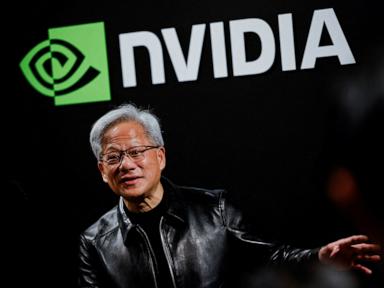
Image via ABC News
Nvidia reinstates Jensen Huang as CEO, signaling stability amid AI-era scrutiny
Nvidia said Monday that it has reinstated Jensen Huang as president and CEO, a move that immediately reframes the company’s posture as it navigates the most consequential period in its history. Nvidia has become a central supplier to the AI boom, and executive continuity matters not just for strategy but for customer confidence, regulator attention, and investor expectations around execution.
The announcement lands at a moment when the semiconductor industry is dealing with unusually high stakes: geopolitics, export rules, hyperscaler concentration, and intensifying competition from AMD, Intel, and a growing set of in-house silicon efforts at Big Tech firms. Bringing Huang back formally telegraphs a preference for proven leadership, especially as Nvidia balances near-term demand management with longer-term platform bets in software, networking, and next-generation accelerators.
What investors will watch next is not the title itself, but the follow-through: whether governance is clearly explained, whether succession planning is credible, and how Nvidia communicates risk around supply chain constraints and policy headwinds. In a market that can swing on a single guidance line, the company’s ability to pair charismatic leadership with disciplined disclosure may matter as much as product roadmaps.
✓ The Bottom Line: This looks like a straightforward bet on steadiness at a time when Nvidia can’t afford mixed signals. Huang is closely identified with Nvidia’s execution culture, and in a sector where credibility is currency, reinstating him likely calms more nerves than it raises. The key question is governance: investors should demand clarity on what changed and how the board is ensuring continuity beyond any one person.
📎 ABC News
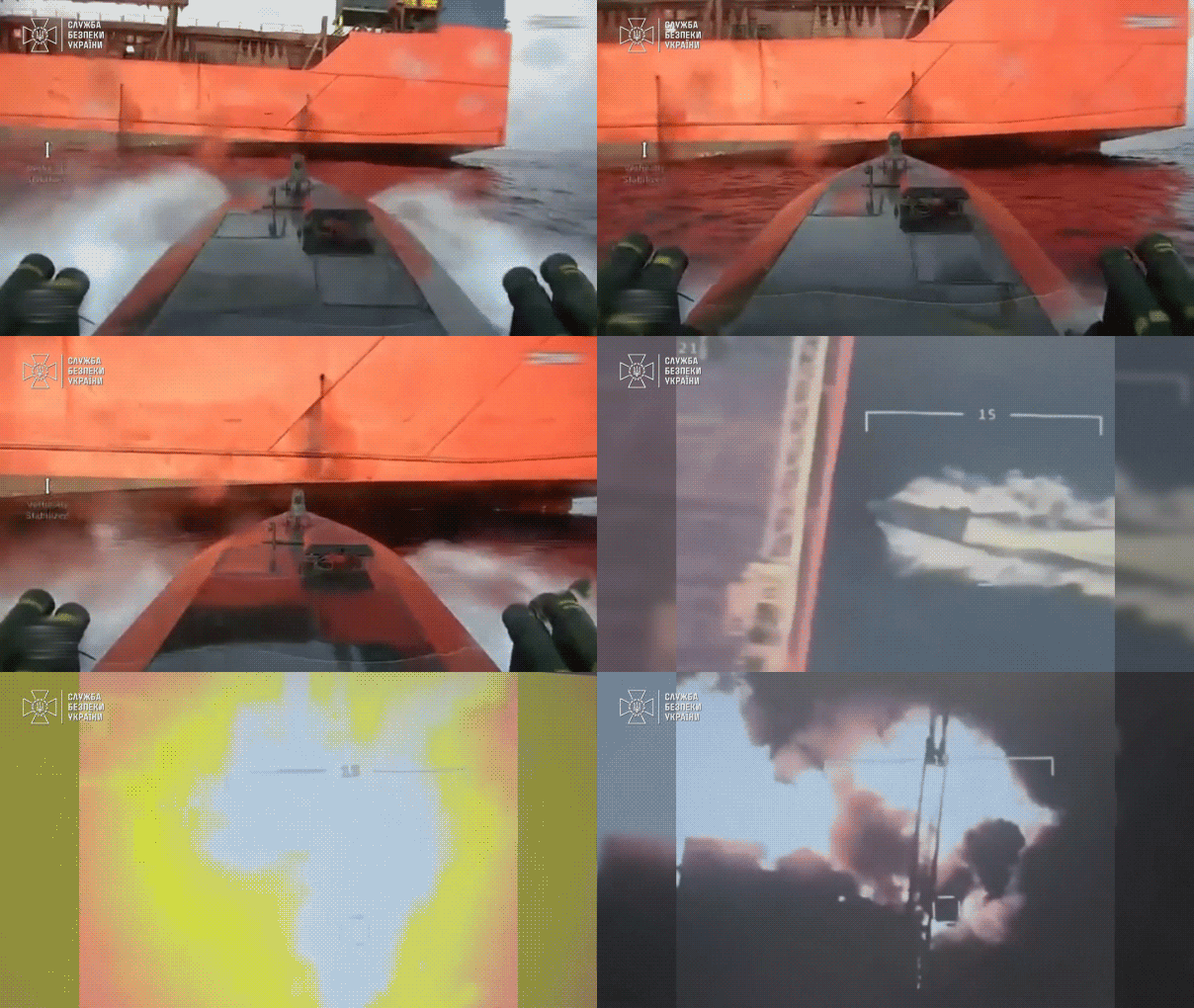
Image via Fox News
Zelenskyy touts drone strike sinking Russian corvette off Libya as talks restart
Ukrainian President Volodymyr Zelenskyy released video he says shows Ukrainian naval drones sinking Russia’s corvette Merkury off the coast of Libya, calling it an "exemplary" operation. The claim, if accurate, would underscore Ukraine’s ability to project force well beyond the Black Sea and complicate Russian naval planning across the broader Mediterranean.
The strike lands as Russia-Ukraine peace talks reportedly resume after a nine-month pause, adding an immediate political layer: Kyiv wants leverage, and Moscow wants to avoid appearing vulnerable. Russia has not been presented here with independently verified details, but Ukraine has repeatedly used low-cost maritime drones to damage or destroy higher-value Russian naval assets, shifting the risk calculus at sea.
The wider implication is that the conflict’s geography keeps expanding, even when diplomacy restarts. If Ukraine can reliably hit Russian ships far from the main theater, expect Russia to push harder for naval and drone-related limits in any negotiation, while Ukraine argues that such capabilities are defensive deterrence rather than escalation.
✓ The Bottom Line: This looks like a classic example of asymmetric warfare paying dividends: cheap systems forcing expensive adaptations. If the sinking is confirmed, it strengthens Kyiv’s bargaining position and further undercuts the idea that Russia can safely operate wherever it chooses. Peace talks can proceed, but they’re not happening in a vacuum; leverage still comes from demonstrated capability.
📎 Fox News
U.S. widens Nvidia-chip investigation to Megaspeed and executive Alice Huang
U.S. investigators are probing chip-related firm Megaspeed and executive Alice Huang, after reporting indicated a former associate of Huang’s was "deeply involved" in the company’s activities, according to CNBC. The inquiry sits in the sensitive overlap of advanced semiconductors, export controls, and potential evasion routes at a moment when Washington is aggressively tightening the perimeter around leading-edge AI chips.
The Nvidia connection matters because the most capable chips are now treated as strategic assets, not just commercial products. Any case that suggests front companies, intermediaries, or concealed end users will draw intense scrutiny, and it can quickly broaden beyond one firm into networks of distributors, shell entities, logistics providers, and financing.
For markets and the tech sector, the risk is less about one headline and more about the direction of travel: compliance burdens rise, transactions slow, and firms face growing pressure to prove clean counterparties. Expect more subpoenas, more corporate internal reviews, and more friction in global chip flows, even for companies trying to operate by the book.
✓ The Bottom Line: The U.S. is right to investigate aggressively here because export-control regimes only work if enforcement is real and visible. But regulators should be careful not to treat every complex supply chain as presumptively criminal; clarity and due process matter for legitimate commerce. The signal to the industry is unmistakable: if you can’t explain your customers, you probably shouldn’t have them.
📎 CNBC
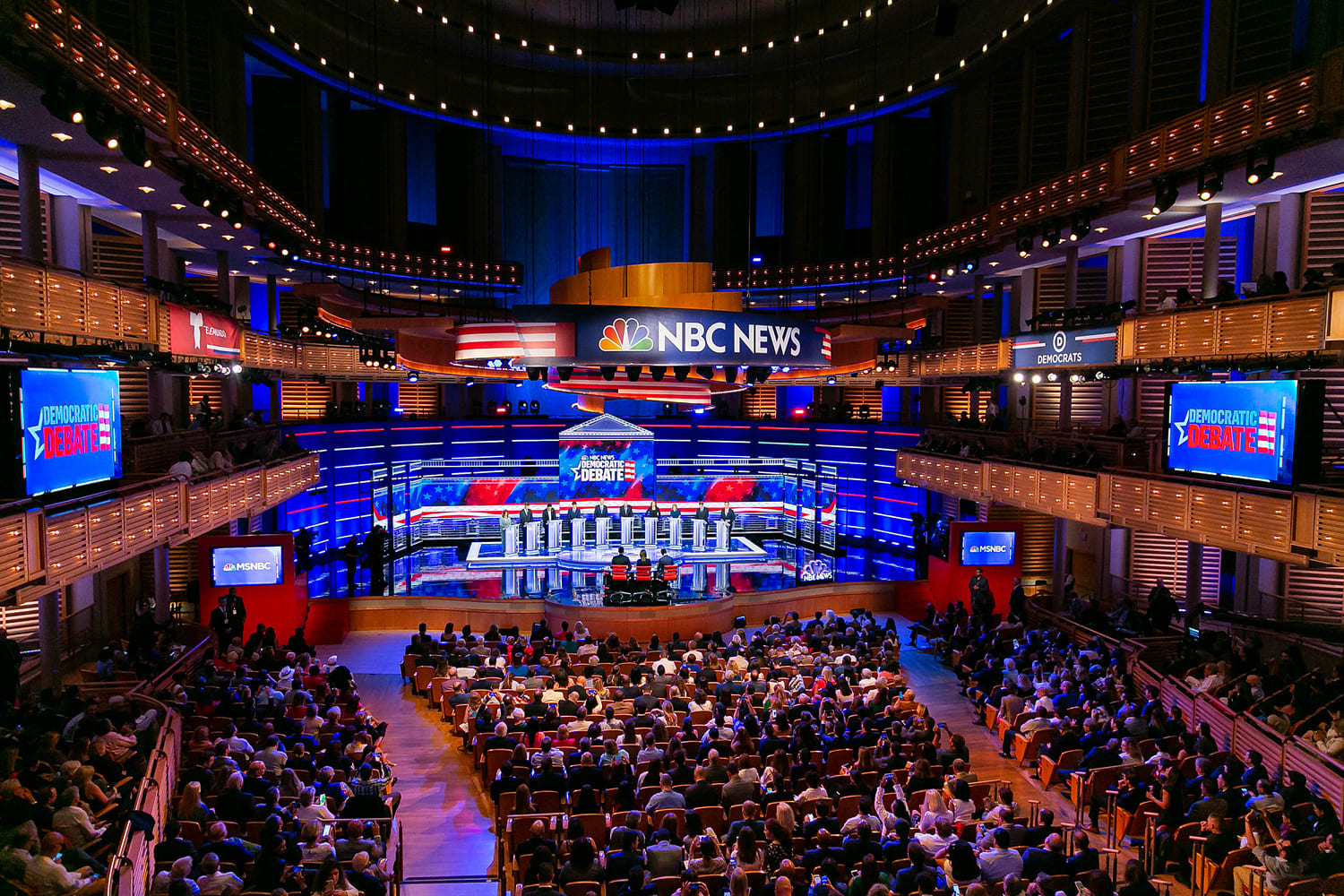
Image via NBC News
DNC lays out 2028 primary debate framework, aiming for order after past chaos
The Democratic National Committee has set broad rules for the party’s 2028 presidential primary debates, including a plan to hold 12 debates next year and in 2028, NBC News reports. The move is designed to impose structure early, establish participation thresholds, and avoid a late scramble over formats, qualifying standards, and scheduling.
Debate rules are never just procedural; they shape who gets oxygen. A higher debate count can benefit lesser-known candidates by giving them repeated national exposure, while tougher qualification rules can winnow the field and protect frontrunners from overcrowded stages. Democrats are also managing intra-party tensions from recent cycles, balancing the desire for competitive vetting with the fear that protracted infighting weakens the eventual nominee.
The practical question is whether the rules will be stable and consistently enforced when the incentives change. Parties often promise transparent thresholds, then face pressure to make exceptions when a favored candidate struggles or when donors and activists want different matchups.
✓ The Bottom Line: More structure is good, and 12 debates is plenty to test candidates without turning the primary into an endless reality show. The real credibility test is whether the DNC sticks to its standards when it’s politically inconvenient. If rules are flexible for insiders and rigid for outsiders, voters notice, and the party pays a trust tax.
📎 NBC News

Image via The Guardian
California shoreline braces for biggest surf in years as hazard warnings spread
California coastal communities were on alert this week as powerful swells brought some of the biggest waves in years, with reports of waves exceeding 9 meters, according to The Guardian. Officials issued multiple hazard warnings, urging people to stay back from the waterline and warning of rip currents, sneaker waves, coastal flooding, and beach erosion.
Events like this expose the gap between “weather” and “infrastructure.” High surf can overwhelm seawalls, damage piers, flood low-lying roads, and endanger first responders when rescues become necessary. It also stresses coastal economies that rely on open beaches and safe access, even as many communities grapple with longer-term coastal change and insurance pressures.
The immediate priority is basic safety and compliance with closures, but local governments also face recurring questions: where to harden infrastructure, where to retreat, and how to fund it. With development pinned close to the shoreline in many places, even rare extremes can become financially routine.
✓ The Bottom Line: This is a moment for plain common sense: coastal warnings exist because the ocean can kill you quickly and without drama. California also needs to get more serious about risk-based coastal planning, not just emergency messaging when the surf spikes. The politics of shoreline development are hard, but physics is harder.
Treasury market’s ‘haven’ rush temporarily overwhelms ugly bond fundamentals
A sharp stock selloff sparked a “haven trade” into U.S. Treasurys this week, pushing price action that, as Wolf Street put it, briefly made fundamentals look irrelevant. In risk-off moments, investors buy what they believe they can sell instantly, and Treasurys remain the world’s default liquidity instrument, even when long-run fiscal and inflation questions loom.
But the underlying bond-market pressures haven’t gone away: inflation risks, heavy Treasury issuance, and the ongoing reality that higher yields mean higher interest costs for the government. When fear subsides, those fundamentals tend to reassert themselves through term premiums, auction demand, and broader expectations about growth and prices.
The takeaway for investors is that short-term flows can dominate, but they don’t rewrite the balance sheet. Volatility driven by positioning and panic can create tactical opportunities, yet it can also lure people into extrapolating a one-week move into a new durable trend.
✓ The Bottom Line: The “flight to safety” trade is real, but calling Treasurys a clean refuge ignores the supply story and the inflation hangover. The market can look irrational for days or weeks, then snap back to the uncomfortable math of deficits and debt service. If you’re investing off fundamentals, this is a reminder to separate short-lived flow shocks from durable rate regimes.
That’s Brief Updates for Monday. We’ll be watching for confirmation on the reported naval strike, any formal charges or sanctions in the chip probe, and whether this week’s bond move holds once the fear bid fades.
— Brief Updates Editorial