Today’s Sponsor
With government debt soaring and inflation still biting, smart investors aren't waiting for volatility to hit — they're preparing now. The Gold Wealth Blueprint breaks down exactly how gold has historically shielded portfolios during periods of fiscal strain and market uncertainty.
Inside, you'll discover why gold moves differently than paper assets, how to use it as a practical hedge, and how to size your exposure without overcommitting. It's concise, actionable, and free — but don't sit on it.
Get the Free Gold Wealth BlueprintBy following the link above, you're choosing to opt in to receive insightful updates from Investor News + 2 free bonus subscriptions. Your privacy is important to us. You can unsubscribe anytime. See our privacy policy for details.

Tuesday, August 4, 2026: A new information tollbooth tied to Trumpworld draws traders, a key confirmation track clears in Washington, shipping risk flares again near Iran, India taps markets for fiscal breathing room, and a deadly Black Sea strike hardens narratives on both sides.

Image via Axios
Wall Street hunts for signal in Trump’s newly paywalled feed
Truth Social is no longer just a political megaphone for President Trump; it is becoming a priced information product. The company has moved key elements of Trump’s posting stream behind a paid tier, and traders are treating the shift like an early-warning channel for market-moving comments on tariffs, investigations, corporate targets, and geopolitics. Data cited by Axios points to an emerging cottage industry of scraping, timing, and back-testing Trump-linked posts alongside real-time price moves in select equities and crypto.
The argument from proponents is straightforward: whether investors like it or not, Trump’s statements can change expectations quickly, and speed matters in modern markets. Critics see something else: a monetized “access to volatility” model that deepens information asymmetry, rewards those willing to pay, and blurs the line between public leadership and private gating of market-relevant speech. The practical implication is that this could widen the gap between institutional desks with automated monitoring and ordinary investors who receive the same information later, after prices have already reacted.
Source: Axios
Read the full story at Axios →
Trump’s audit shield holds as Blanche’s confirmation path opens
President Trump’s long-running tax-audit immunity posture remains intact for now, even as the political and legal machinery around the Justice Department continues to shift. Developments reported Tuesday indicate that Emil Bove’s and Todd Blanche’s orbit inside Trump’s legal and political ecosystem is still central to how the administration approaches sensitive oversight questions, with Blanche’s path to confirmation clearing a procedural hurdle.
The immediate takeaway is less about a single personnel move and more about the institutional stakes: audit and enforcement questions become more politically combustible when they intersect with appointment fights and claims of partisan weaponization. Supporters argue that heightened scrutiny of Trump is proof of bias and justifies stronger guardrails. Opponents counter that any special immunity, formal or informal, corrodes equal application of the tax code and invites a precedent future presidents will exploit. The near-term implication is a longer runway for litigation, oversight disputes, and competing narratives, rather than a clean resolution.
Source: Associated Press
Read the full story at Associated Press →

Image via The Hill
Strait of Hormuz strike raises shipping risk as U.S.-Iran tensions simmer
A cargo ship reported it was struck by a projectile while transiting the Strait of Hormuz overnight, injecting fresh uncertainty into one of the world’s most important maritime chokepoints. The incident comes amid renewed friction between the U.S. and Iran, including disputes over whether and how to restart peace talks, and as commercial vessels and insurers remain on edge about miscalculation in crowded sea lanes.
Even when attribution is unclear in the early hours, the market and security effects can be immediate: rerouting costs climb, war-risk premiums rise, and naval patrol postures tighten. Regional actors often have incentives to keep responsibility ambiguous, but the strategic message tends to be the same: capability and willingness to disrupt commerce without fully triggering direct retaliation. For Washington and its partners, the challenge is deterring further strikes without escalating into a broader conflict that would magnify the very energy and trade disruptions they are trying to prevent.
Source: The Hill
Read the full story at The Hill →
India leans on LIC share sale to steady the budget picture
India’s fiscal arithmetic is getting a notable assist from a $3.3 billion share offering in Life Insurance Corp. of India, part of a broader push to raise funds through state-asset sales. Bloomberg reports the sale follows seven others this fiscal year that together have raised more than 212 billion rupees, signaling New Delhi’s continued reliance on market-based financing to support spending priorities without letting deficits drift higher.
For investors, the offering is a litmus test on two fronts: appetite for large, state-linked financial names and confidence that India can keep threading the needle between growth spending and fiscal discipline. For policymakers, divestment is politically tricky but financially useful: it can reduce borrowing needs and create room for infrastructure outlays. The tradeoff is that repeated reliance on asset sales can look like one-off funding rather than structural reform, so markets will still watch tax receipts, subsidy restraint, and the credibility of medium-term deficit targets.
Source: Bloomberg
Read the full story at Bloomberg →
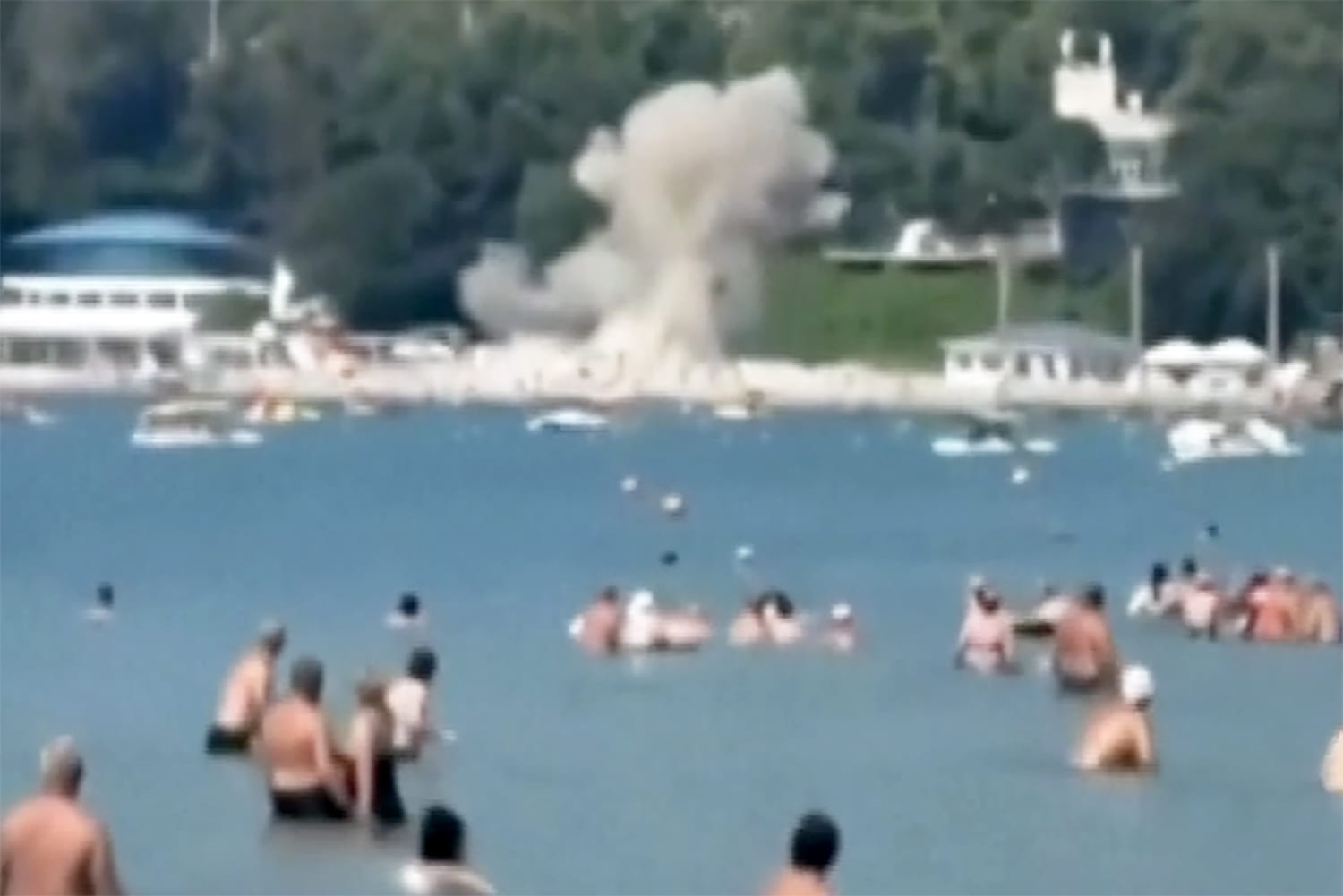
Image via NBC News
Deadly Black Sea beach drone blast deepens Russia-Ukraine blame game
Moscow and Kyiv traded accusations after a drone explosion killed seven people, including three children, on a beach in the Russian Black Sea resort town of Gelendzhik, according to Russian officials. NBC News reported that the incident occurred during a holiday period, amplifying public shock and raising the stakes for both governments’ messaging about civilian risk and battlefield responsibility.
Such incidents often become information warfare accelerants: each side frames the strike as proof of the other’s brutality, while details on launch point, type of drone, and command intent can remain contested for days. Regardless of attribution, the strategic reality is that drone warfare has expanded the geography of fear, pushing beyond front lines and into tourism zones, ports, and air-defense corridors. The implication is greater pressure for domestic retaliation demands in Russia and tighter security measures, while Ukraine’s partners will watch closely for credible evidence and for any escalation that could broaden the conflict’s footprint.
Source: NBC News
Read the full story at NBC News →
That’s the report for Tuesday. We’ll be watching for attribution in the Hormuz incident, confirmation timing in Washington, and any verified details on the Black Sea strike as they emerge.
— Brief Updates Editorial