Today’s Sponsor
One CEO just put $19 million of his own money into his company's stock — on the open market, reported to the SEC, fully verifiable. He's not alone. While most investors watched headlines, a handful of CEOs were quietly making seven-figure bets on their own companies. We dug through SEC Form 4 filings and verified the largest CEO stock purchases of 2026 — real names, real dollar amounts, real dates, every one linked to the actual filing so you can check it yourself.
The free report includes six confirmed purchases, the CEO who bought his own stock five separate times this year, and the small-cap insider buying aggressively while his stock was getting crushed. No rumors. No vague teasers. Just the paper trail insiders are legally required to leave behind — and what it could mean for your next trade.
Get the Free Report Now →Clicking the link above subscribes you to future messages from Equiscreen, LLC and provides instant access to two additional bonus subscriptions from our marketing partners. Unsubscribe anytime. View Privacy Policy.

Friday, July 31, 2026: Trump says Hamas agreed to disarm as part of a Gaza plan; Ceuta faces an unprecedented 24-hour migration spike; U.S. probes possible Iranian links to Minnesota water-system hacks; a major industrial firm pitches water-neutral AI data centers; and a notable insider sale hits a BlackRock closed-end fund.
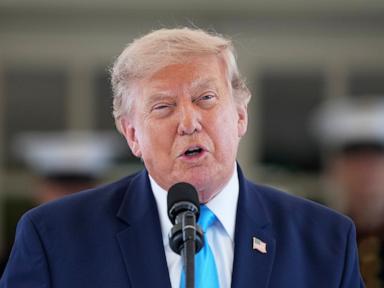
Image via ABC News
Trump says Hamas agreed to disarm under Gaza peace plan — big claim, big verification gap
President Donald Trump announced what he described as an agreement for the complete disarmament of Hamas and other armed groups in Gaza, framing it as a central pillar of a broader peace plan he unveiled last year. The announcement, delivered with maximal language, immediately raised practical questions: who exactly signed on, what enforcement mechanism exists, and what sequencing would govern disarmament versus governance, reconstruction, and security guarantees.
Even sympathetic analysts tend to treat disarmament as the hardest part of any Gaza arrangement, because it collides with Hamas’s core identity, its internal cohesion, and the local security vacuum that would follow. Israel has long insisted that any durable post-war order must remove Hamas’s military capacity, while many Palestinians and regional actors argue that disarmament without credible political horizons and physical security would be destabilizing and potentially invite new militias. Until terms, timelines, and third-party monitoring are public, the announcement reads less like a closed deal and more like a negotiating position meant to shift expectations.
Source: ABC News
Read the full story at ABC News →
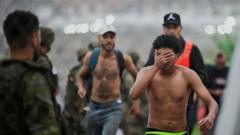
Image via BBC News
Ceuta hit by extraordinary 24-hour surge as officials cite roughly 60,000 arrivals
Authorities in Ceuta, the Spanish territory on the North African coast, reported an estimated 60,000 migrants arriving in roughly 24 hours — a number that, if confirmed, would represent one of the most abrupt migration spikes ever recorded in the region. The figure is striking not just in absolute terms but relative to Ceuta’s population of about 83,600, meaning the city was suddenly confronted with an influx equivalent to more than 70% of its residents.
The immediate implication is capacity: shelter, medical services, screening, security, and transport simply do not scale overnight. Politically, Ceuta sits at the fault line of European border policy, where humanitarian obligations, deterrence strategies, and diplomatic pressure on neighboring states collide. Episodes like this also tend to harden public opinion across Spain and the EU, strengthening calls for stricter border enforcement and faster returns — while also intensifying scrutiny of whether smugglers, policy signals, or breakdowns in cross-border coordination triggered the surge.
Source: BBC News
Read the full story at BBC News →
Minnesota water-system cyberattacks prompt Iran-linked probe — and a reminder of soft targets
Federal and state officials are investigating a wave of malicious cyber activity affecting technology at more than 30 community water systems across Minnesota, with authorities examining whether Iranian actors were involved. While details remain limited, the incident underscores a persistent risk: small and mid-sized utilities often rely on aging infrastructure, thin IT staffing, and remote-access tools that can be exploited at scale.
Even when operational impact is limited, attacks on water systems carry an outsized public-safety and confidence effect. The U.S. has warned for years that hostile states and aligned groups probe critical infrastructure for access, leverage, and disruption potential, particularly when geopolitical tensions rise. If the Iran link is substantiated, it will likely accelerate pressure for mandatory baseline cyber standards, more federal support for municipal defenses, and sharper consequences for state-backed intrusions — but it will also raise the question of whether Washington is moving fast enough to harden the most vulnerable nodes.
Source: CBS News
Read the full story at CBS News →
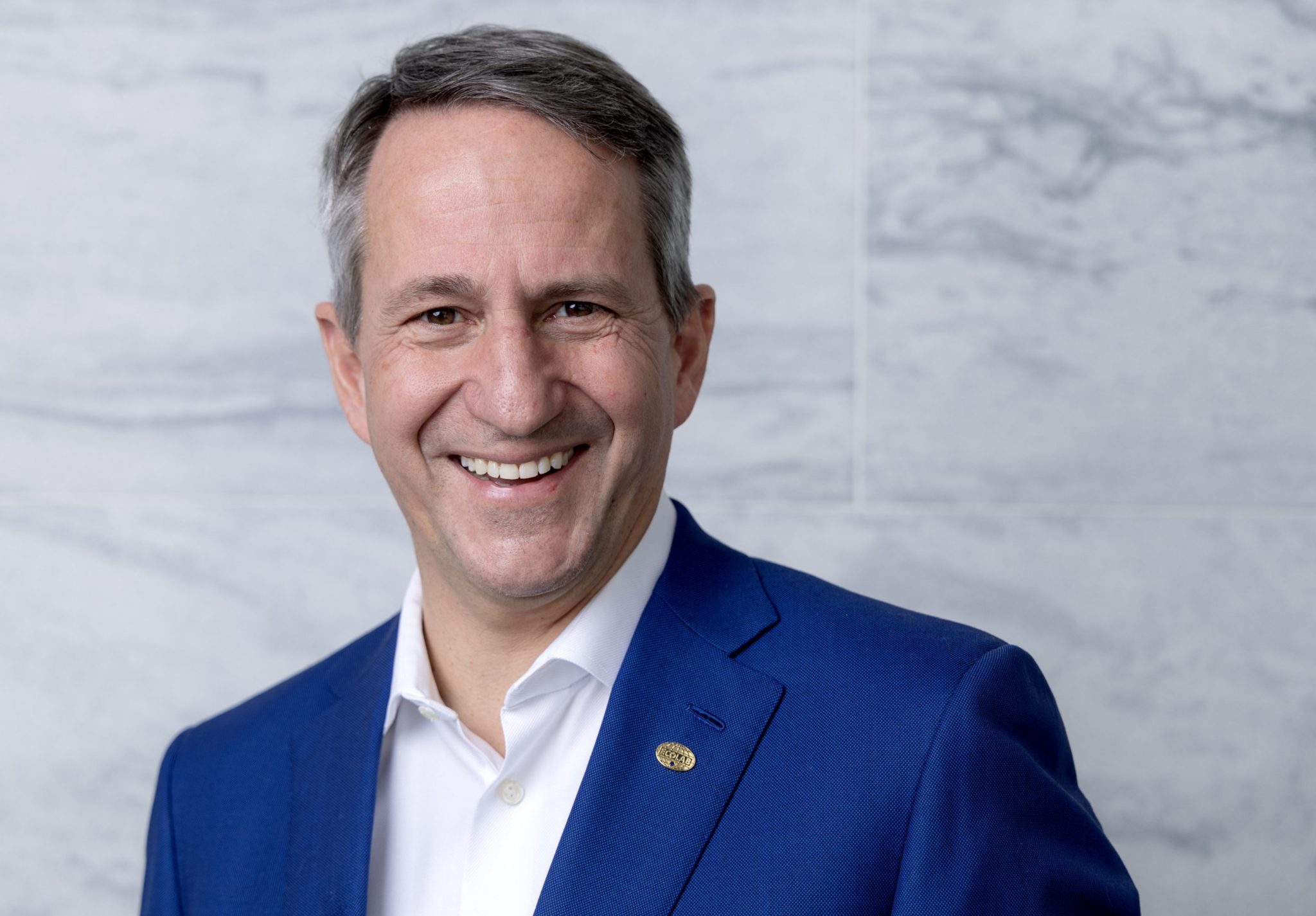
Image via Fortune
Ecolab pitches “water-neutral” AI data centers as the next sustainability battleground
Ecolab, a century-old industrial services company, says it has a plan to help AI data centers become “water-neutral,” aiming to balance water consumed with water saved or restored elsewhere. The pitch lands at a moment when the electricity demands of AI are already under intense scrutiny — and when water use, especially for cooling, is becoming the quieter but increasingly urgent constraint in drought-prone regions.
Data-center operators have been chasing efficiency gains through better cooling designs, higher operating temperatures, and different siting choices, but AI workloads are changing the scale of the problem. “Water-neutral” claims will hinge on definitions and verification: whether savings are local or remote, whether offsets are credible, and how companies account for peak seasonal strain on municipal supplies. For investors and policymakers, the practical question is whether these programs meaningfully reduce localized stress or mostly repackage sustainability accounting. Either way, water is now firmly part of the AI infrastructure conversation — not an afterthought.
Source: Fortune
Read the full story at Fortune →

Image via Investing.com
Saba Capital trims BlackRock ECAT stake with $4.6 million share sale
Saba Capital, reported as a 10% owner, sold roughly $4.6 million in shares of BlackRock’s closed-end fund ECAT, according to an insider-trading item. In closed-end funds, ownership shifts by large holders can matter because these vehicles often trade at premiums or discounts to net asset value, and activist or opportunistic investors sometimes push for buybacks, tender offers, or structural changes to narrow discounts.
A sale does not automatically signal a bearish view; it can reflect portfolio rebalancing, liquidity needs, tax considerations, or a view that the discount has moved enough to capture gains. Still, markets watch Saba closely because the firm has a history of pressing closed-end fund managers on capital returns and governance. For smaller investors, the key is context: whether the fund’s discount/premium and distribution profile still fit their risk tolerance, and whether a big holder’s move changes the likelihood of future corporate actions.
Source: Investing.com
Read the full story at Investing.com →
That’s the file for Friday. We’ll keep tracking what’s real, what’s performative, and what actually changes incentives on the ground.
— Brief Updates Editorial