Today’s Sponsor
Most people wait for headlines. By then, it's too late. Before a ticker heats up, there's a brief signal phase — a quiet shift that appears before the noise. No alerts. No buzz. Just an early tell for those who know where to look.
The FREE Market Signal Brief from the Daily Edge Report breaks down exactly how to spot these setups before they explode into the news cycle. Once the story hits — the early edge is already gone. Don't wait.
Download Your Free Signal Brief NowWe encourage readers to perform their own research and due diligence on any information we provide. By clicking the link above you will automatically be subscribed to the Daily Edge Report Newsletter. To view our privacy policy, visit lifewatermedia.com/privacy-policy.

From Southeast Asian scam operations to high-stakes White House meetings, today's roundup covers enforcement gaps, military shortfalls, and the complex calculus of international conflict.

Image via South China Morning Post
Malaysian Authorities Dismantle Major Scam Hub in Johor, Arrest 335
Malaysian police conducted coordinated raids on 32 premises in Forest City, a massive development project in Johor state near Singapore, arresting 335 individuals allegedly involved in online scam operations. Authorities seized assets worth approximately 1 million ringgit (roughly $225,000 USD) in what represents one of the largest enforcement actions against cybercrime infrastructure in the region.
Forest City, a controversial Chinese-backed mega-development that has struggled to attract residents, has reportedly become a haven for organized criminal operations targeting victims across Asia and beyond. The raids underscore growing regional concerns about transnational cybercrime syndicates that have exploited lightly regulated special economic zones to establish sophisticated fraud operations. Malaysian authorities have faced pressure from neighboring countries whose citizens have been victimized by these scams.
The operation highlights the challenge facing Southeast Asian nations as they balance economic development incentives with law enforcement imperatives. Similar scam centers have been raided in Myanmar, Cambodia, and Laos in recent years, often revealing that workers themselves were trafficked and forced to participate in fraud schemes under threat of violence.
Read the full story at South China Morning Post →

Image via BBC
French Patrol Boat Fires Shots in Channel During British MP's Interview
A French naval patrol vessel fired 17 gunshots in the English Channel while Shadow Home Secretary Chris Philp was conducting a BBC interview on migration enforcement, the Conservative MP reported. Philp was observing Channel crossings aboard a British vessel when the incident occurred, raising questions about maritime protocol and cross-Channel tensions over migration policy.
The circumstances surrounding the French vessel's actions remain unclear, including whether the shots were directed at a migrant boat, fired as warning shots, or represented some other form of maritime enforcement. The incident comes amid continued friction between the UK and France over responsibility for managing illegal Channel crossings, which remain a politically sensitive issue in Britain despite reduced numbers in recent months.
Both countries cooperate on Channel security under bilateral agreements, but enforcement approaches have occasionally sparked diplomatic tensions. The French government has not yet issued a formal statement explaining the patrol boat's actions. The timing during Philp's media appearance adds a theatrical element to what is already a contentious cross-border issue.
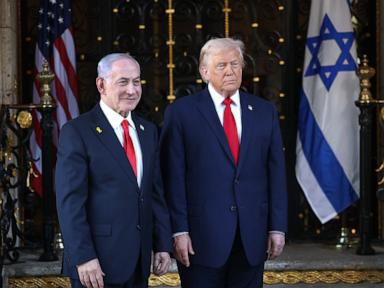
Image via ABC News
Netanyahu and Zelenskyy Schedule Back-to-Back White House Meetings
Israeli Prime Minister Benjamin Netanyahu and Ukrainian President Volodymyr Zelenskyy are both scheduled for separate White House meetings this week as they seek to advance their respective national security agendas with the Trump administration. The two leaders will also attend a funeral service for Senator Lindsey Graham, the influential Republican hawk who championed both Israeli security and continued Ukraine aid until his recent death.
Netanyahu is expected to press for continued American military support and diplomatic backing as Israel manages ongoing tensions with Iran and seeks to reshape its security posture in the region. Zelenskyy, meanwhile, faces the more precarious task of securing sustained U.S. military assistance amid growing Republican skepticism about open-ended commitments to Ukraine's defense. The Trump administration has signaled interest in negotiating an end to the Ukraine conflict, raising Ukrainian concerns about potential pressure to accept territorial concessions.
Graham's funeral provides an unusual backdrop for the diplomatic choreography, as the late senator was among the strongest congressional advocates for both Israeli and Ukrainian causes. His absence removes a key Republican voice that bridged the party's traditional foreign policy hawks and its newer, more skeptical faction regarding international military commitments.
Read the full story at ABC News →
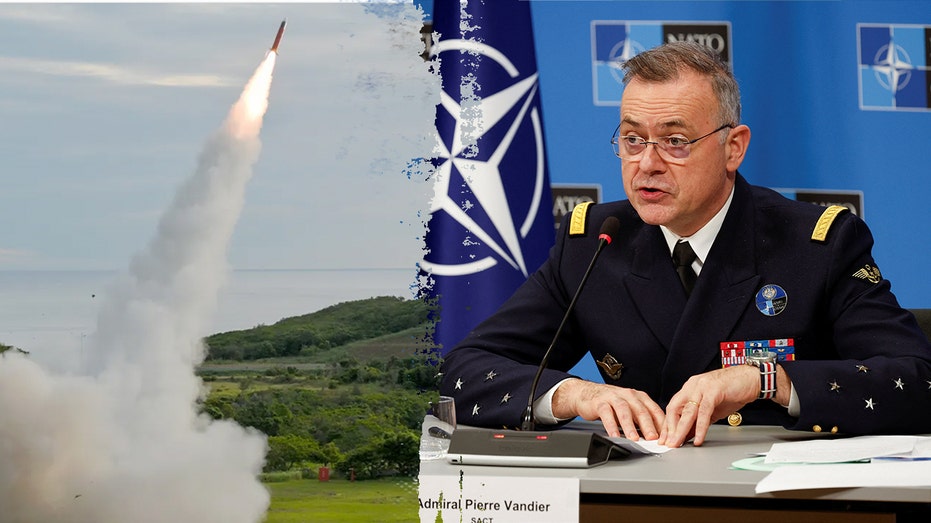
Image via Fox News
NATO Commander Warns Alliance Faces Critical Weapons Production Shortfall
NATO's top transformation commander has issued a stark warning that Western nations cannot produce sufficient Patriot missile systems and other advanced weaponry to meet current defense requirements, with "the math not in favor of the West." The assessment points to a fundamental mismatch between NATO's defense commitments and the industrial capacity available to fulfill them, a gap that Russia's sustained military production has helped expose.
The commander's remarks highlight a strategic vulnerability that has become increasingly apparent as Ukraine has depleted Western stockpiles of key munitions systems. While Russia has shifted to a wartime industrial footing capable of producing artillery shells, missiles, and drones at scale, Western manufacturers largely operate on peacetime production schedules optimized for profitability rather than surge capacity. The Patriot missile shortage is particularly acute, as these systems are needed both for NATO's own defense architecture and to support Ukraine's air defense.
The warning underscores calls for a comprehensive redesign of Western weapons production, moving away from just-in-time manufacturing toward maintained surge capacity that can respond to sustained conflicts. This shift would require substantial government investment and potentially permanent overcapacity that runs counter to commercial incentives. The challenge represents a fundamental question about whether democratic market economies can match the industrial mobilization of authoritarian states in extended conflicts.
Read the full story at Fox News →
Dollar Softens as Oil Retreats on Middle East Conflict Pause
The U.S. dollar eased against major currencies as oil prices fell following indications of a temporary pause in Middle East hostilities. Crude prices declined on reduced fears of immediate supply disruptions, pulling back the dollar's safe-haven premium that had strengthened during recent regional tensions. Currency and commodity markets remain sensitive to any signals regarding the trajectory of conflicts involving major energy-producing regions.
The market reaction reflects trader assessment that near-term escalation risks have diminished, at least temporarily, though underlying regional tensions remain unresolved. Oil prices had spiked earlier on concerns that expanding conflict could threaten key shipping routes or production facilities. The pullback suggests markets believe diplomatic efforts or tactical pauses may create a window of reduced volatility, even if longer-term geopolitical risks persist.
Currency traders are watching for any indications from the Federal Reserve regarding monetary policy responses to energy price fluctuations. Sustained high oil prices could complicate inflation management, while sharp declines might signal weakening global demand. The interplay between geopolitical risk premiums and underlying economic fundamentals continues to drive dollar movements in an uncertain international environment.
Read the full story at Reuters →
That's your Brief Updates roundup for Tuesday, July 28, 2026 — the facts, the context, and what matters.
— Brief Updates Editorial