Today’s Sponsor
In 1971, Nixon ended the gold standard in a single 15-minute broadcast — no warning, no debate. Gold tripled in 3 years and rose 20x over the next decade. The people who saw it coming protected their wealth. Everyone else watched their savings quietly erode. History may be about to repeat itself. Trump holds the same executive authority Nixon used — and his own advisors are now openly saying a reversal is on the table.
Reagan Gold Group has put together a free briefing covering exactly what Nixon did, why Trump is the first president positioned to undo it, and the one move you can make right now to be on the right side of what comes next. Free. 30 seconds to request. Don't wait for the Sunday night broadcast.
Get the Free Briefing NowReagan Gold Group does not provide financial, legal, or tax advice. This information is for educational purposes only and should not be considered investment advice. All investments carry risk, including loss of principal. Past performance is not indicative of future results. Consult your licensed financial advisor before making investment decisions. This is an advertisement. If you no longer wish to receive this promotional message, please Unsubscribe. Or write to: 2029 Century Park E Suite 400, Los Angeles, CA 90067.

Wednesday, August 19, 2026: Five stories shaping politics, markets, and the war in Europe — with context and implications, minus the spin.

Image via Politico
Florida voters buck party brass — and even brush past Trump’s picks
Florida’s primaries delivered a double rebuke to political establishments on both sides: Democrats elevated a progressive Senate nominee over more traditional contenders, while Republican voters rejected President Donald Trump’s endorsements in two competitive House races. The result is a reminder that in a state often treated as a national political weather vane, brand-name backing still helps with fundraising and attention — but it does not guarantee a win in a late-summer turnout election driven by local issues and factional energy.
For Democrats, the Senate choice signals an electorate that is not simply optimizing for perceived “electability” in a state that has trended red in recent cycles. Progressives argue this is the clearest route to mobilize base voters who have tuned out; skeptics counter it risks narrowing the coalition needed to win statewide, especially among independents and suburban voters concerned about inflation, crime, and school issues. On the Republican side, the anti-endorsement outcomes complicate the assumption that Trump can still clear the field at will — a sign that some GOP primary voters are prioritizing local loyalties, ideological style, or campaign competence over national cues.
The broader implication: Florida is not “post-Trump,” but it is not uniformly programmable either. Candidate quality, local networks, and intra-party fatigue can outweigh top-down signaling, particularly in House districts where constituents see the race through a neighborhood lens rather than a national one.
Source: Politico
Read the full story at Politico →
Moderna and Merck report strong melanoma results for personalized cancer vaccine; shares surge
Moderna and Merck said a personalized cancer-vaccine regimen paired with Keytruda significantly extended the time patients lived without their melanoma returning compared with Keytruda alone, according to initial late-stage trial results. Investors reacted forcefully: Moderna shares surged on the news, reflecting both the clinical significance and the prospect that Moderna’s mRNA platform could translate beyond infectious disease into a durable oncology business.
The approach aims to train the immune system to recognize tumor-specific mutations and attack residual cancer cells after initial treatment. For patients, the practical takeaway is straightforward: delaying or preventing recurrence is a major endpoint in melanoma care, and improving that measure can translate into longer survival and fewer rounds of harsh therapies. For the industry, the data are another marker that “personalized” mRNA-based oncology is moving from theory toward scalable practice, though regulators will still scrutinize safety, durability of benefit, and real-world logistics.
The caution flag is also clear: “initial” readouts can look better than later analyses, and late-stage success must still clear regulatory review, manufacturing constraints, and payer questions about cost. But if the benefit holds, this could be one of the first broadly commercial examples of individualized mRNA cancer vaccination — a potential turning point for both companies and the treatment landscape.
Source: CNBC

Image via NBC News
Alaska Senate race takes shape: Sullivan and Peltola advance to a high-stakes general election
NBC News projected that Republican Sen. Dan Sullivan and Democrat Mary Peltola will advance to Alaska’s general election in a contest likely to draw national money and attention. Sullivan enters as an incumbent with strong party infrastructure and a clear message on energy development and national security; Peltola, a statewide-known figure, has built a brand around retail politics and a more centrist Democratic profile that can play well in Alaska’s unique electorate.
The race’s mechanics still matter. Alaska’s election system can produce unusual candidate configurations, and NBC noted uncertainty over whether Sullivan could also face an opponent with the same name — a wrinkle that could create confusion and force campaigns to spend time and money on voter education rather than persuasion. In a close race, even small informational frictions can affect outcomes, especially with late-deciding voters.
Strategically, expect Republicans to nationalize the contest around control of the Senate and Biden-era governance critiques, while Democrats will try to make it about independence, local economics, and protecting Alaska-specific priorities. In a state where ticket-splitting is common and energy policy is personal, the candidate who looks most credibly “Alaska-first” tends to gain the edge.
Source: NBC News
Read the full story at NBC News →
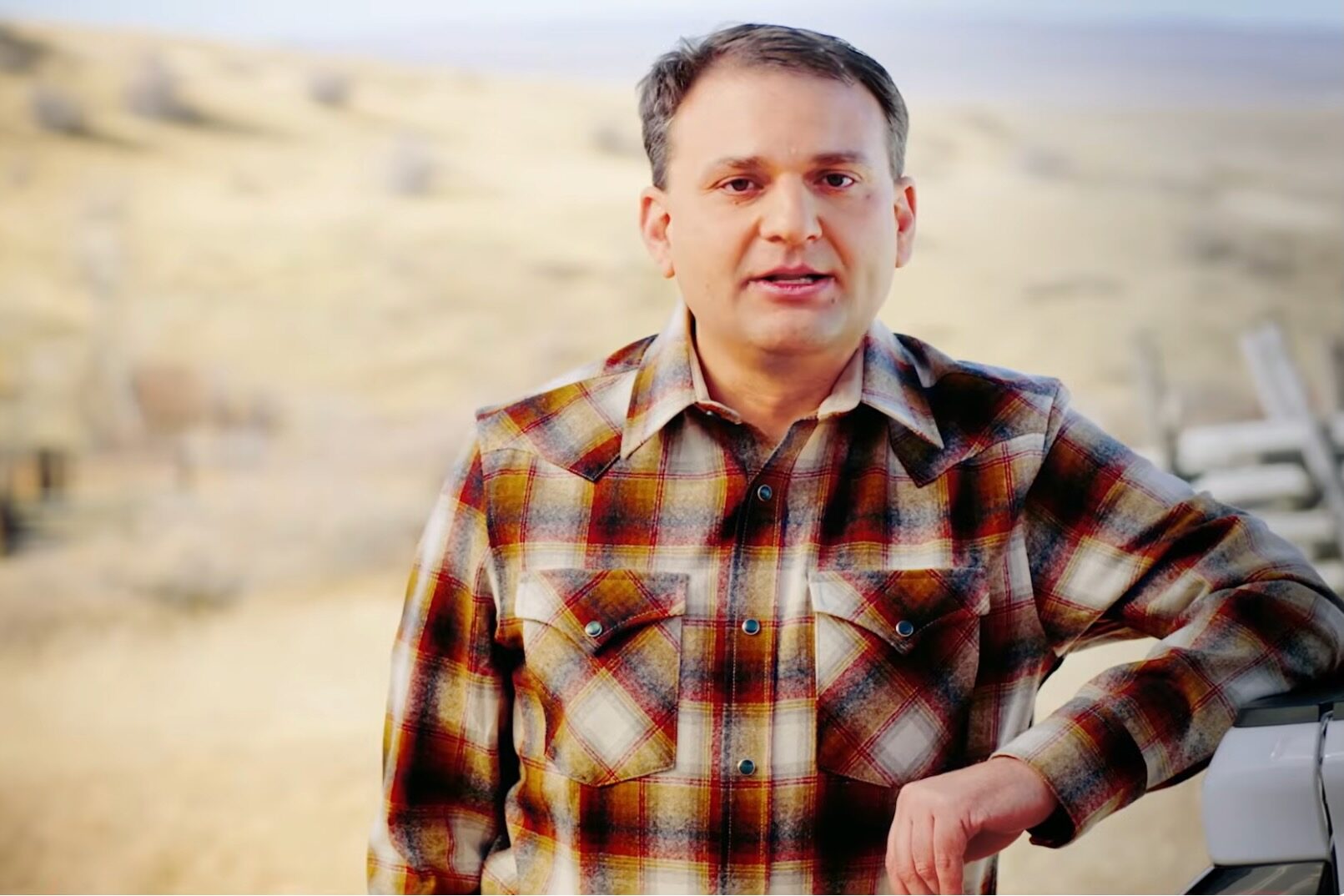
Image via Roll Call
Wyoming Republicans line up a new House member as Chuck Gray wins GOP primary
Wyoming Secretary of State Chuck Gray won the Republican primary for the state’s at-large House seat, putting him in position to succeed Rep. Harriet Hageman. In Wyoming, the GOP primary is typically the decisive contest, so Gray’s win effectively sets the state’s next representative barring a political shock.
Gray has been a prominent figure in Wyoming’s conservative politics, and his primary victory signals that Republican voters remain aligned with a combative, movement-oriented style of governance. For Washington, the practical impact is less about flipping control — the seat is safely Republican — and more about what kind of Republican will arrive: a legislator likely to prioritize border policy, federal land management fights, and a hard line on regulatory and cultural issues.
The transition also matters for committee assignments and Wyoming’s leverage in Congress. Seniority resets can reduce influence in the short term, but a new member can also bring fresh energy and relationships, especially if aligned with House leadership factions that are ascendant in the next Congress.
Source: Roll Call
Read the full story at Roll Call →

Image via France 24
Ousted Ukrainian minister calls for wartime elections, intensifying pressure on Kyiv
Mykhailo Fedorov, Ukraine’s ousted defence minister, called for elections to be held despite Russia’s ongoing war, in a YouTube address that landed like a political grenade. His argument centers on legitimacy: that democratic renewal should continue even under siege. The timing is combustible, because Ukraine has operated under wartime constraints that make normal campaigning, voting, and monitoring extraordinarily difficult — especially with displacement, frontline security risks, and the threat of Russian strikes.
Kyiv has generally framed postponing elections as a practical necessity and a national-security imperative, arguing that voting conditions cannot be free or fair while large parts of the population are abroad or in occupied territories and while soldiers are deployed. Critics, including some domestic voices and foreign skeptics, counter that prolonged emergency governance risks concentrating power and dulling accountability. Fedorov’s intervention gives that critique a high-profile messenger, though his status as an ousted official also invites questions about motive, factionalism, and timing.
The wider implication is that Ukraine’s political unity — a strategic asset in wartime — is under stress as the conflict drags on. Any election debate will be watched closely by allies weighing long-term support and by Russia, which has incentives to amplify internal division. The core issue is not whether elections are virtuous in theory, but whether they can be conducted securely, inclusively, and credibly in practice under active attack.
Source: France 24
Read the full story at France 24 →
That’s the file for today. We’ll be watching how these primary outcomes reshape party coalitions, whether the oncology data holds up under full scrutiny, and how Ukraine navigates the hard tradeoffs between wartime governance and democratic legitimacy.
— Brief Updates Editorial