Today’s Sponsor
A rare signal just fired. One of Alpha Wire Daily's most reliable indicators — the kind that doesn't trigger often — just flagged a quiet small-cap that's historically appeared right before major announcements, institutional buying surges, and sharp price moves. Most investors haven't noticed it yet.
The team at Alpha Wire Daily put together a full briefing: company name, chart setup, and exactly why this one made the cut. They'd rather send you one email that matters than fifty that don't. This is that email — but it won't stay timely for long.
Read the Free Report + Get Alert AccessWe encourage readers to perform their own research and due diligence on any information we provide. By clicking the link above you will automatically be subscribed to the Alpha Wire Newsletter. Privacy Policy

Thursday, July 30, 2026: A direct Vance-Netanyahu exchange underscores growing daylight; the U.S. answers an attempted attack with heavy strikes on Iran; Japan’s quake zone struggles with heat and water outages; inflation cools as growth slows; Microsoft tops targets on AI and cloud demand.
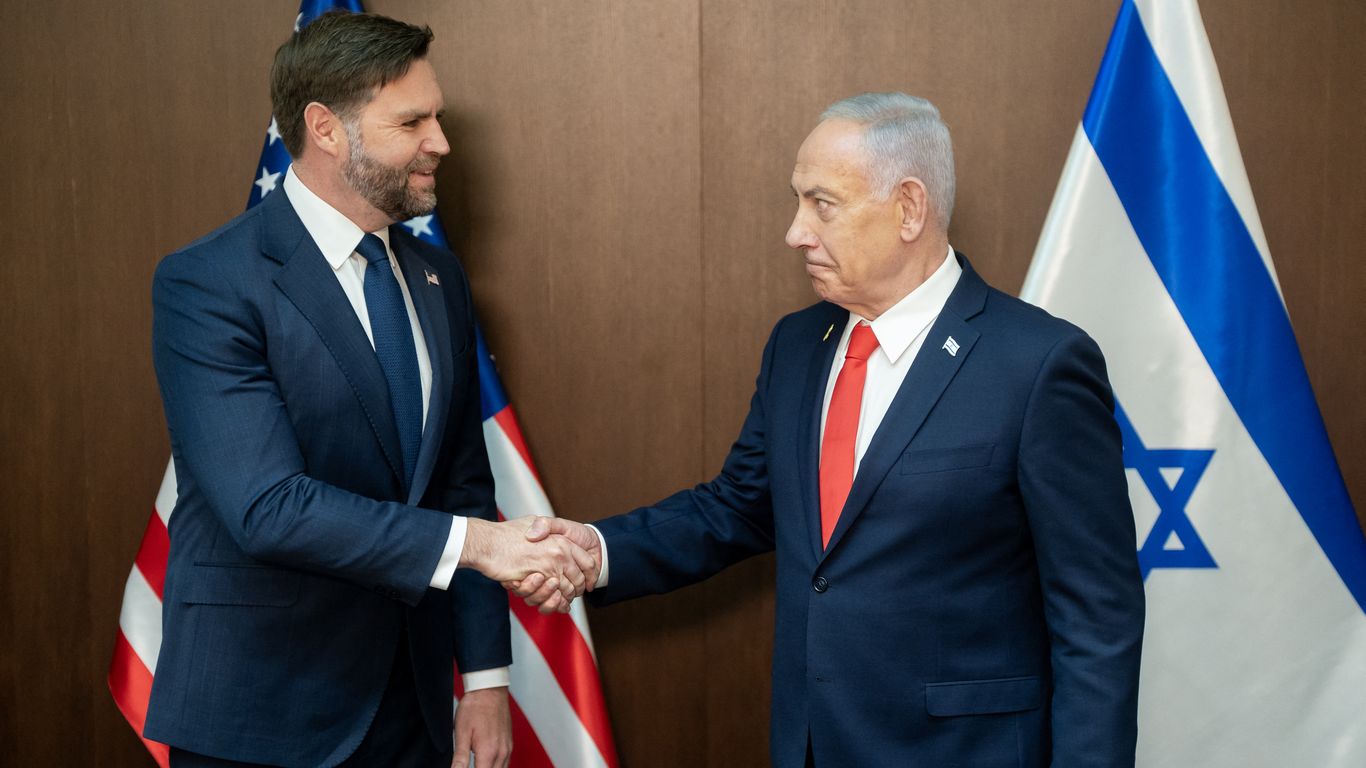
Image via Axios
Netanyahu Presses Vance on Public Critiques as U.S.-Israel Differences Surface
Israeli Prime Minister Benjamin Netanyahu and U.S. Vice President JD Vance held a private, one-on-one meeting in Washington marked by a notably direct exchange over Vance’s recent criticism of Israeli government decisions, according to reporting on the conversation. The message from Jerusalem was straightforward: public pressure from senior U.S. officials complicates Israeli coalition politics and, in Netanyahu’s view, signals disunity to regional adversaries.
The meeting underscores a broader reality: even where U.S.-Israel security cooperation remains deep, the political bandwidth for open-ended alignment is thinner than it was a decade ago. Vance has framed his comments as consistent with U.S. interests and democratic values, while Netanyahu has argued that Israel’s elected government must be free to prosecute the war and manage security policy without allied micromanagement. The immediate question is whether the two sides can keep disagreements behind closed doors as Washington weighs military posture in the region and Israel navigates both battlefield demands and domestic constraints.
Read the full story at Axios →

Image via BBC News
U.S. Conducts Heavy Strikes on Iran After Attempted Attack on American Troops
The U.S. launched what officials described as heavy strikes on Iran following an attempted attack targeting American troops, according to reporting that said a brief lull in hostilities has given way to renewed missile exchanges. The episode marks another sharp escalation after a short period in which both sides had paused major action, raising the risk of retaliation cycles that become harder to contain with each round.
The strategic logic from Washington is deterrence: make clear that attacks on U.S. personnel carry immediate, costly consequences. Tehran’s likely counter-argument is familiar as well, portraying U.S. action as aggression while leaning on regional proxies and asymmetric tactics to impose costs without triggering full-scale war. For U.S. policymakers, the hard part is calibrating force to protect troops and credibility while keeping channels open to prevent a wider regional spillover that markets, allies, and voters are increasingly sensitive to.
Read the full story at BBC News →

Image via NTD
Japan Quake Aftermath: Water Outages and Heat Compound a Rising Toll
Survivors of a powerful earthquake in Japan are battling thirst and extreme heat as water systems remain disrupted, with the reported death toll rising to 30. In affected communities, residents have been gathering at relief points to receive water and basic supplies while authorities work to restore service and assess damage to infrastructure.
The compounding effect of heat on disaster response is a recurring challenge in Japan’s summer months: dehydration risk rises quickly for older residents, and evacuation centers can become pressure points if power, ventilation, or sanitation are strained. Beyond the immediate toll, the next phase will hinge on rapid repairs to water and transport networks, medical support for vulnerable populations, and clear public communication about aftershocks and safe sheltering. The report cited Reuters imagery and on-the-ground conditions as responders scaled up aid.

Image via Forbes
Inflation Gauge Cools, But Second-Quarter Growth Slows as Fed Weighs Next Move
The Federal Reserve’s preferred inflation measure cooled last month, offering a measure of relief after a long stretch of price pressures that have been sticky in key services categories. At the same time, new data showed the U.S. economy slowed in the second quarter, complicating the policy picture as officials try to avoid either entrenching inflation or overtightening into weaker growth.
Markets and policymakers are now balancing two signals that often conflict: inflation trending in a better direction, and activity losing momentum. Persistent inflation concerns are still expected to keep the prospect of another rate hike on the table, especially if progress stalls or if wage and services inflation re-accelerate. For households and businesses, the practical implication is continued uncertainty on borrowing costs, with the Fed likely to remain data-dependent and cautious about declaring victory too soon.
Read the full story at Forbes →
Microsoft Beats June-Quarter Expectations as AI and Cloud Demand Drive Results
Microsoft exceeded Wall Street expectations for its June quarter, buoyed by strength in cloud services and accelerating demand tied to artificial intelligence. The results reinforce the company’s position as a primary beneficiary of enterprise AI spending, particularly where customers are pairing software subscriptions with large-scale cloud compute to train and run models.
The bigger story for investors is not just a single-quarter beat, but whether AI-related growth is durable enough to justify the massive capital expenditures now standard across big tech. Microsoft’s advantage is its distribution: it can embed AI tools across workplace software while monetizing the underlying infrastructure through Azure. The pressure point is execution and cost discipline as AI competition intensifies and regulators scrutinize market power in both cloud and software ecosystems.
Read the full story at Investor's Business Daily →
That’s the file for today. We’ll be watching for signs of escalation management in the Middle East, updated quake response figures in Japan, and any shift in Fed messaging as fresh inflation and labor data land.
— Brief Updates Editorial