Today’s Sponsor
The Fed held rates, inflation is still above target, and uncertainty is rising — that means the "buy anything AI" trade is over. Smart money is rotating fast toward the companies actually building AI infrastructure: chips, cloud capacity, and mission-critical data tools. Big Tech alone is projected to spend $635B–$665B on AI in 2026 — and not all of it is going where most investors are looking.
We've identified 9 AI stocks worth watching right now — including a lesser-known chip name tied to U.S. AI infrastructure, a cloud player with improving setup, and a data analytics company with government exposure. This isn't hype. It's about following where capital is actually being deployed.
Get the Free Report NowBy clicking the link above, you will receive this free report and a free subscription to the StockEarnings daily email newsletter. You are also agreeing to the terms of our Privacy Policy. Unsubscribe at any time.

Friday, September 25, 2026: Xi’s constitutional stop, Meta’s privacy pivot, an election-eve power vote, renewed ceasefire feelers, and a deficit reality check.

Image via The Hill
Xi closes D.C. visit with a stop at America’s founding documents
Chinese President Xi Jinping is set to wrap up his Washington visit Friday with President Trump at the National Archives, viewing the Constitution and Bill of Rights. The optics are deliberate: a symbolic coda to a summit meant to signal stability after years of U.S.-China friction over trade, technology controls, Taiwan, and security competition.
Public ceremonies like this typically aim less at policy detail and more at framing. For the White House, it is a chance to underscore that engagement with Beijing comes with a clear American self-conception about rights and rule of law, even as the administration balances hardline tools like export restrictions with pragmatic dealmaking.
The immediate question is whether the symbolism translates into durable working channels: military-to-military deconfliction, tighter guardrails around cyber and espionage accusations, and any measurable progress on trade irritants. Markets and allies will be watching for follow-through, not photo-ops, especially as Washington’s China posture now blends competition with selective cooperation.
✓ The Bottom Line: This is smart stagecraft, but stagecraft is not strategy. If the administration can convert the symbolism into real guardrails, especially on military risk and economic retaliation, it is worth doing. Still, Americans should judge the visit by concrete deliverables and verification, not by gestures in a museum.
📎 The Hill

Image via Axios
Meta’s new pitch: privacy as a product feature, not an afterthought
Meta is repositioning itself around a new message: it cares about privacy, and wants that to be a defining attribute of its next wave of products, including its fast-growing AI assistant, Muse. According to Axios, the shift reflects both consumer fatigue with data-hungry platforms and a more hostile regulatory climate in the U.S. and abroad.
Meta’s business has long depended on collecting and analyzing user behavior to target ads, so any privacy-first branding faces credibility tests. In practice, the stakes come down to technical design choices: what data is collected by default, whether sensitive processing happens on-device, how long data is retained, whether training data is segregated, and how clearly users can opt out without losing core functionality.
There is also a competitive angle. AI assistants are becoming the new front door to the internet, and the company that wins user trust could capture outsized attention and advertising dollars. Meta’s challenge is to prove that “privacy” is more than a tagline while still monetizing at scale.
✓ The Bottom Line: Meta can earn some benefit of the doubt only if it changes defaults, limits retention, and makes opt-outs real, not punitive. After years of scandals and settlements, “trust us” will not cut it, and regulators should demand measurable commitments. A privacy-centered product strategy is possible, but it will require Meta to accept less data, not just better messaging.
📎 Axios
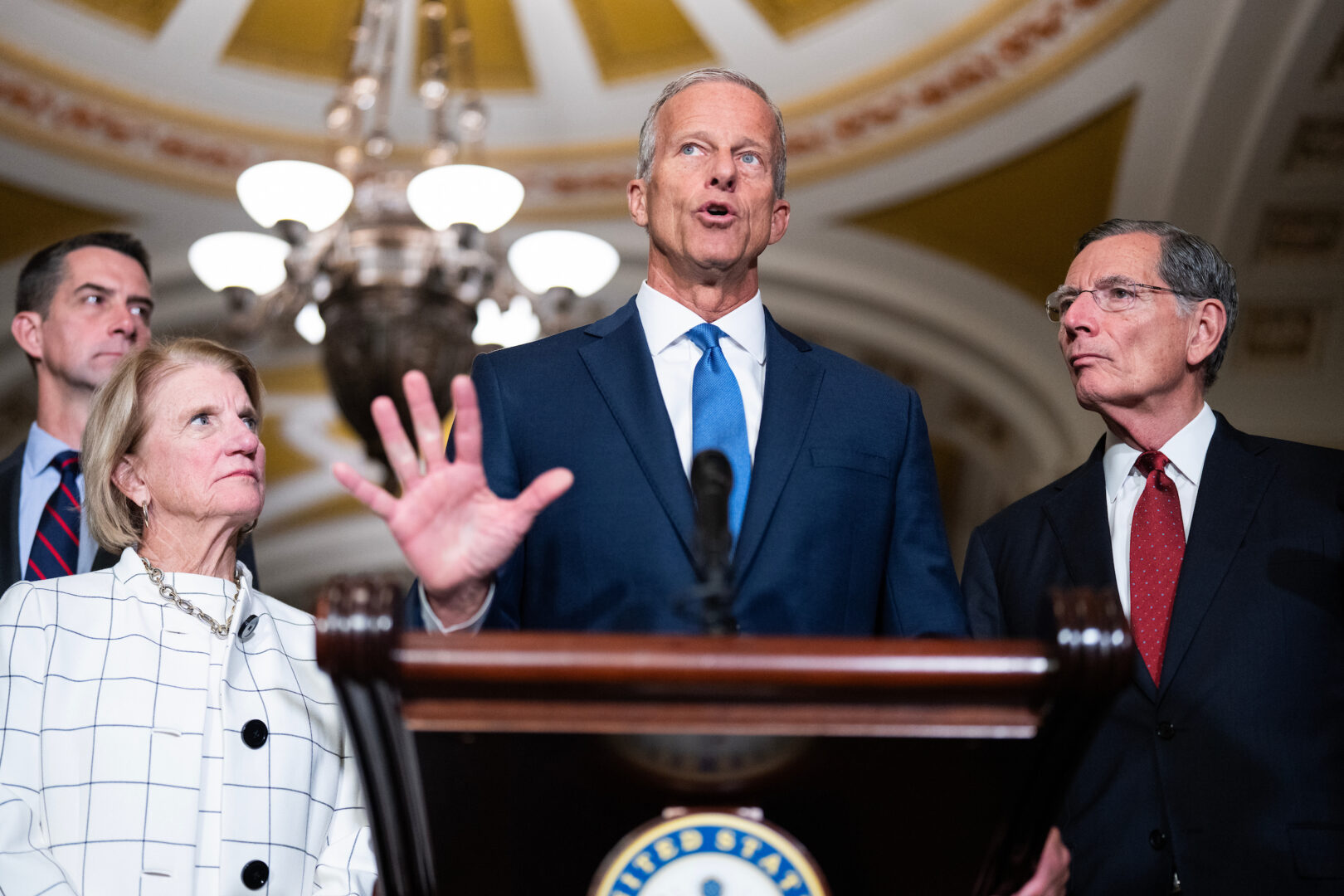
Image via Roll Call
Senate’s election-eve to-do list includes a high-stakes power vote for data centers
With elections approaching, Senate leaders are mapping out a final week that could include a vote tied to electricity supply for data centers, a growing concern as AI and cloud computing drive massive power demand. Roll Call reports the planning is happening under the usual late-session pressures: limited floor time, heightened partisan messaging, and lawmakers eager to head home.
The policy problem is real and getting harder to ignore. Data centers are arriving faster than many grids can comfortably accommodate, and permitting for generation and transmission remains slow. Legislators are being pulled between priorities that often collide: keeping power reliable and affordable, meeting emissions goals, and ensuring the U.S. does not lose AI infrastructure to foreign competitors.
Any last-minute Senate action is likely to be narrower than the challenge, but it can still matter. If lawmakers can create clearer rules for interconnection, streamline transmission approvals, or offer targeted incentives for firm power, it could reduce bottlenecks that otherwise hit households and industry alike through higher bills and reliability risk.
✓ The Bottom Line: Washington is late to a predictable problem: electricity is now a strategic input to the digital economy. A serious package should focus on faster permitting and more transmission, not just subsidies or slogans. If the Senate can deliver even a modest, practical step before adjournment, it is better than punting again.
U.S. tries to restart ceasefire talks as Russia’s strikes continue
The United States is seeking to revive ceasefire talks between Russia and Ukraine, according to Al Jazeera, as fighting continues and Ukrainian officials report multiple regions under attack. The diplomatic effort comes amid war fatigue in parts of Europe and the U.S., but also amid deep distrust between the parties after previous negotiations collapsed.
The core obstacle remains unchanged: Russia still appears to want terms that lock in territorial gains and weaken Ukraine’s long-term security, while Ukraine insists on sovereignty and credible guarantees that any pause would not simply allow Russia to rearm for the next offensive. Even limited ceasefires raise hard operational questions about monitoring, enforcement, and consequences for violations.
For Washington, the balancing act is delicate. Pushing talks can look like realism to voters and allies worried about escalation and cost, but it risks pressuring Kyiv into a bad deal if diplomacy gets ahead of battlefield facts. The credibility of any process will depend on whether it addresses enforcement and whether partners remain aligned on sanctions and military support.
✓ The Bottom Line: Exploring talks is fine, but a ceasefire that rewards aggression or lacks enforceable guarantees is not peace, it is a pause. The U.S. should support negotiations only if they are paired with sustained leverage: military aid, sanctions unity, and verification mechanisms. The goal should be a durable settlement, not a headline.

Image via Fox Business
Deficit math meets kitchen-table reality: watchdog says lower red ink could ease rates
The Committee for a Responsible Federal Budget argues that reducing the roughly $2 trillion federal deficit could help lower inflation and interest rates for Americans, according to Fox Business. The claim rests on a straightforward mechanism: large deficits can add to demand and increase government borrowing, which can put upward pressure on prices and on interest rates, especially when the economy is near capacity.
While inflation is influenced by many factors, including energy, supply chains, and monetary policy, fiscal policy is not a spectator. Persistent deficits can also raise long-term debt servicing costs, leaving less room for defense, infrastructure, or tax relief when the next downturn hits. Higher rates translate quickly into household pain through mortgages, car loans, and credit cards.
The political challenge is that deficit reduction is easy to endorse and hard to enact. Real savings require choices on entitlements, discretionary spending, and tax policy. Any credible plan will have to confront tradeoffs rather than rely on optimistic growth assumptions or one-time gimmicks.
✓ The Bottom Line: CRFB is right on the direction: sustainably smaller deficits make it easier for rates to come down over time, even if they are not the only driver. The responsible path is a bipartisan mix of spending restraint and a tax base that can actually fund what Washington promises. The longer leaders delay, the more the adjustment will be forced by markets instead of chosen by voters.
That’s the day’s mix: symbolism, strategy, and the unglamorous constraints of power, bandwidth, and budgets. We’ll be watching for what turns into policy, not just headlines.
— Brief Updates Editorial