Today’s Sponsor
The Fed held rates, CPI came in at 2.4%, and analysts still expect 12.5% Q1 earnings growth — but estimates have already been cut across nine sectors and the S&P 500 is stretched above its 5- and 10-year average forward P/E. Trading earnings on headlines alone in this environment is a costly mistake.
The free Earnings Season eBook breaks down the exact pre-report checklist, how to weigh guidance and expectations, and how to read the first reaction after numbers hit — so you're never improvising after the move already started.
Get the Free Earnings PlaybookBy clicking the link above, you will receive this free report and a free subscription to the StockEarnings daily email newsletter. You are also agreeing to the terms of our Privacy Policy. Unsubscribe at any time.

Five developments shaping the vote and the next governing agenda, from DOJ’s unprecedented monitoring footprint to economic crosscurrents voters feel at the pump and on the mortgage statement.
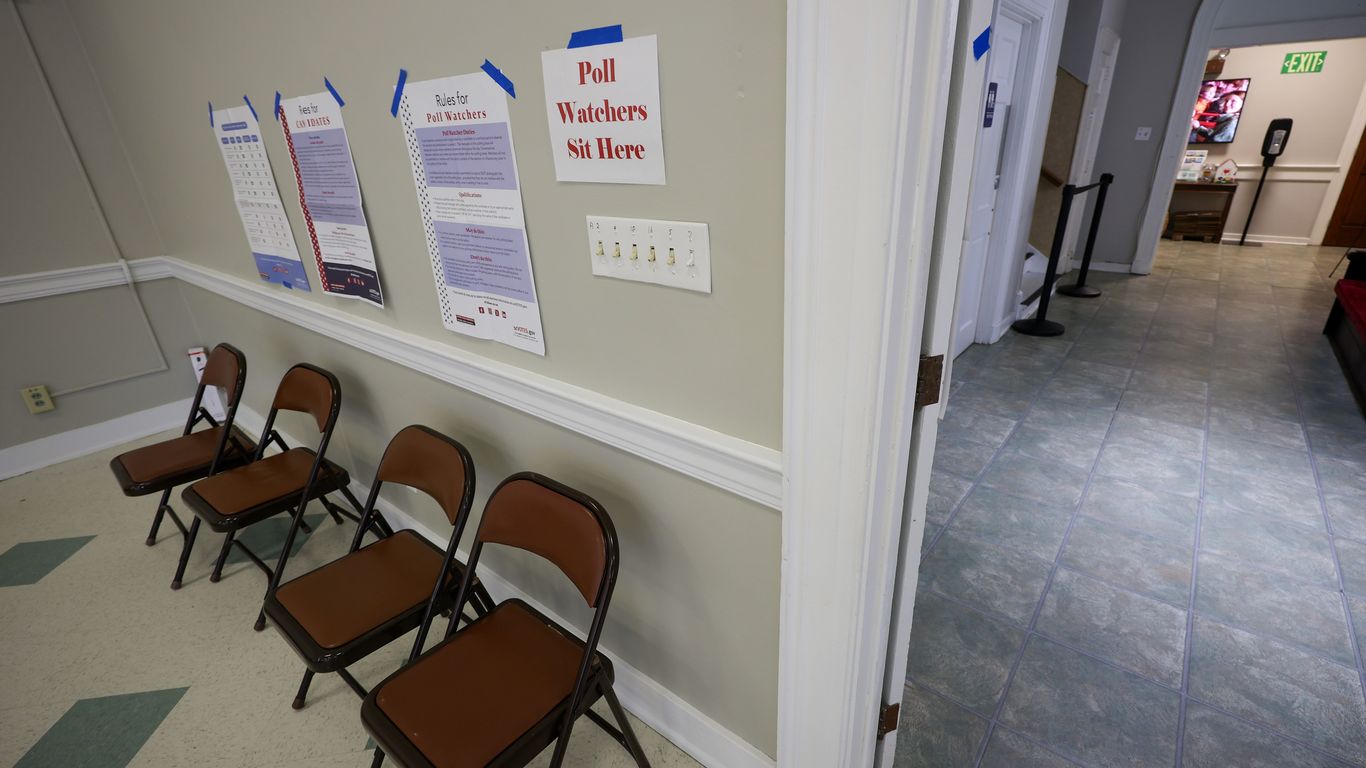
Image via Axios
DOJ to deploy 1,000 election monitors nationwide in first 50-state effort
The Justice Department said it will send about 1,000 election monitors to observe polling sites across all 50 states, marking the first time it has mounted a nationwide, all-states deployment on Election Day. DOJ monitors typically appear in jurisdictions with consent decrees, prior voting-rights disputes, or specific complaints; this time the footprint is broader and more standardized.
Supporters argue the move is a deterrent against intimidation and procedural violations, and a way to reassure voters in a polarized environment. Critics counter that a 50-state deployment risks looking like federalization of a state-run process, and warn the government should be clear about the monitors’ authority, what triggers intervention, and how complaints will be handled to avoid confusion at the polls.
The practical effect will likely be more about documentation than disruption: observers can watch, ask questions, and refer concerns, but they do not run elections. Still, in close races, even the perception of unequal scrutiny can become its own storyline, so transparency about placement decisions and protocols will matter as much as the headcount.
✓ The Bottom Line: Federal oversight has a legitimate role when there are credible risks of intimidation or discrimination, but a first-ever 50-state deployment sets a precedent that should come with unusually clear guardrails. DOJ should publish what it can about criteria, training, and escalation rules, because trust is earned by process, not press releases. If this is mainly about confidence, the department should act like confidence is the deliverable: maximum transparency, minimal theatrics.
📎 Axios

Image via The Hill
Trump claims deal to end U.S. aid to Israel this year, citing political "talking points"
President Trump said he has reached a deal with Israeli Prime Minister Benjamin Netanyahu that would end U.S. aid to Israel this year, describing the move in an interview and casting it as a corrective to what he called a bad political “talking point.” The claim, if accurate and implemented, would be a dramatic break from decades of bipartisan policy that has treated aid as a pillar of the U.S.-Israel security relationship.
Details were limited, including how the change would be executed, what timeline “this year” implies in budget terms, and whether Congress would go along. Most U.S. security assistance is authorized and appropriated by lawmakers, and Israel’s long-term military financing arrangements have historically involved multi-year commitments. Any sudden cutoff would raise questions about replacement funding, arms deliveries already in the pipeline, and U.S. leverage in regional deterrence.
Politically, the announcement lands in the middle of a broader debate over America’s overseas commitments: whether aid buys influence, whether it encourages dependency, and how Washington should prioritize defense resources. Strategically, adversaries will watch for signals of U.S. reliability, while allies will look for clarity on what conditions, if any, are being attached to the relationship going forward.
✓ The Bottom Line: If this is more than a headline and less than a negotiating feint, it’s a major policy shift that should not be executed via ambiguity. The U.S. has real interests in Israel’s qualitative military edge and in regional deterrence, but aid should be regularly audited for effectiveness and aligned with concrete strategic outcomes. Ending assistance abruptly, without congressional buy-in and a clear rationale, risks undercutting U.S. credibility more than it improves U.S. leverage.
📎 The Hill
Avathon pitches AI that runs the plant, not just the spreadsheet
AI’s next frontier is less about chatbots and more about the physical systems that keep the economy running: power generation, factories, fleets, and aerospace operations. Avathon’s CEO Pervinder Johar told Bloomberg the company is focused on “autonomous operations,” using AI to monitor equipment health, predict failures, optimize workflows, and reduce downtime in complex industrial environments.
The promise is straightforward: fewer unplanned outages, safer worksites, tighter supply chains, and lower operating costs. The constraints are just as real. Industrial AI must handle messy sensor data, harsh conditions, and high stakes where a bad model call can mean real-world damage, not a wrong answer on a screen. Buyers also worry about cybersecurity, vendor lock-in, and whether AI systems can be validated and audited to meet regulatory and safety requirements.
If the pitch is right, this wave of AI could be less about replacing jobs and more about augmenting technical teams while addressing a chronic skills gap in maintenance and operations. But the winners will be companies that can prove reliability over time, integrate with legacy systems, and deliver measurable ROI beyond glossy demos.
✓ The Bottom Line: Industrial AI is one of the few areas where the hype can become durable productivity growth, but only if vendors treat reliability and security as the product, not an add-on. The strongest case for adoption isn’t “autonomy” as a slogan; it’s fewer failures, better safety, and clearer accountability when systems make recommendations. Regulators and customers should push for auditability and red-team testing before these tools become invisible infrastructure.
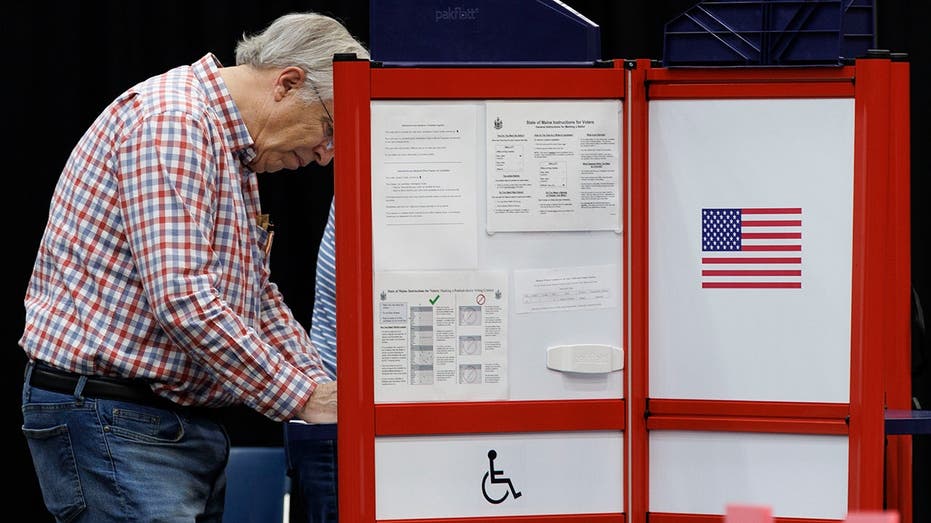
Image via Fox News
Voters feel the squeeze: strong markets, stubborn household costs
A Fox News analysis argues the economy is central to today’s voting, pointing to charts showing inflation running ahead of wages, gas prices sitting above $4 in many places, and mortgage rates pushing past 7%. At the same time, the S&P 500’s sharp rise under Trump is framed as a sign of financial strength that hasn’t translated into everyday relief for many households.
This split-screen economy has been a defining feature of the cycle: asset prices and corporate earnings can surge while renters, first-time homebuyers, and families financing cars and groceries still feel pinched. When housing costs and borrowing rates stay high, even a decent paycheck growth story can feel like treading water. And because energy and food are highly visible, they carry outsized political weight compared with less tangible gains like improved balance sheets or lower long-run inflation.
Policy arguments now tend to cluster around two competing claims: that tighter regulation and spending have kept costs elevated, versus that global shocks and higher rates are the unavoidable price of stabilizing inflation. Either way, the political test is whether leaders can show a credible path to lower cost-of-living pressures without igniting another inflation spike.
✓ The Bottom Line: The market is not the economy most voters live in, and policymakers ignore that at their peril. If wages aren’t clearly outpacing essentials and housing is effectively locked behind 7% rates, “look at the S&P” won’t persuade many swing households. The evidence suggests the political center of gravity is cost of living, so any winning agenda will need tangible, near-term steps on energy, housing supply, and competition, not just macro talking points.
📎 Fox News

Image via NBC News
Election Day storms force last-minute polling changes across multiple regions
Severe weather disrupted voting in parts of the country, with flash flooding, heavy rain, and tornado threats forcing election officials to move or adjust polling locations in at least three regions. The changes created a scramble for local administrators who had to reroute voters, communicate new sites, and maintain ballot security and chain-of-custody procedures under pressure.
The immediate concern is access: when a precinct location moves with little notice, turnout can suffer, especially for elderly voters, people with limited transportation, and first-time voters unsure where to go. Emergency relocation also raises predictable questions about consistency and transparency, even when officials are acting in good faith to keep voters safe.
Most jurisdictions have contingency plans, but climate-driven volatility is testing them more often. Expect renewed focus on real-time voter communication, backup sites that are pre-approved and accessible, and expanded options like early voting and no-excuse absentee ballots that reduce the stakes of a single bad-weather day.
✓ The Bottom Line: Bad weather shouldn’t become a de facto voting barrier, and the answer isn’t partisan: it’s operational competence and redundancy. States should standardize emergency relocation rules and require rapid, auditable public notice so voters aren’t left guessing. The more Election Day becomes a high-risk single point of failure, the stronger the case for wider early-vote windows and resilient logistics that protect both access and integrity.
📎 NBC News
That’s the latest from Brief Updates. Keep your eye on process as much as outcomes tonight: how institutions perform under stress is often the real headline.
— Brief Updates Editorial