Today’s Sponsor
While other sectors stall, AI investment is accelerating — showing up in earnings calls, corporate budgets, and real-world deployment. Capital is quietly concentrating around companies with clear demand and long-term relevance, and selective opportunities are forming right now.
A new research brief identifies 2 AI stocks trading under $15 that may be positioned for the next phase of growth — including key developments that could move these names in the months ahead.
Get the Free AI Stocks ReportBy following the link above, you're choosing to opt in to receive insightful updates from Investing Ideas Daily + 2 free bonus subscriptions! Your privacy is important to us. You can unsubscribe anytime. See our privacy policy for details.

Friday, September 4, 2026: Trump envoys head to Moscow and Kyiv, two Nepal tunnel workers rescued after floods, August hiring strengthens, a new acting Army secretary, and Russia signals with an ICBM test amid U.K. tensions.
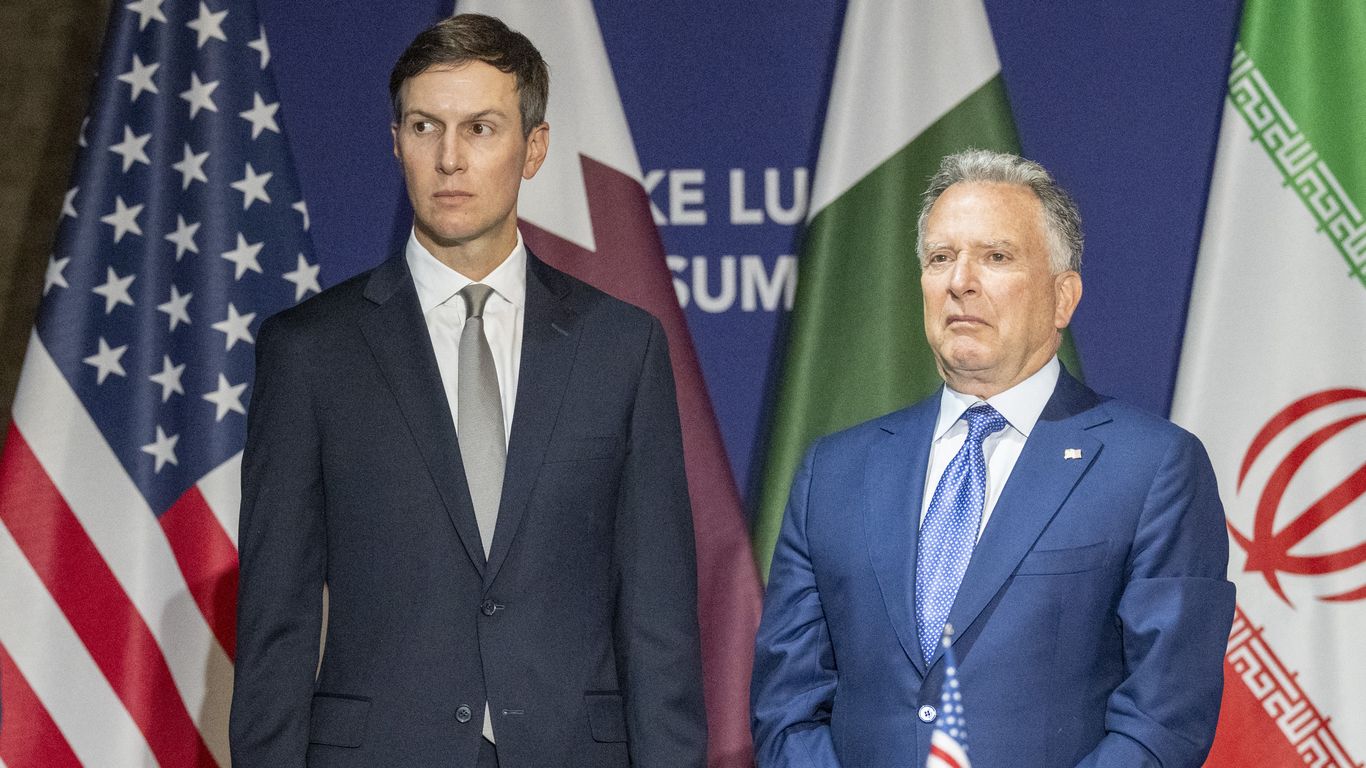
Image via Axios
Trump envoys set Moscow and Kyiv swing as White House presses for an endgame
Two senior Trump envoys, Steve Witkoff and Jared Kushner, are expected to travel this weekend to Moscow and Kyiv for talks aimed at ending the war in Ukraine, according to U.S. officials. The trip signals a renewed push for direct engagement with both sides at a moment when the battlefield remains grinding and diplomacy has repeatedly stalled.
The immediate questions are what, exactly, the U.S. is prepared to offer or demand, and how Ukraine’s leadership will gauge any proposed terms against sovereignty and security guarantees. Any outreach to Moscow will also be scrutinized by European allies, many of whom see sustained pressure on Russia as the only credible route to a durable settlement.
If the mission produces even a framework for further talks, it could change near-term expectations about escalation risks and defense spending trajectories across Europe. If it fails, it may harden arguments in Washington for either tighter sanctions and more military support, or for a recalibration of U.S. goals to something short of a comprehensive peace.
✓ The Bottom Line: Diplomacy is necessary, but a deal that stops shooting without addressing enforcement and future deterrence is just a pause button. The U.S. should be clear-eyed that Moscow has repeatedly used negotiations to buy time, and Kyiv cannot be pressured into terms that invite a repeat invasion. If these talks go anywhere, the proof will be in concrete security arrangements and verifiable timelines, not photo-ops or vague “understandings.”
📎 Axios

Image via NBC News
Nepal rescue brings rare good news after floods as two workers found alive in tunnel
Rescuers in Nepal pulled two workers out alive from a hydropower tunnel on Friday, more than a week after catastrophic floods swept parts of the Himalayan region. The men had been trapped for about nine days, a remarkable survival outcome amid a disaster that has left large numbers of people missing and communities cut off.
The rescue underscores both the scale of the emergency response and the harsh realities of infrastructure work in extreme terrain, where tunnels, roads, and power projects are vulnerable to sudden weather shifts. It also throws a spotlight on the risks faced by workers when flood monitoring, evacuation protocols, and site protections fail to keep pace with fast-moving conditions.
For Nepal, the broader test now is sustaining search-and-rescue while also shifting rapidly into recovery: restoring access routes, stabilizing slopes, and preventing disease outbreaks. With climate-driven extremes becoming more common, the long-term challenge is building systems that treat flood readiness as a core national security and economic priority, not an afterthought.
✓ The Bottom Line: This rescue is a testament to grit and skilled responders, but it shouldn’t distract from hard questions about preparedness and worker safety. Hydropower is vital for development, yet projects can’t be treated as “progress at any cost” in regions prone to sudden flooding and landslides. Nepal and international partners should tie future financing to stricter safety standards, real-time monitoring, and enforceable emergency plans.
📎 NBC News

Image via Fox Business
August hiring snaps back with solid gains as labor market steadies
The U.S. added a solid number of jobs in August, according to Labor Department data, a rebound that points to continued resilience in the labor market. The report suggests employers are still hiring at a healthy clip even as the economy digests higher rates and tighter financial conditions than in the early part of the decade.
Markets and policymakers will parse the details: whether gains were broad-based, what happened to wage growth, and whether labor-force participation improved. A “good” report can be double-edged if it implies inflation pressure is sticking around, but it can also ease fears that the economy is slipping into a hiring freeze.
For households, steady job creation matters most in the form of opportunity and bargaining power. For Washington, it shapes the next round of debate over interest rates, deficit spending, and whether the economy is headed toward a soft landing or just a delayed slowdown.
✓ The Bottom Line: A rebound in hiring is welcome, but the right read is disciplined optimism, not victory laps. Strong jobs with controlled wage-driven inflation is the best-case scenario, and the Fed should stay data-driven rather than political. The bigger risk is complacency: a few good months can mask underlying imbalances if spending and borrowing keep outpacing productivity.
Trump names Adam Telle acting Army secretary, signaling a shake-up at the top
President Trump has selected Adam Telle to serve as acting U.S. Army Secretary, effective immediately. The move puts a new figure in a key civilian leadership post overseeing the Army’s budget, acquisition priorities, personnel policies, and readiness decisions.
An acting appointment can be purely transitional, but it also sets the tone for management style and near-term priorities, particularly on procurement and force structure choices that ripple across industry and allies. It also arrives in an era when the Army is balancing modernization programs with ongoing operational demands and recruitment challenges.
The practical question is how quickly the Pentagon and Congress can align around stable leadership and clear directives. Extended reliance on acting officials can complicate long-term planning, especially on major acquisition decisions and reforms that require continuity and sustained oversight.
✓ The Bottom Line: Civilian control of the military works best when leadership is steady, qualified, and accountable to Congress, not when roles churn. If Telle is meant to drive reform, the administration should be transparent about objectives and move quickly toward a confirmable, permanent nominee. The Army has too many big-ticket decisions on the table for indefinite “acting” governance.

Image via New York Post
Russia test-fires ICBM as it warns U.K. over long-range strikes
Russia conducted a test launch of an intercontinental ballistic missile as tensions with the United Kingdom escalated, alongside warnings that British military targets could be struck if Ukraine uses long-range British cruise missiles against targets deep inside Russia. The launch functions as a strategic signal: Russia reminding NATO that escalation ladders exist well beyond the conventional fight in Ukraine.
While test launches are not uncommon in nuclear-armed states, the timing and accompanying rhetoric are designed to shape Western decision-making. The key distinction is between deterrence messaging and genuine preparations for wider conflict; Moscow often blends both to create uncertainty and leverage.
For London and its allies, the dilemma is familiar: how to support Ukraine’s ability to strike military targets linked to ongoing attacks without triggering uncontrolled escalation. That puts a premium on clear rules of use, tight coordination among allies, and credible defensive posture at home and across NATO’s eastern flank.
✓ The Bottom Line: Russia’s nuclear signaling is meant to intimidate, and the West shouldn’t reward it by self-deterring into paralysis. At the same time, the U.K. and allies should pair any expanded strike authority with disciplined targeting and unified messaging that NATO seeks deterrence, not a wider war. The best response is firmness plus clarity: keep supporting Ukraine while closing off misunderstandings that could spiral.
That’s the file for today. We’ll be watching for readouts from Moscow and Kyiv, revisions and wage details from the jobs report, and any concrete policy shifts tied to Pentagon leadership changes.
— Brief Updates Editorial