Today’s Sponsor
While other sectors stall, AI investment is accelerating — showing up in earnings calls, corporate budgets, and real-world deployment. Capital is quietly concentrating around companies with clear demand and long-term relevance, and selective opportunities are forming right now.
A new research brief identifies 2 AI stocks trading under $15 that may be positioned for the next phase of growth — including key developments that could move these names in the months ahead.
Get the Free AI Stocks ReportBy following the link above, you're choosing to opt in to receive insightful updates from Investing Ideas Daily + 2 free bonus subscriptions! Your privacy is important to us. You can unsubscribe anytime. See our privacy policy for details.

Monday, July 27, 2026 | A fair, well-rounded look at today's news: the political downside of governing, a Senate showdown over election rules, a risk-on market bounce led by tech, Ford's profit hunt in accessories, and oil's quick repricing as Washington and Tehran pause.

Image via Axios
Democrats discover the anti-incumbent wave doesn't always break their way
Democrats are running into a dynamic Republicans have learned the hard way: voters angry at "the system" don't reliably reward whichever party is currently out of power. In several competitive contests, frustration with Washington and state capitals is showing up as a broader rejection of insiders, not a neat referendum that automatically benefits one brand.
Axios highlights how this plays out inside the party, especially where ideological labels and local grievances collide. A populist mood can punish establishment-aligned Democrats in primaries and sap enthusiasm in general elections, particularly in places where voters see Democratic governance as synonymous with bureaucracy, cost-of-living pressures, or cultural lecturing.
The upshot is that "anti-incumbency" is less a partisan wind at Democrats' backs and more a volatile weather pattern that can knock down whoever looks in charge. That forces Democrats into a tricky two-front campaign: arguing they're delivering results while also convincing skeptical voters they're not the face of a failed status quo.
✓ The Bottom Line: The evidence suggests this cycle's anger is directional in some places, but broadly institutional in others. Democrats can't campaign like they're merely the alternative to Republicans; they also have to prove they're capable of governing without sounding like managers defending the DMV. If they don't offer a credible reform-and-results case, the "throw them all out" mood will keep clipping their candidates too.
📎 Axios

Image via The Hill
Trump urges Thune: keep the Senate in until the SAVE America Act clears
President Trump is pressuring Senate Majority Leader John Thune to keep the Senate in session until it passes the Safeguard American Voter Eligibility (SAVE America) Act, escalating a familiar election-fight playbook: force a procedural confrontation, frame it as election integrity, and dare the other side to block it.
The bill's core premise is tightening voter-eligibility enforcement, a message that plays well with many Republicans and some independents who want clearer rules and better verification. Democrats and voting-rights advocates argue such measures risk creating new hurdles for lawful voters, especially people with limited documentation access, and warn of administrative chaos if implemented bluntly.
Thune is caught between floor-time reality and intra-party politics. Keeping senators in town can produce leverage, but it also raises the stakes for a public standoff that could spill into other priorities and deepen the perception that Congress is stuck in permanent campaign mode.
✓ The Bottom Line: Election administration needs higher trust, but durable reform comes from precision, not maximalist brinkmanship. If Republicans can show the bill targets verification gaps without blocking legitimate voters, they should welcome amendments and transparency rather than a made-for-TV siege. Forcing a "stay until it passes" moment may rally the base, but it's a poor substitute for building a law that can survive court scrutiny and future majorities.
📎 The Hill
Markets rebound as geopolitics cools and big tech regains its footing
Stocks climbed as signs of easing Middle East tensions reduced the market's immediate risk premium, helping push investors back toward equities. When the probability of an oil shock declines, the first beneficiaries are often the most rate-sensitive and growth-oriented parts of the market, which had been jittery about inflation re-accelerating.
Bloomberg also points to Nvidia-related deal momentum as a positive catalyst, reinforcing the idea that the AI investment cycle remains intact even as Washington watches semiconductor supply chains and national-security angles more closely. The market's tone was simple: less geopolitical heat, more room for risk-on positioning.
Still, this kind of rally can be fragile. If diplomacy stalls or energy prices snap back, the same macro concerns that drove recent volatility$—inflation expectations, rate paths, and earnings durability$—will return quickly.
✓ The Bottom Line: Today's move looks like a rational repricing of near-term risk, not proof that the macro story has turned. Investors should separate two things: the real resilience in AI-linked demand and the market's habit of overreacting to headline-driven geopolitics. The better signal will be whether earnings and guidance validate valuations after the relief trade fades.
Ford leans into customization to chase fatter margins and a culture of "drops"
Ford is expanding its accessories and parts push, betting that more customers will personalize vehicles and generate higher-margin revenue after the sale. The company is targeting a bigger slice of the U.S. automotive aftermarket, framing customization not just as utility but as identity$—especially for enthusiast models like the Bronco.
CNBC reports Ford is also borrowing language from consumer brands, aiming for limited-run "Nike shoe drop" moments that create buzz and scarcity. If executed well, that can boost profitability, deepen loyalty, and keep customers inside the Ford ecosystem rather than losing accessory dollars to third parties.
The risks are operational and reputational: inventory planning, quality control, and pricing discipline matter, and customers will punish anything that feels gimmicky or delayed. But the logic is hard to argue with$—automakers need new profit pools as vehicle pricing normalizes and EV transition costs remain heavy.
✓ The Bottom Line: This is one of the more sensible ways for a legacy automaker to improve margins without simply raising sticker prices. The win condition is boring competence: fast fulfillment, fair pricing, and accessories that look factory-quality. If Ford can deliver that consistently, "drop" marketing is optional$—the profitable part is keeping the aftermarket revenue in-house.
📎 CNBC
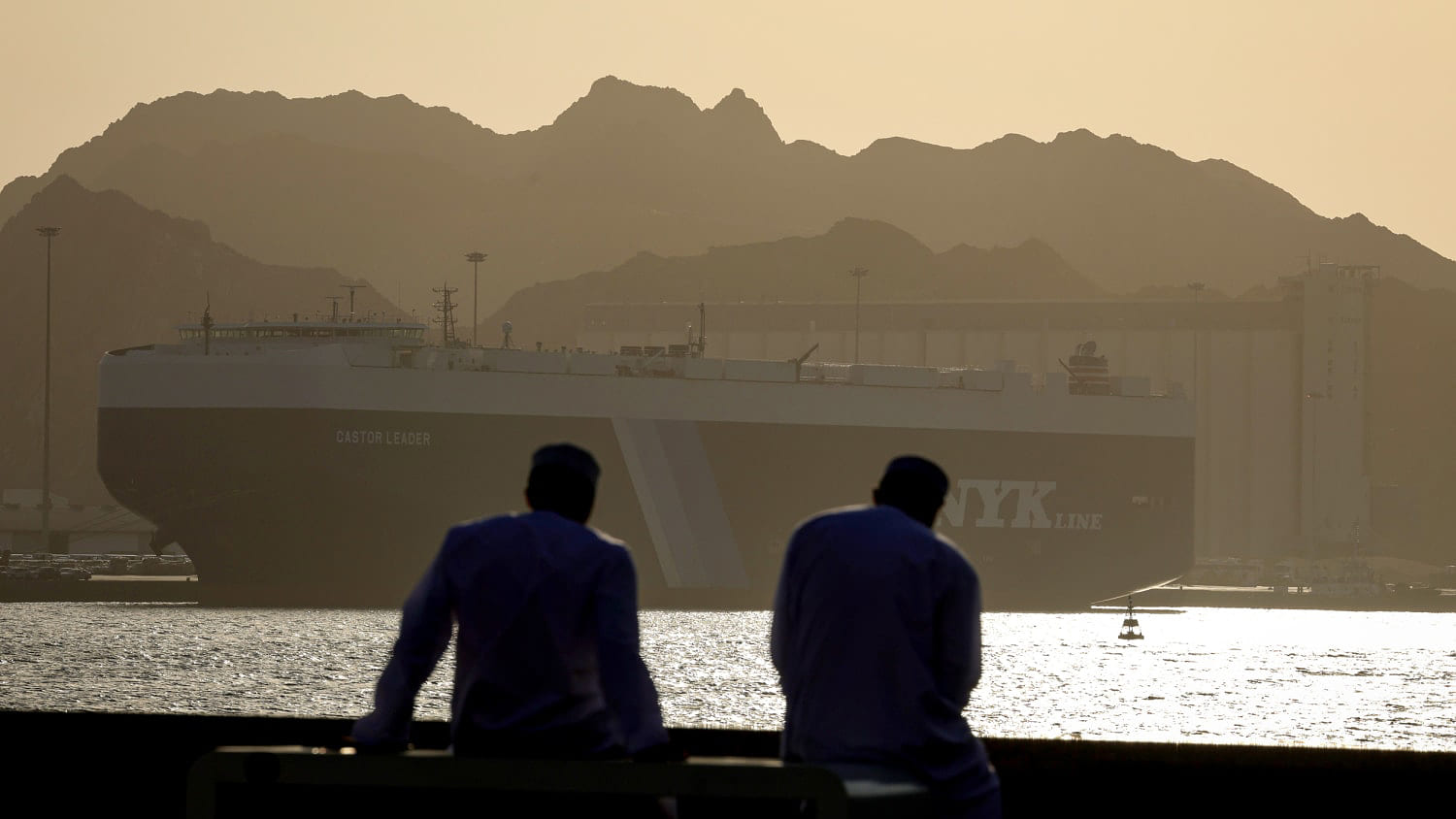
Image via NBC News
Oil drops as U.S. and Iran pause strikes, giving diplomacy room to work
Oil prices slid after the U.S. and Iran paused escalating strikes to create what officials described as "space" for diplomacy. Markets quickly priced down the odds of an immediate supply disruption, including worst-case scenarios tied to shipping lanes and broader regional escalation.
NBC News notes the pullback followed a tense stretch that had pushed energy traders to pay up for insurance against sudden outages. Even a temporary pause can unwind that premium, especially if there are signals that backchannel talks or third-party mediators are active.
The underlying risk hasn't vanished. The region's security environment remains volatile, and a single incident can flip sentiment back toward fear, pushing crude higher and reigniting inflation concerns for consumers and central banks alike.
✓ The Bottom Line: The market is right to treat "pause" as meaningful but not definitive. Diplomacy is cheaper than war, and reducing the temperature should be the immediate priority, yet the strategic incentives that drive escalation haven't magically changed. Policymakers should use this window to lock in de-escalation mechanisms that survive the next provocation, not just the next news cycle.
📎 NBC News
That's Brief Updates for Monday. We'll be watching Capitol Hill for what becomes a real legislative push versus a messaging fight, and we'll keep an eye on whether the Middle East calm holds long enough to change markets beyond a one-day relief trade.
— Brief Updates Editorial