Today’s Sponsor
Stop stressing over weekly stock picks! Our veteran investor just released a FREE report featuring 10 U.S. stocks you can buy and hold — backed by 20+ years of experience and deep research into AI, EVs, digital health, and cloud megatrends.
Get bulletproof entries, holding strategies, portfolio allocation guides, and sector insights that work for beginners and pros alike. Available for first movers only — grab yours in the next few days!
Get the 10 Stocks For FreeBy clicking this link you agree to receive emails from StockEarnings and our affiliates. You can opt out at any time. Privacy Policy

Twilio argues AI-driven, two-way customer conversations are raising the bar for messaging infrastructure just as geopolitics, war, tariffs, and U.S. redistricting battles add fresh risk and uncertainty.
Twilio Bets on AI Agents as Messaging Shifts From Alerts to Two-Way Conversations
Twilio’s CEO said the communications market is moving quickly from one-way customer notifications—password resets, shipping updates, appointment reminders—toward AI-driven, two-way conversations that can be personalized at scale. That evolution, he argued, raises the bar for what developers and enterprises need from core messaging infrastructure: reliability, compliance tooling, identity and fraud protections, and the ability to coordinate across channels in real time.
In the discussion, the company framed “AI agents” as the new front-end for customer engagement—software that can text, call, or chat on a customer’s behalf and then escalate smoothly to a human when needed. The implication for Twilio is strategic: the more businesses standardize on automated conversational workflows, the more valuable the underlying “plumbing” becomes—number provisioning, deliverability, routing, consent management, and cross-channel orchestration.
The broader trend also increases competitive pressure. Big platforms and cloud providers are pushing deeper into customer engagement, while enterprises are scrutinizing messaging costs and regulatory risk. Twilio is positioning itself as the neutral infrastructure layer for omnichannel communications in a world where AI is increasingly “the operator” behind the keyboard.
Read the full story at Bloomberg →
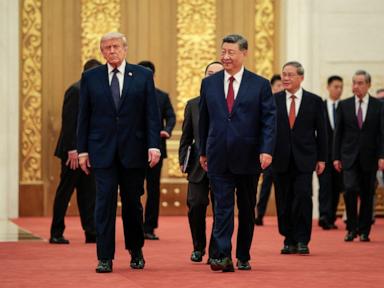
Image via ABC News
Xi Warns Trump on Taiwan in High-Stakes Beijing Summit
Chinese President Xi Jinping warned President Donald Trump that the U.S. and China risk “clashing” if Taiwan is handled “improperly,” sharpening Beijing’s long-running message that Washington must not deepen official ties or military support for Taipei. The remarks came during Trump’s state visit to Beijing, a highly choreographed meeting that sits at the center of an already tense bilateral relationship.
The summit underscores the competing priorities on both sides. For Beijing, Taiwan remains the top sovereignty issue, and Xi has consistently sought to deter U.S. steps that China views as encouraging independence. For Washington, Taiwan is both a strategic partner and a flashpoint tied to broader Indo-Pacific deterrence, with many in the U.S. foreign policy establishment arguing that ambiguity must be backed by credible capability and coordination with allies.
Any public friction during the trip is likely to reverberate through markets and regional capitals. Allies in Asia typically watch for signals about U.S. commitment and crisis management, while investors tend to track whether high-level engagement lowers the risk of miscalculation—or simply papers over unresolved fundamentals.
Read the full story at ABC News →

Image via PBS NewsHour
Russian Strikes Hit Multiple Ukrainian Cities, Killing 7 and Wounding Dozens
Russian strikes across Ukraine killed at least seven people and injured dozens, according to reporting from Kyiv and regional authorities. In the capital, damage was described in residential areas, with emergency crews responding to shattered buildings and debris in neighborhoods not typically associated with frontline combat.
The attacks fit a pattern of Russia sustaining pressure on Ukraine’s cities and infrastructure through missiles and drones, forcing Ukraine to expend air-defense interceptors while keeping civilians under persistent threat. Ukraine has argued that such strikes demonstrate Moscow’s intent to wear down public morale and disrupt daily life far from the battlefield, while Russia has often framed its campaign as targeting military-linked assets.
For Ukraine and its partners, the repeated volleys keep the spotlight on air-defense needs—interceptors, radar, and integrated command-and-control—as well as the difficulty of fully shielding a large country from saturation attacks. The humanitarian toll also complicates diplomacy, hardening domestic and European political constraints around any ceasefire terms seen as rewarding aggression.
Read the full story at PBS NewsHour →
Businesses Begin Receiving Refunds for IEEPA Tariffs After Court Fight
Some U.S. businesses say they are now receiving refunds tied to tariffs imposed under the International Emergency Economic Powers Act (IEEPA), after legal challenges and administrative processing opened a path for repayments. Owners interviewed described watching bank accounts and tracking claims closely, citing cash-flow strain as duties accumulated.
The refunds matter because tariffs, even when intended as leverage in trade negotiations, function like a tax on importers in practice—often passed through to consumers or absorbed as lower margins. For small and mid-sized firms, the timing can be decisive: refunds can stabilize working capital, but delays can also mean layoffs, canceled orders, or higher prices.
The episode also highlights a recurring policy friction: tariffs can be politically popular as a show of toughness, but the mechanics—legal authority, eligibility, documentation, and reimbursement—can become complex and costly. More broadly, the refund process may influence how aggressively companies contest future tariff actions and how policymakers weigh short-term leverage against long-term administrative and economic fallout.
Read the full story at CBS News →
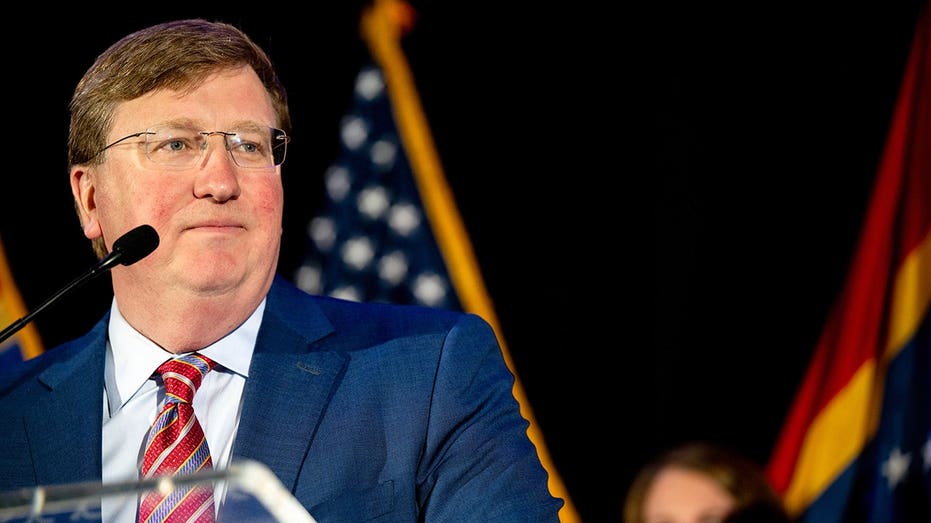
Image via Fox News
Mississippi Redistricting Delay Blunts GOP Push to Target Bennie Thompson Seat
Mississippi Gov. Tate Reeves is delaying a move to redraw the state’s congressional map, stepping back from an election pledge that Republicans hoped would put Democratic Rep. Bennie Thompson’s seat in play ahead of 2026. The decision is being framed as a significant setback for national Republicans who have been looking for opportunities to reshape a small number of districts to improve midterm odds.
At issue is the political and legal risk of redistricting in a state with a long history of voting-rights litigation. Any attempt to dismantle or significantly alter a district anchored by Black voters would face immediate scrutiny, and potentially court challenges, over whether the map dilutes minority voting power. That prospect can deter state leaders who want to avoid prolonged legal uncertainty and political backlash.
For Trump-aligned strategists, the Mississippi pause complicates a broader midterm plan that relies on maximizing structural advantages where possible, especially in closely contested control scenarios. For Democrats, it preserves a durable seat and signals that some redistricting ambitions may be running into practical limits—even in deep-red states.
Read the full story at Fox News →
Brief Updates — clear facts, balanced context, no wasted words.
— Brief Updates Editorial