Today’s Sponsor
That "Trump Bump" Social Security raise? Already gone. Medicare premiums, gas, groceries — they've swallowed every penny before it hits your account. Meanwhile, your benefits have already lost 13.7% of their purchasing power since 2016, and the system would need to raise checks by 15.7% just to break even. You're getting $81. You needed $296.
Central banks have been quietly buying one specific asset at the fastest pace in 50 years — and JP Morgan now sees it hitting $8,000. Smart retirees aren't waiting on the next COLA. They're protecting what's left right now. Get the free guide and see the 3 steps disciplined retirees are using to outrun the inflation Washington can't stop.
Get the Free Wealth Preservation GuideThis is an advertisement. If you no longer wish to receive our promotionals, please let us know. Or write to: 5005 Lyndon B. Johnson Fwy. Suite 350, Dallas, TX 75244

Friday, September 18, 2026. Berkshire enters a post-Buffett chapter as oil markets wobble between escalation and indifference, Washington politics tests its messaging lanes, and consumers keep trading down under war-driven price pressure.
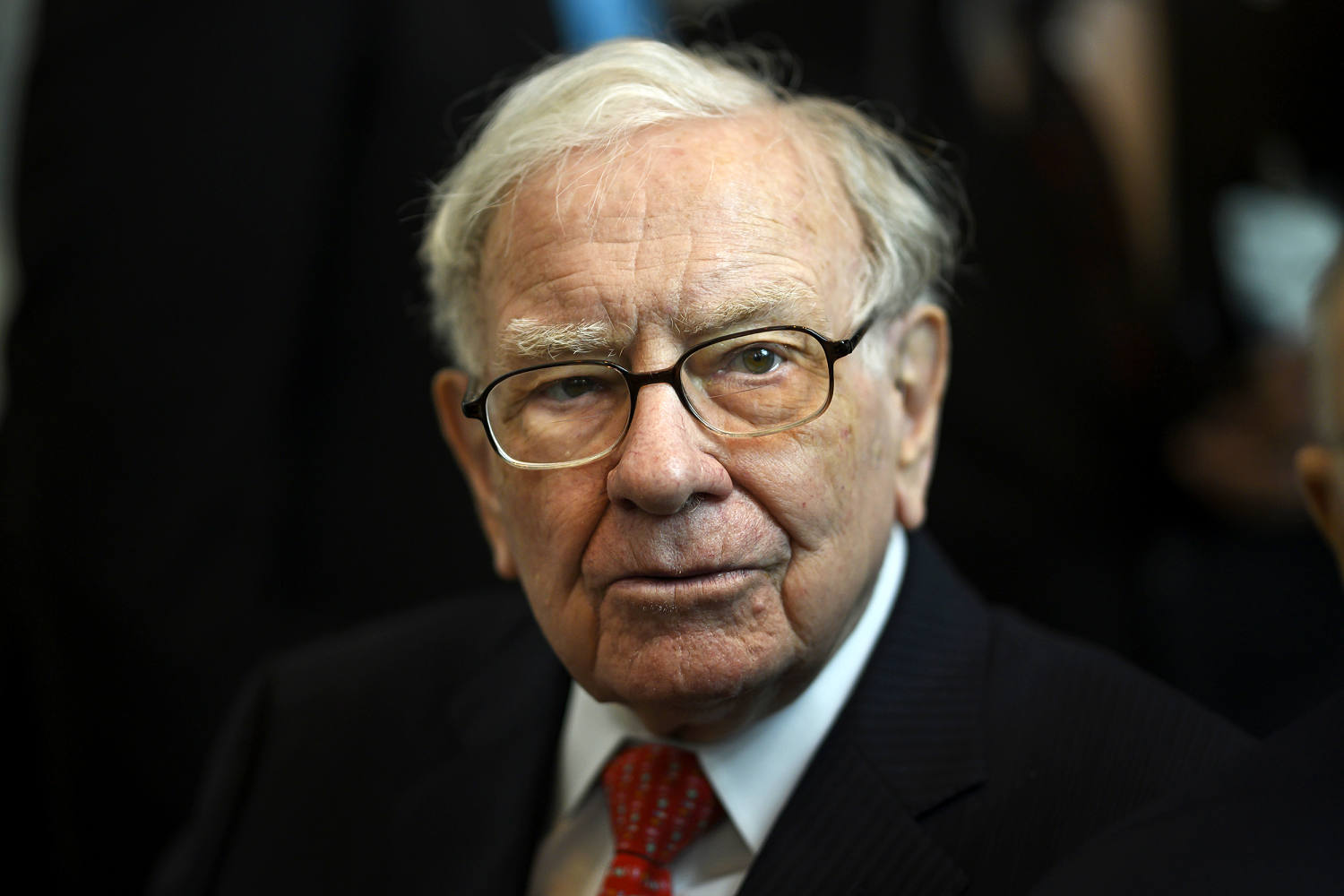
Image via NBC News
Buffett steps aside as Berkshire chairman, handing a legacy and a governance test to his successors
Warren Buffett is stepping down as chairman of Berkshire Hathaway, closing a defining chapter in American business. Over more than six decades, Buffett turned Berkshire into a sprawling conglomerate and a global symbol of long-term, plainspoken investing discipline, while building an unusual culture that prized autonomy for operating companies and a headquarters that stayed famously lean.
The immediate market question is less about day-to-day operations, which Berkshire has long structured to run without Buffett micromanaging, and more about capital allocation and confidence. Berkshire’s scale, giant cash pile, and insurance float make leadership continuity especially consequential when markets are volatile and dealmaking windows open and shut quickly.
The transition also brings governance into sharper focus: Berkshire’s identity has been unusually intertwined with one person’s credibility. Investors will now judge whether the firm can preserve its decentralized model while proving that its next generation can deploy capital with discipline rather than simply protect the brand.
✓ The Bottom Line: Berkshire has spent years preparing for this moment, but the hardest part isn’t running subsidiaries; it’s replacing the judgment premium Buffett commanded. The smartest expectation is not “another Buffett,” but a slightly more conventional Berkshire whose performance will be measured against opportunity cost, not mythology. If the company stays conservative on leverage and disciplined on acquisitions, it can keep earning trust the old-fashioned way: results over reverence.
📎 NBC News

Image via Axios
Oil’s new mood: even the pros admit they don’t know what happens next
Oil markets are behaving in a way that would have seemed strange in earlier Middle East flare-ups: prices react, then often relax, as if traders are toggling between alarm and fatigue. Axios highlights J.P. Morgan’s unusually candid framing that, amid the Iran conflict, analysts lack a reliable baseline view, underscoring how quickly assumptions about supply disruptions, retaliation, and policy response can break down.
Several forces are colliding. Physical flows, spare capacity, shipping risk, and insurance costs can change fast, while demand signals are muddied by uneven global growth and consumers pulling back. Meanwhile, market participants are trying to handicap not just what Iran and the U.S. do next, but what they choose not to do, which can matter just as much for supply.
This uncertainty has real-world consequences: it can widen price swings, distort hedging decisions, and complicate central-bank and government planning. When the best-funded analysts are openly signaling low conviction, that’s a warning that volatility may be the only dependable forecast.
✓ The Bottom Line: The honesty is welcome, but the shrug has a cost: uncertainty itself becomes a driver of higher risk premiums. Policymakers should read this as a signal to focus on resilience, not prediction, including strategic stockpile discipline and clearer deterrence messaging around shipping lanes. Markets can live with bad news; they struggle most with unclear rules and unpredictable escalation paths.
📎 Axios

Image via The Hill
Iran claims strike on tanker in Strait of Hormuz, raising stakes for global shipping
Iran says it struck an oil tanker in the Strait of Hormuz that it claims was attempting to pass “illegally,” according to a statement from the Islamic Revolutionary Guard Corps. The Strait is one of the world’s most critical maritime chokepoints, and even isolated incidents can ripple through energy prices, insurance rates, and naval posture.
Tehran’s framing matters: labeling commercial transit as unlawful is a way to justify force while pressuring adversaries without a formal blockade. For shipping companies and importing countries, the near-term focus is on the facts of the incident, the condition of the vessel and crew, and whether this signals a broader campaign targeting commercial traffic.
The strategic risk is escalation through miscalculation. If more vessels are hit or if a retaliatory action follows, the region could slide from sporadic incidents into sustained disruption, with knock-on effects for inflation, growth, and political stability well beyond the Gulf.
✓ The Bottom Line: Attacking or claiming justification to attack commercial shipping in Hormuz is not a routine “security” measure; it’s coercion with global consequences. The U.S. and partners should treat this as an escalation risk that demands firm, proportionate deterrence and rapid clarity on attribution, not rhetorical posturing. Letting the definition of “illegal passage” drift toward Iran’s preferences would effectively outsource the rules of a critical waterway.
📎 The Hill

Image via Politico
Vance courts skeptical Jewish Republicans in a high-wire White House meeting
Vice President JD Vance is facing a politically delicate meeting with New York radio host Sid Rosenberg, a vocal pro-Israel figure with influence among parts of the conservative base. Politico reports the sit-down comes as Vance works to shore up support among skeptical Jewish Republicans, a constituency that can be small in raw numbers but meaningful in fundraising networks, media ecosystems, and coalition signaling ahead of a likely 2028 run.
The broader backdrop is an intra-right debate over foreign policy posture, Israel policy, and how much the party should prioritize restraint versus traditional alliance commitments. A White House meeting with a prominent media personality is also a reminder that persuasion in modern politics often happens through influencers and talk platforms as much as through formal party structures.
For the administration, the challenge is to project steadiness on national security while keeping domestic politics from looking transactional. For Vance personally, it’s a test of whether he can translate populist instincts into disciplined diplomacy and coalition maintenance without alienating other factions that are wary of open-ended commitments abroad.
✓ The Bottom Line: If Vance wants to be taken seriously as a national leader, he needs to show he can engage allies of the party without sounding like he’s auditioning for a radio segment. The evidence so far across U.S. politics is clear: coalitions hold when leaders offer consistent principles, not just calibrated applause lines. A durable posture on Israel and the Middle East should be rooted in U.S. interests and credible deterrence, not vibes or factional appeasement.
📎 Politico
War-driven price pressure pushes shoppers to trade down, and brands scramble to keep up
Bloomberg reports that as the Iran war drives up costs, value-conscious consumers are increasingly hunting for cheaper options, while manufacturers look for ways to protect margins without losing volume. The pattern is familiar: when essentials get pricier, households become more willing to switch brands, delay discretionary purchases, and prioritize promotions, store brands, and smaller pack sizes.
For companies, the squeeze is two-sided. Input costs and logistics can rise quickly during geopolitical shocks, but passing those increases through to shoppers is harder when demand is already fragile. That dynamic tends to reward firms with simpler product lines, better supply-chain flexibility, and pricing strategies that don’t rely on constant stealth increases.
The broader implication is political as much as economic. When households feel the pinch in groceries, fuel, and basic goods, patience for policy risk-taking drops, and inflation narratives regain power in elections and consumer confidence measures alike.
✓ The Bottom Line: Consumers trading down is not a mystery; it’s a rational response to the real erosion of purchasing power, and it’s a warning light for policymakers. The best antidote isn’t lecture-mode messaging, it’s reducing avoidable volatility: energy security, credible foreign-policy deterrence, and domestic regulatory restraint that lowers baseline costs. Companies should stop pretending pricing power is infinite and compete harder on value, because shoppers are already voting with their carts.
That’s the file for today. We’ll keep tracking what’s signal versus noise as markets, politics, and kitchen-table economics collide.
— Brief Updates Editorial