Today’s Sponsor
A little-known force is now controlling the S&P's price action — and most traders have no idea it exists. A former VP of a trillion-dollar firm has spent years cracking it, and the results speak for themselves: a 79.4% win rate with same-day returns like 176% and 75.4% — up or down market, it doesn't matter.
This isn't mainstream. It won't be on CNBC. But right now, you can get the full breakdown — including how to use this force to target double- and triple-digit moves today. Don't sit this one out.
Get the Free Breakdown NowWe develop tools and strategies to the best of our ability, but we can't guarantee the future. In LIVE trading alerts in real time from 08/23/24 to 3/28/26, the strategy is 54-14, with an overall win rate of 79.4% and an average return (winners and losers included) of 59.3%, with an average winner of 86.8% over a 1-day hold time. Trade at your own risk. By clicking the link above you agree to periodic updates from The TradingPub and its partners. Privacy Policy.

Friday, July 17, 2026: A tight look at five developments with real political, legal, and public-safety stakes.
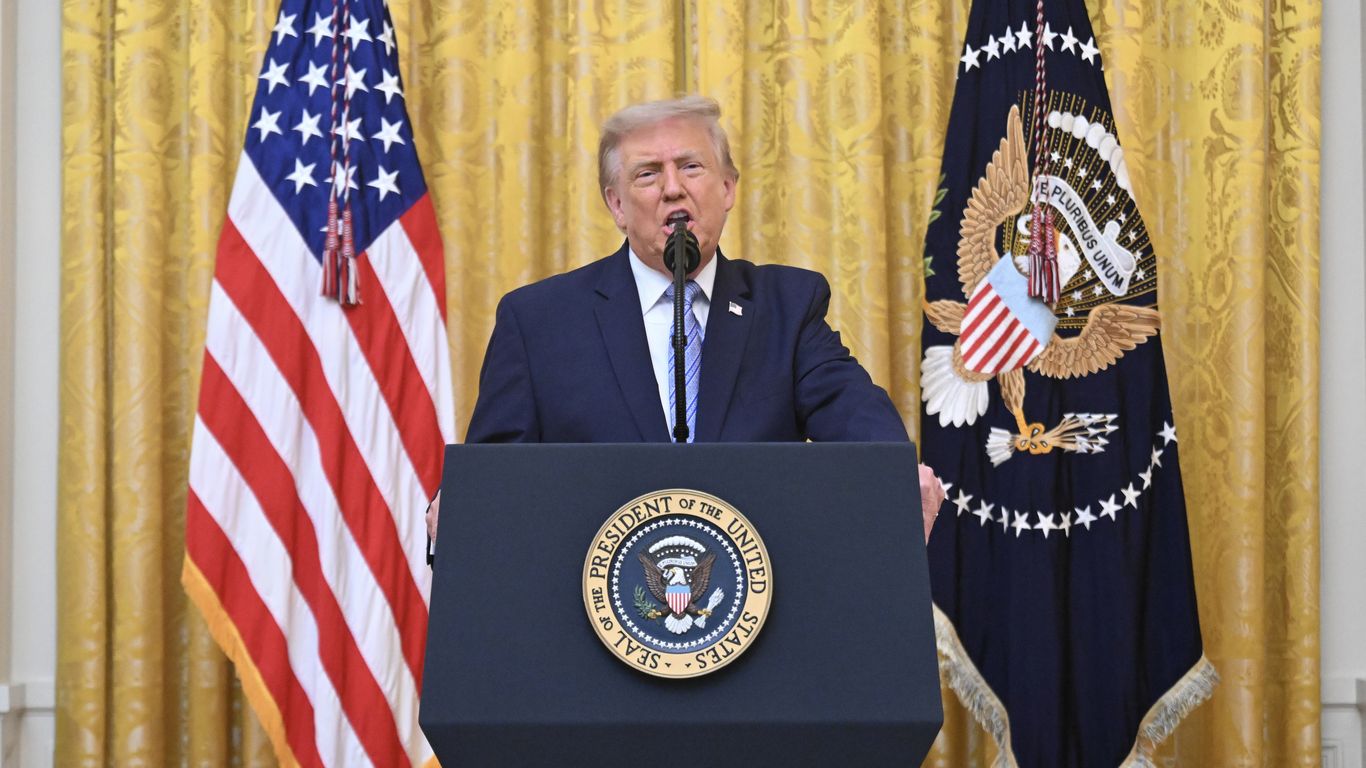
Image via Axios
Trump renews threat to pull ABC and NBC licenses after they skip his speech
President Trump threatened to revoke the broadcast licenses of ABC and NBC after the networks declined to preempt regularly scheduled programming to carry a speech. The president’s comments revive a familiar pressure tactic: using the language of government sanction against media outlets that make editorial decisions he dislikes.
Legally, the president cannot unilaterally “take” a broadcaster’s license. Broadcast licenses are administered by the Federal Communications Commission under statutory standards, and the First Amendment sharply limits government retaliation based on content. Still, presidential threats can matter even when they are unlikely to succeed in court, because they can chill news judgment, incentivize self-censorship, and turn routine programming calls into political flashpoints.
The networks’ decision not to carry the speech live is not unusual in modern media; outlets frequently cover major remarks via clips, highlights, and analysis rather than wall-to-wall carriage, especially when the content is expected to be political rather than emergency-related. The larger implication is less about one address than about whether regulatory rhetoric becomes a normalized tool of political leverage over legacy broadcasters.
Source: Axios
Read the full story at Axios →

Image via The Hill
China flatly rejects Trump’s renewed claim of 2020 election interference
China’s government dismissed President Trump’s accusation that Beijing interfered in the 2020 U.S. presidential election, calling the allegation “entirely fabricated” and “groundless,” while insisting it does not meddle in other countries’ domestic politics. The pushback adds another layer of friction to an already strained U.S.-China relationship, where disputes over trade, technology, and security routinely spill into public messaging.
Trump’s assertion taps into a broader U.S. debate about foreign influence operations, which have historically included cyber activity, propaganda, and covert funding attempts by multiple actors. But claims carry different weight depending on what evidence is presented and which agencies corroborate them. Beijing’s denial is unsurprising; what will matter is whether the administration releases verifiable intelligence, declassifies supporting material, or directs investigators to make a public case.
Politically, the allegation can serve multiple purposes at once: framing a narrative of outside sabotage, hardening voter attitudes toward China, and justifying tougher policy positions. Diplomatically, it risks escalating retaliation and reducing room for negotiated cooperation on issues where the two countries still intersect, from fentanyl precursors to crisis communications.
Source: The Hill
Read the full story at The Hill →
Maine shooting report sparks Capitol Hill demands for answers on federal handling and accountability
Lawmakers are demanding answers after a new report described as a “bombshell” raised fresh questions about the circumstances surrounding a shooting in Maine and the federal government’s role before and after the incident. The story has sharpened scrutiny of how agencies assessed risk, what information was shared between jurisdictions, and whether warning signs were acted on in time.
While full details are still emerging, the political stakes are clear: any credible indication of missed signals, miscommunication, or procedural failures will intensify pressure on federal authorities and could trigger hearings, inspector general reviews, and document requests. These episodes often become less about a single decision than about the quality of the system, including how tips are handled, how individuals are monitored within legal bounds, and how responsibilities are divided across local, state, and federal lines.
The case also intersects with broader immigration and enforcement debates referenced in the reporting. In recent years, tragedies tied to lapses in information-sharing or custody decisions have repeatedly fueled calls for tougher policies, while critics warn against drawing sweeping conclusions from incomplete facts. Expect lawmakers to push for timelines, internal communications, and a clear account of who knew what, and when.
Source: AP News
Read the full story at AP News →
Iran and the U.S. trade strikes again as dispute grows over an American’s release
Iran and the United States have stepped up attacks amid an escalating confrontation, while a dispute over the release of an American has become a central point of contention. The latest exchanges underscore how quickly tit-for-tat actions can broaden from targeted operations into a sustained cycle that raises the odds of miscalculation.
According to reporting, the fight is unfolding on two tracks: military pressure and diplomacy over detainees. Those tracks often collide. When detainee issues are folded into broader coercive bargaining, both sides face domestic political constraints that make compromise harder, even when a deal might be mutually beneficial. The result can be a prolonged standoff where each party claims it is acting defensively while steadily increasing risk.
For Washington, the immediate questions are whether escalation is producing deterrence or simply inviting more retaliation, and how regional partners are being protected from spillover. For Tehran, the question is whether pressure tactics can extract concessions without triggering a wider conflict it likely cannot control. In the near term, watch for signals on backchannel negotiations and any move to formalize deconfliction to keep incidents from spiraling.
Source: Reuters
Read the full story at Reuters →
Wildfire smoke blankets swaths of the U.S., pushing air quality warnings for roughly 100 million
Heavy smoke from Canadian wildfires is driving dangerous air quality conditions across a wide stretch of the United States, affecting an estimated 100 million Americans across 14 states. Officials are urging residents to limit outdoor activity, particularly children, older adults, pregnant women, and people with heart or lung conditions.
This is the public-safety reality of a cross-border phenomenon: even when flames are far away, fine particulate pollution can travel hundreds or thousands of miles and turn routine summer days into health advisories. Schools, employers, and local governments often face rapid-fire decisions about outdoor events, worksite exposure, and whether to open clean-air shelters for people without adequate filtration at home.
The practical guidance is straightforward but easy to underuse: check local Air Quality Index readings, run HVAC or portable filters with appropriate ratings, keep windows closed when conditions spike, and use properly fitted masks if you must be outside for extended periods. The policy question, meanwhile, is whether North American wildfire management and preparedness are keeping pace with the frequency and intensity of smoke events that now regularly disrupt daily life.
Source: CBS News
Read the full story at CBS News →
That’s the file for this Friday. We’ll be watching for concrete evidence behind the China interference allegation, formal congressional action on the Maine shooting reporting, and whether Iran-U.S. channels can cool the escalation without rewarding hostage-style leverage.
— Brief Updates Editorial