Today’s Sponsor
Silver surged 144% in 2025 — and with Trump's deregulation clearing the path and Elon Musk eyeing critical material supply chains for Tesla, analysts say silver's next move could be explosive. Even whispers of Musk entering the silver market could send prices skyrocketing.
We created the 2026 Silver Forecast Guide to show you exactly what's driving silver's demand, why the timing is critical, and how to position yourself before the headlines break. Once the market reacts, it'll be too late.
Get the Free 2026 Silver Forecast GuideThis is an advertisement from First Ballot. If you no longer wish to receive promotions from this advertiser, please unsubscribe here. Or write to: 5005 Lyndon B. Johnson Fwy. Suite 350, Dallas, TX 75244.

Wednesday, November 4, 2026: Democrats notch surprise gains, Republicans regroup, and the post-election picture sharpens from Washington to Wall Street to foreign capitals.
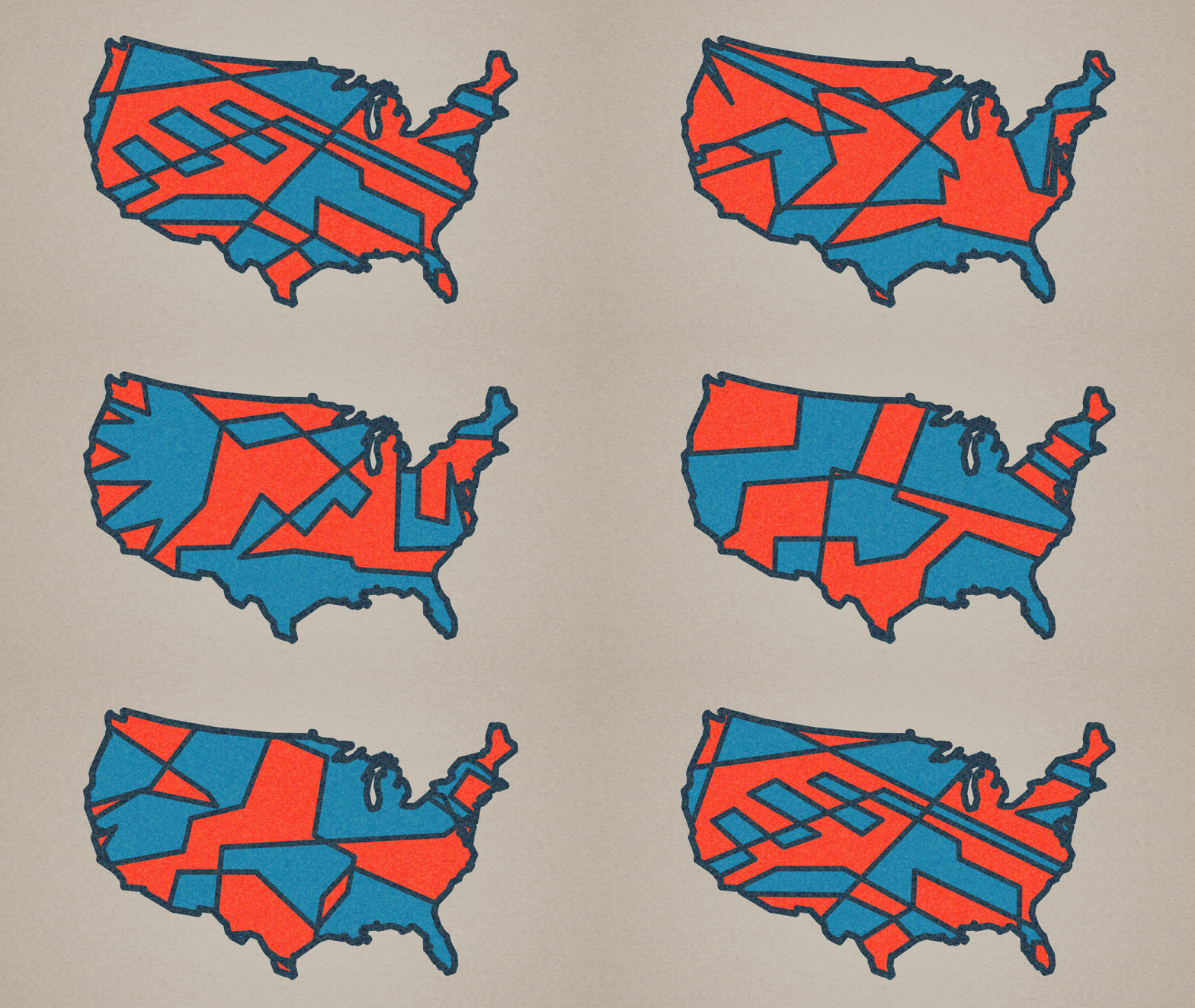
Image via Axios
GOP redistricting gambit collapses under a blue-wave map
Republicans spent the past year leaning hard on mid-cycle redistricting as a structural shield for the House. The idea was straightforward: bank more friendly districts now, absorb some national headwinds later. Tuesday’s results showed the limits of that approach when the political environment turns decisively against you.
Axios reports the redistricting “firewall” didn’t just spring leaks; it was overwhelmed. Seats Republicans expected to hold based on new lines flipped anyway, and competitive districts became outright losses as turnout and swing-voter movement swamped the margins that mapmakers tried to engineer.
The broader implication is that the House majority can’t be protected indefinitely with cartographic tactics if candidate quality, issue mix, and national mood run the other direction. Redistricting can shape the playing field, but it can’t rewrite the fundamentals: persuasion, performance, and turnout.
✓ The Bottom Line: If your majority depends on constant map surgery, you don’t have a majority in the political sense; you have a temporary geometry problem. The evidence here points to a national environment strong enough to overpower gerrymandered advantages, which should worry Republicans more than any single race result. It also hands Democrats an argument that fairer maps matter because even aggressive redistricting isn’t a substitute for accountability.
📎 Axios
Johnson vows to press on after losses, as GOP searches for a governing lane
House Speaker Mike Johnson struck a defiant but measured tone as results came in, saying Republicans will keep working “to make America great again,” according to AP’s live coverage. The message was twofold: reassure the base that the project continues, and signal to donors and candidates that the party isn’t headed for a circular firing squad.
But post-election reality has a way of narrowing slogans into strategy. If Republicans lost ground in the suburbs and among ticket-splitters, the next question is whether leadership pivots toward a clearer governing agenda or doubles down on cultural combat that excites core voters but repels the middle.
Johnson’s test is less about conference rhetoric and more about triage: figuring out what the electorate rejected, what it merely tired of, and what it still wants from a center-right party. Personnel decisions, committee priorities, and the next legislative fights will reveal whether the GOP’s lesson learned is “message harder” or “govern better.”
✓ The Bottom Line: Johnson is right to project steadiness, but “keep working” isn’t a plan unless it becomes policy choices that can win back persuadables. The results suggest the GOP needs a sharper competence-and-cost-of-living pitch, with less self-inflicted chaos and fewer purity tests. If Republicans treat this as a branding problem rather than a performance problem, they’ll be back in the same hole in two years.
📎 AP News
SpaceX-Qualcomm pact signals a serious push into nationwide mobile service
SpaceX has signed a multiyear deal with Qualcomm to build out base-station technology for Starlink Mobile, CNBC reports. In practical terms, SpaceX is moving from being “satellite internet” to becoming a fuller-stack wireless player, tying satellite coverage to terrestrial network components that can support broader mobile service ambitions.
For Qualcomm, the partnership is another bet that the future of connectivity blends space and ground infrastructure, and that device and network ecosystems will need new standards and hardware pathways. For SpaceX, it’s an execution challenge: integrating satellite backhaul, terrestrial radios, spectrum arrangements, and consumer expectations for reliability and price.
Competition and regulation will shape what comes next. Incumbent carriers won’t sit still, and policymakers will watch how spectrum use, emergency communications, and rural coverage claims line up against real-world performance. If SpaceX can deliver consistent service at scale, it could pressure prices and expand coverage in places traditional networks have long treated as marginal.
✓ The Bottom Line: This looks less like a flashy side project and more like SpaceX laying track for a durable telecom business. The upside for consumers is real if it creates meaningful competition and expands rural coverage without new subsidy games. The risk is overpromising: mobile users don’t grade on a curve, and reliability will matter more than visionary branding.
📎 CNBC

Image via NBC News
Markets rally on blue-wave clarity, but policy risks don’t disappear
Stock futures jumped after election results pointed to a larger-than-expected Democratic surge, with NBC News describing Wall Street’s surprise at the size of the “blue tsunami.” The immediate market reaction reflects a familiar preference: clearer governing expectations can reduce near-term uncertainty, especially if investors think budget fights and brinkmanship may ease.
The rally also arrives amid an AI-driven enthusiasm cycle, where big-cap tech and infrastructure names have been carrying a lot of weight. Traders are trying to price not only today’s election outcome but the next two years of tax, spending, industrial policy, and regulatory direction.
Still, “certainty” is not the same as “pro-growth” for every sector. Depending on how governing coalitions form, markets could face renewed scrutiny on antitrust, financial regulation, and energy policy, even if the threat of abrupt shutdown showdowns recedes. The key question is whether Washington uses the mandate for durable budgeting and permitting reform, or simply for bigger promises and sharper oversight battles.
✓ The Bottom Line: Markets are celebrating fewer headline risks, not the arrival of some economic magic wand. A stronger Democratic hand can reduce governance chaos, but it can also bring heavier regulatory instincts that investors tend to underestimate on day one. The real bullish outcome would be competence: predictable budgeting, permitting speed-ups, and restraint on new inflationary spending.
📎 NBC News
Foreign capitals react to U.S. results with spin, caution, and wish-casting
International reactions to U.S. election results are arriving quickly, and often self-servingly. CBS News reports Iran claimed the results reflected a rejection of war, while Spain’s leader framed the outcome as further evidence that right-wing populism is faltering.
These statements are less about interpreting American precinct data and more about shaping narratives at home and signaling positions abroad. Allies look for clues about U.S. commitments and predictability; adversaries look for openings and propaganda value; everyone tries to read the direction of Washington’s foreign-policy posture through the crude lens of electoral outcomes.
The practical impact depends on what U.S. leaders actually do next: defense funding levels, Ukraine and Indo-Pacific strategy, sanctions enforcement, and diplomatic bandwidth. Elections can change tone and personnel, but national interests and global constraints narrow the range of plausible outcomes more than foreign commentators typically admit.
✓ The Bottom Line: Foreign governments are going to tell the story that flatters their agenda, and Americans shouldn’t confuse that with insight. Iran’s claim, in particular, reads like strategic messaging aimed at weakening U.S. resolve rather than an honest reading of voter intent. The sober takeaway is that allies and adversaries will test the new Washington—so clarity and consistency will matter more than victory laps.
📎 CBS News
That’s the morning file: the map couldn’t save the GOP, the market likes clarity, and the rest of the world is already trying to spin America’s verdict. Back tomorrow with what actually changes—and what doesn’t.
— Brief Updates Editorial