Today’s Sponsor
Mode Mobile — the company ranked North America's #1 fastest-growing software company by Deloitte with 32,481% growth — is still offering pre-IPO shares at $0.52/share. But not for long. On August 14, the price goes up. With 490M+ users, $115M+ in lifetime revenue, and a reserved Nasdaq ticker ($MODE), over 60,000 investors have already poured in $100M+ — including original Shark Tank investor Kevin Harrington.
This is your last shot at the current entry point. Just like Uber disrupted cars and Airbnb disrupted homes, Mode is turning everyday phone use into income — and the window to get in early is closing fast. Don't miss the August 14 deadline.
Claim Your Pre-IPO Shares Now*Mode Mobile recently received their ticker reservation with Nasdaq ($MODE), indicating an intent to IPO in the next 24 months. An intent to IPO is no guarantee that an actual IPO will occur. *The Deloitte rankings are based on submitted applications and public company database research, with winners selected based on their fiscal-year revenue growth percentage over a three-year period. *Mode revenue and EBITDA numbers include full year revenue and EBITDA of businesses acquired by Mode Mobile in 2025. *Please read the offering circular and related risks at invest.modemobile.com.

Trump installs a new attorney general as the White House manages a hot war with Iran and tense alliances abroad. Intel taps markets for AI-era capital. Ukraine and Taiwan signal resolve under pressure, while Netanyahu and Trump openly diverge on Gaza.

Image via The Hill
Trump swears in Todd Blanche as attorney general after razor-thin Senate fight
President Donald Trump is set to swear in Todd Blanche as attorney general Monday, capping a confirmation battle that ended with a 50-49 Senate vote early Saturday. The narrow margin underscores how contested the pick was, even with Republicans holding the chamber by a slim edge and treating the Justice Department as a key lever in the administration’s second-term agenda.
Blanche’s arrival comes amid heightened scrutiny of DOJ priorities, including how aggressively the department pursues national security cases, election-related enforcement, and public corruption investigations. Supporters argue he’ll restore accountability and rein in what they describe as politicized law enforcement; critics warn that installing a close Trump ally risks eroding institutional independence at a moment when public trust in the department is already strained.
The confirmation process itself became part of the story, with weekend floor maneuvering and a near party-line outcome signaling that DOJ leadership will remain a frontline political issue. The test now is operational: whether the attorney general can demonstrate evenhanded enforcement while navigating intense pressure from both the White House and Capitol Hill.
Source: The Hill
Read the full story at The Hill →
Intel seeks $15 billion stock sale, betting investors will fund its AI push
Intel said it plans a $15 billion stock offering, tapping equity markets as demand for AI chips and data-center infrastructure keeps pulling in extraordinary levels of capital. The move highlights the scale of investment required to compete in an AI economy where compute, advanced packaging, and capacity expansion are becoming decisive advantages.
For Intel, the offering is a signal that management sees a multi-year capex and product race that can’t be financed comfortably through operating cash flow alone. Equity issuance can strengthen the balance sheet, but it also dilutes existing shareholders and effectively asks the market to underwrite execution risk—including whether Intel can regain momentum against entrenched rivals and sustain credible road maps in both design and manufacturing.
The broader context is a crowded capital cycle: rivals and hyperscalers have spent aggressively on chips, networking, and power-hungry data centers, while governments continue pushing strategic semiconductor capacity. Intel’s ask will be judged not just by its AI narrative, but by margins, timelines, and proof that new investments translate into competitive products at scale.
Source: CNBC
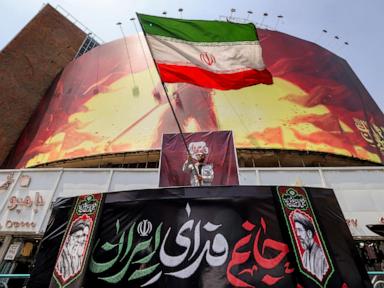
Image via ABC News
Trump says U.S. is ‘low-keying’ Iran talks as conflict messaging turns tactical
President Trump said the U.S. is “low-keying” negotiations with Iran, suggesting messages are being exchanged even as the administration maintains a public posture of military pressure. The comments come after Trump announced “major combat operations” against Iran on Feb. 28, describing massive joint U.S.-Israeli strikes and framing the broader confrontation in strategic, step-by-step terms.
The administration appears to be trying to hold two tracks at once: deter further escalation through force while keeping a diplomatic off-ramp available to limit spillover risk to Gulf shipping, regional bases, and global energy markets. That dual-track approach is common in crises, but it also creates credibility challenges: each side tests whether the other’s threats are real and whether private assurances match public rhetoric.
What remains unclear is the scope of any negotiation—whether it’s narrowly focused on de-escalation, hostages, maritime security, or a broader package involving nuclear constraints and sanctions relief. With combat operations ongoing and Iranian decision-making opaque, the near-term outlook hinges less on formal talks and more on whether both sides can keep battlefield events from triggering a wider regional war.
Source: ABC News
Read the full story at ABC News →

Image via BBC
Deadly Ukrainian drone strike hits deep inside Russia, testing Moscow’s defenses
At least 13 people were killed and 75 injured in a Ukrainian drone strike in Russia’s Tatarstan region, Russian officials said, marking one of the deadliest drone attacks on Russian territory since Moscow’s full-scale invasion of Ukraine. The incident highlights how long-range drone warfare is increasingly pushing the conflict beyond front lines, bringing the war to regions far from the battlefield.
Ukraine has argued that strikes on Russian infrastructure and military-linked targets are a legitimate response to Russia’s sustained attacks on Ukrainian cities, energy systems, and logistics. Russia, meanwhile, typically characterizes such incidents as terrorism and uses them to reinforce domestic narratives about existential threat, while also pressing air defenses and internal security to prevent repeat strikes.
Strategically, deep strikes carry two messages: to Russia, that rear-area sanctuaries are shrinking; to Ukraine’s partners, that Kyiv is sustaining operational reach despite resource constraints. The risk is escalation and miscalculation, especially if attacks increasingly hit civilian areas or politically sensitive sites—a pattern that can harden positions and reduce room for negotiation.
Source: BBC
Taiwan drills for an invasion scenario as Beijing pressure campaign grinds on
Taiwan is holding military drills focused on preparing for a potential invasion by China, a reminder that Taipei is treating the threat as practical planning, not abstract geopolitics. The exercises come amid sustained Chinese military activity around the island and an ongoing pressure campaign that mixes air and naval operations with economic and diplomatic coercion.
For Taiwan, visible readiness serves multiple purposes: improving force coordination, reassuring the public, and signaling to Beijing that an assault would be costly and uncertain. Critics sometimes argue drills can provoke China, but deterrence logic runs the other direction as well—a posture of weakness can invite adventurism, especially if Beijing perceives declining U.S. resolve or political distraction.
The larger question is whether Taiwan can modernize fast enough across air defense, anti-ship capabilities, reserves, and civil resilience, while sustaining public support for longer-term defense reforms. The island’s security ultimately rests on a layered deterrent: Taiwan’s own capacity, credible U.S. and allied support, and Beijing’s calculation that the economic and military costs of war would be intolerable.
Source: Al Jazeera
Read the full story at Al Jazeera →

Image via France 24
Netanyahu rejects U.S.-backed Gaza plan, widening daylight with Trump
Israeli Prime Minister Benjamin Netanyahu rejected a U.S.-led Gaza plan endorsed by Hamas, according to reporting that frames the move as both policy and politics: a bid to shore up his domestic base as friction with President Trump grows. The public split is notable given the traditional emphasis both countries place on tight coordination during wartime and high-stakes negotiations.
The immediate dispute centers on the terms and sequencing of a Gaza deal—including questions of ceasefire duration, hostages, governance arrangements, and what Israel considers acceptable security guarantees. Netanyahu’s governing coalition faces intense internal pressure from factions skeptical of concessions, while families of hostages and broader Israeli public opinion have pulled in competing directions about how to balance military aims with a negotiated outcome.
For Washington, the episode underscores the limits of leverage even with a close ally, particularly when leaders on both sides are navigating domestic politics. The strategic consequence is broader than Gaza: public U.S.-Israel disagreements can affect regional diplomacy, complicate efforts to contain spillover, and signal to Iran-aligned actors that allied unity is not assured.
Source: France 24
Read the full story at France 24 →
That’s the file for Monday. We’ll be watching whether the Iran conflict finds a diplomatic off-ramp, how markets price Intel’s dilution-versus-growth tradeoff, and whether political constraints in Jerusalem and Washington harden into a lasting policy rift.
— Brief Updates Editorial