In partnership with

It's time to set up your holiday streaming campaign

Are you ready to reach holiday shoppers on CTV? For many streamers, the season is already underway.
Last year, according to Roku internal data, holiday content searches on Roku saw an 86% increase during October. And in November, those searches rise an average of 39% weekly. This surging holiday spirit is mirrored by consumer activity, as about half of Roku streamers shopped Black Friday and Cyber Monday deals in 2025.
Meeting those shoppers is easier than you might think. Begin with the seasonal outcome you hope to drive: awareness, online sales, leads, store visits, or another measurable goal. From there, define your audience, upload your creative, set the budget and campaign dates, and establish measurement before launching. You can even create a shoppable ad unit that lets streamers buy with a click of their remote.
Our holiday playbook offers a month-by-month guide to reaching shoppers during this all-important time of year.
First-time spenders get a $5,000 match on the first $5,000 spent with code BEEHIIV5K. Terms apply.

Friday, November 20, 2026: Anthropic starts life as a public company, lawmakers probe encrypted messaging in government, U.S.-China frictions persist after Asia meetings, Russia strikes Kyiv infrastructure, and a jolt hits the Los Angeles basin.
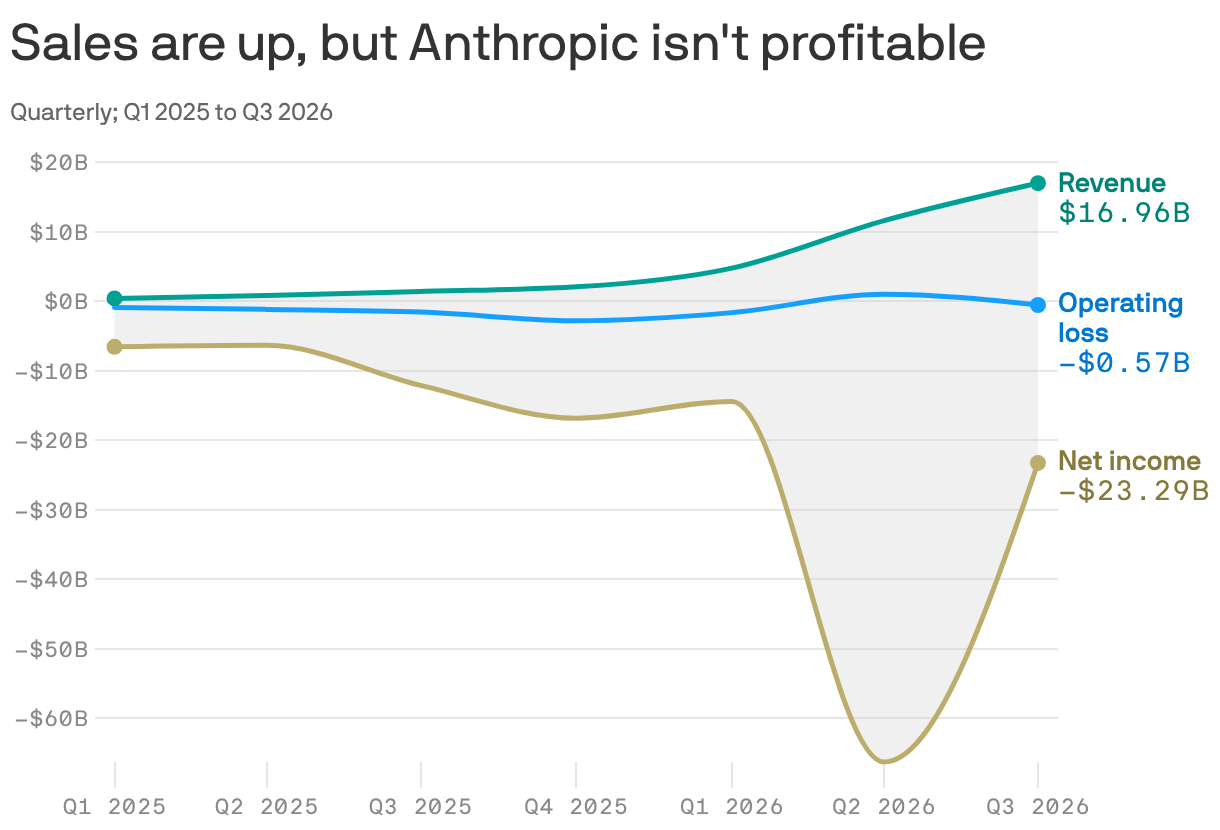
Image via Axios
Anthropic is public; now investors will demand profits, not promises
Anthropic’s IPO is complete, shifting the company’s center of gravity from raising the next round to delivering quarterly results. The immediate question for new shareholders is less about model demos and more about whether the business can reduce its dependence on constant capital infusions while still funding expensive compute, talent, and safety work.
The strategic bind is familiar in frontier AI: the product improves with scale, scale costs real money, and pricing power is still being tested as enterprises shop among competing model providers. Anthropic will face scrutiny over revenue durability, margin trajectory, customer concentration, and how quickly it can convert “usage growth” into predictable cash flow without cutting corners on safety and reliability that have been core to its brand.
✓ The Bottom Line: Going public doesn’t solve the AI business model; it simply makes the math unavoidable. If Anthropic can show a credible path to gross margin expansion and customer lock-in without a new capital raise every year, it can earn the market’s patience. If not, shareholders will eventually treat “frontier” as a cost center, not a moat.
📎 Axios
Raskin presses agencies on encrypted messaging as official records concerns grow
Rep. Jamie Raskin is investigating federal agencies’ use of messaging apps to discuss official business, a move that puts renewed focus on whether the government is preserving records as required while employees increasingly rely on encrypted, auto-deleting platforms. The inquiry reflects a broader tension: staff want secure communications, while watchdogs and litigants argue that off-the-books chats can weaken oversight, transparency, and accountability.
Agencies have grappled with where to draw lines between permissible operational security and impermissible end-runs around recordkeeping laws. Critics say tools like Signal and similar apps can become a de facto shadow channel if policies are weak or enforcement is lax; defenders counter that secure messaging is essential for sensitive work and that responsible use can coexist with archiving and retention requirements.
✓ The Bottom Line: Secure messaging is not the problem; unmanaged messaging is. Congress is right to press for clear, enforceable rules that preserve official records while still allowing secure communications for legitimate needs. A government that can’t reliably retain decisions and directives invites mistrust, litigation risk, and preventable scandals.
📎 AP News
Trump returns from Asia with the same U.S.-China headaches: trade, Taiwan, and chips
After a week of high-profile meetings tied to APEC in Shenzhen, analysts say U.S.-China tensions over trade, Taiwan, and technology restrictions remain largely unresolved. The travel delivered optics and dialogue, but few concrete outcomes that would change the trajectory of tariffs, export controls, or broader strategic competition.
The core disputes are structural, not interpersonal: Washington wants tougher enforcement, reduced reliance on China in critical supply chains, and guardrails on advanced semiconductors and AI-related tech; Beijing wants relief from restrictions and what it views as containment, while maintaining pressure points around Taiwan. Markets typically welcome any thaw, but businesses planning 2027 investments still face the same uncertainty on rules, retaliation risk, and cross-border data and technology controls.
✓ The Bottom Line: Diplomacy that lowers the temperature is worthwhile, but investors and companies should not confuse meetings with resolution. The most likely near-term outcome is continued managed rivalry: selective deals at the margins, hard limits on advanced tech, and periodic flare-ups around Taiwan. U.S. policy should stay firm on security-sensitive technology while being clearer and more predictable for everyone else.
📎 CNBC
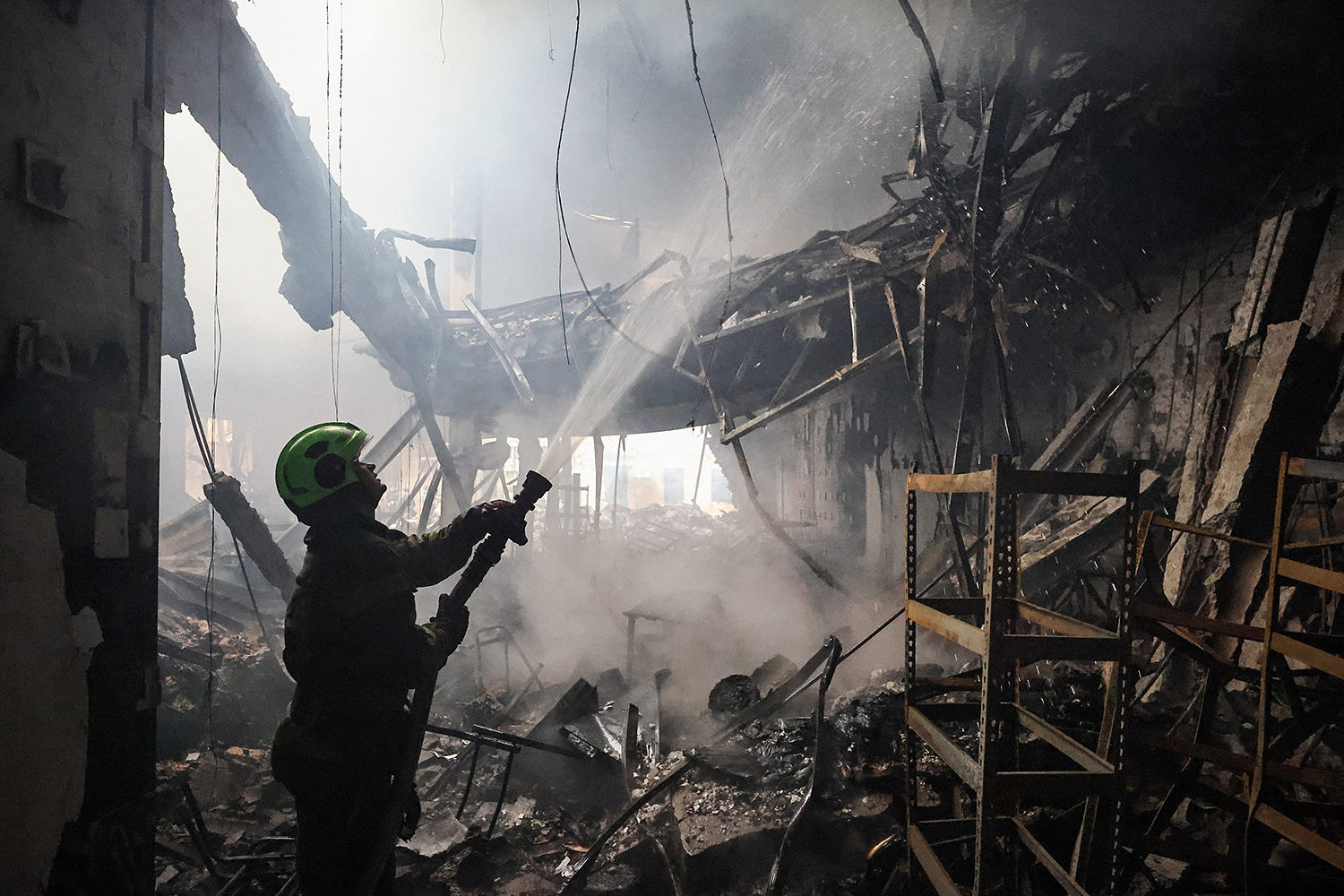
Image via NBC News
Russia hits Kyiv bridges after Putin’s revenge vow, escalating pressure on civilian infrastructure
Russian ballistic missile strikes hit three bridges in Kyiv, according to officials in the Ukrainian capital, after President Vladimir Putin vowed retaliation for attacks on Crimea. Targeting bridges underscores an ongoing Russian emphasis on degrading Ukraine’s mobility and logistics, while also amplifying psychological pressure on civilians in major cities.
The strikes come as Ukraine continues to seek air defense capabilities and as Western backers debate sustainment levels, ammunition stocks, and long-term industrial capacity. Attacks on critical infrastructure also complicate daily life and emergency response, forcing Ukraine to devote resources to repairs and rerouting even when frontline lines remain contested.
✓ The Bottom Line: Striking bridges in a capital city is a reminder that Russia’s strategy still leans heavily on coercion through infrastructure damage, not just battlefield maneuver. The West should read this plainly: air defense and resilience funding aren’t “nice-to-haves,” they’re central to preventing civilian harm and keeping Ukraine functioning. If Moscow believes escalation brings leverage, deterrence requires sustained support, not episodic attention.
📎 NBC News
A 4.4 earthquake jolts the Los Angeles area, a routine reminder with real stakes
A 4.4-magnitude earthquake rattled the Los Angeles area Friday morning, according to the U.S. Geological Survey. The quake struck about a half mile north-northwest of Commerce, roughly seven miles from downtown Los Angeles, and was widely felt across the basin.
Even moderate quakes can expose weak points in older structures, unreinforced masonry, and aging utilities, especially in dense urban corridors. The event also serves as a practical drill: communications, workplace safety procedures, and household readiness tend to matter most in the first minutes, when information is incomplete and aftershocks are possible.
✓ The Bottom Line: Southern California doesn’t need a disaster to justify preparedness; it needs consistency. The policy lesson is unglamorous but clear: enforce retrofit requirements, harden utilities, and keep public messaging practical rather than sensational. A 4.4 is usually a warning, not a catastrophe, but the region shouldn’t wait for the bigger one to do the basics.
📎 CBS News
That’s the file for today. We’ll be back with the weekend developments and what they mean in plain terms.
— Brief Updates Editorial