Today’s Sponsor
The Fed held rates, inflation is still above target, and uncertainty is rising — that means the "buy anything AI" trade is over. Smart money is rotating fast toward the companies actually building AI infrastructure: chips, cloud capacity, and mission-critical data tools. Big Tech alone is projected to spend $635B–$665B on AI in 2026 — and not all of it is going where most investors are looking.
We've identified 9 AI stocks worth watching right now — including a lesser-known chip name tied to U.S. AI infrastructure, a cloud player with improving setup, and a data analytics company with government exposure. This isn't hype. It's about following where capital is actually being deployed.
Get the Free Report NowBy clicking the link above, you will receive this free report and a free subscription to the StockEarnings daily email newsletter. You are also agreeing to the terms of our Privacy Policy. Unsubscribe at any time.

Monday, August 31, 2026: Big Tech tries to reframe AI as medicine, new details raise alarms about a U.S. missile’s effects, Trump escalates a court fight over the Kennedy Center, OpenAI’s ad push hits a milestone, and flash floods turn deadly in the Southwest.
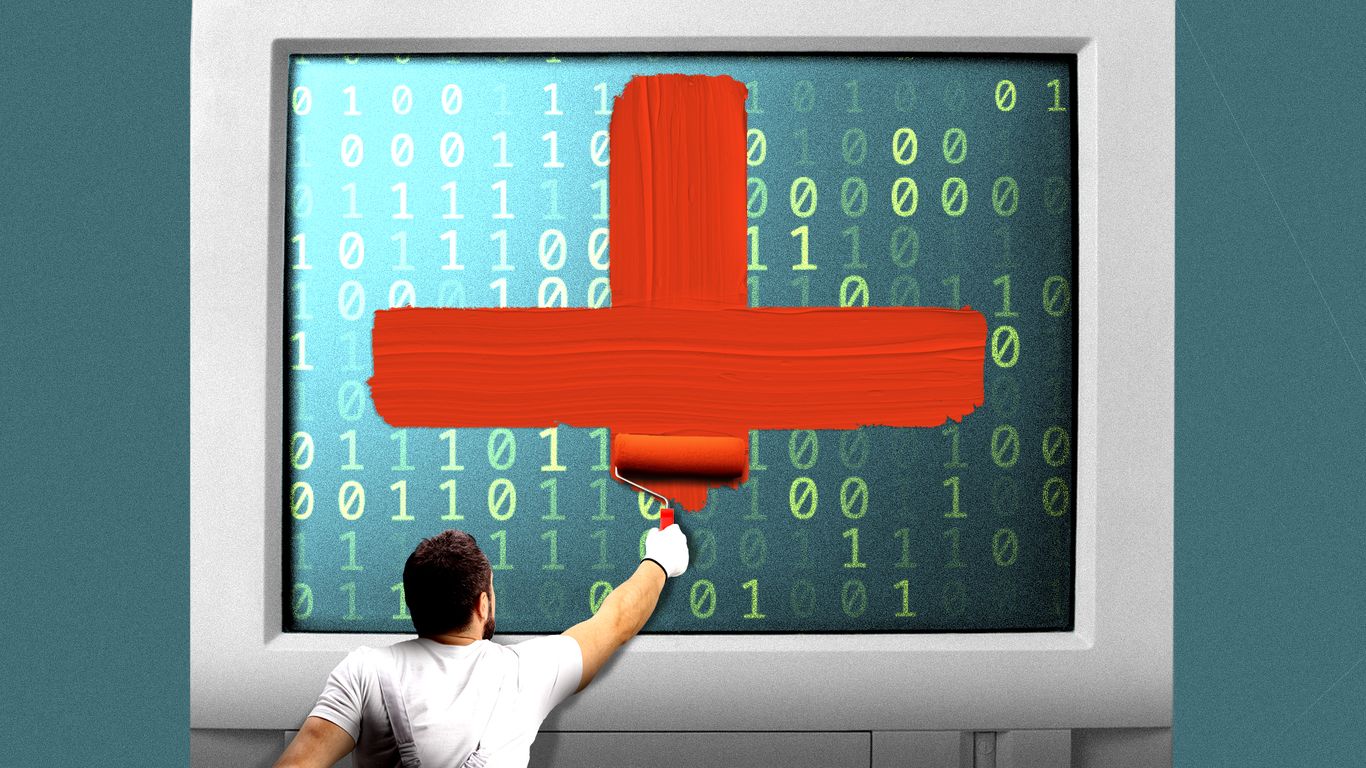
Image via Axios
AI giants pitch health-care breakthroughs as reputational shield
Top AI companies are leaning hard into health care, spotlighting disease research, drug discovery, and clinical workflows as a public-facing proof point that the technology can do obvious good. The argument is simple: if AI can help catch cancers earlier or speed up new treatments, it becomes harder for skeptics to paint the industry as purely extractive, unsafe, or socially destabilizing.
The push comes as public trust remains fragile amid job-displacement fears, copyright and data-consent fights, and concerns about hallucinations, bias, and security vulnerabilities. Health care is a uniquely powerful arena for narrative repair because it offers emotionally compelling wins, but it’s also one of the highest-stakes settings for errors. That means the PR upside is real, but so is the regulatory and liability exposure if companies overpromise or move faster than validation allows.
Expect a surge of partnerships with hospitals, insurers, and pharma firms, along with more “medical-grade” branding. The key question for policymakers and patients isn’t whether AI can help in medicine—it can—but whether claims are backed by peer-reviewed evidence, transparent evaluation, and clear accountability when systems fail.
✓ The Bottom Line: Using health care to show AI’s value is rational, and in many niches it’s already delivering. But it shouldn’t become a moral shield that lets companies dodge harder questions about safety, data rights, and labor disruption. If the industry wants credibility, it should welcome tougher clinical validation standards and real auditability, not just heartwarming demos.
📎 Axios
Report details deadly aftermath in Iran city allegedly hit by new U.S. missile
A report from an Iranian city describes a wide path of death and destruction that appears consistent with the use of a new U.S. missile system, raising urgent questions about targeting, munitions effects, and escalation dynamics. The account points to extensive damage across a broad area, with imagery and on-the-ground descriptions suggesting a weapon designed for precision may still produce catastrophic results depending on where and how it’s employed.
Washington’s exact role, the target set, and the operational context remain central uncertainties—especially given the information fog that follows high-intensity strikes and the competing incentives of governments to shape narratives. Iranian officials have an interest in emphasizing civilian harm and depicting the U.S. as reckless; U.S. officials typically stress precision and military necessity. Independent verification is difficult, and casualty claims can shift as debris is cleared and hospitals report in.
Still, the incident underscores a strategic reality: new long-range, high-speed strike capabilities can shorten decision timelines and raise the risk of miscalculation, even when the intent is deterrence. If the weapon was used as reported, the policy debate will hinge on whether the strike met proportionality standards, what intelligence supported it, and what steps were taken to minimize civilian harm.
✓ The Bottom Line: If this report holds up, it’s a reminder that “precision” is not the same as “low consequence,” especially in dense or mixed-use areas. The U.S. has a legitimate interest in deterring Iranian aggression, but legitimacy depends on disciplined targeting and credible transparency afterward. When civilians are plausibly caught in the blast pattern, the burden is on Washington to explain the objective, the safeguards, and the accountability.
📎 AP News

Image via The Hill
Trump attacks judge in Kennedy Center dispute, turning a renovation fight into a governance test
President Trump criticized U.S. District Judge Christopher Cooper as “highly conflicted” in a legal fight tied to the Kennedy Center and the administration’s efforts to refurbish and rename aspects of the institution. The dispute sits at the intersection of executive power, stewardship of national cultural assets, and the limits of political influence over quasi-public institutions.
Public officials routinely argue that courts should not micromanage policy choices, especially involving federal property and administrative decisions. But direct attacks on a sitting judge’s integrity—without clear, substantiated evidence—carry a different weight. They can chill institutional trust and frame routine judicial review as partisan obstruction, which is corrosive regardless of which party is in power.
Substantively, the case will likely turn on statutory authority, governance structure, funding streams, and whether proper process was followed. Politically, it risks inflaming a familiar cycle: a court dispute becomes a proxy battle over legitimacy itself, rather than a narrow question of what the law permits.
✓ The Bottom Line: Presidents can and should argue the merits of their authority, but personalizing it into “the judge is crooked” is usually a dodge when the legal argument is weak. If there’s a real conflict, the remedy is a motion grounded in facts, not public pressure. Conservatives should want strong institutions and clear legal limits, even when a court decision is inconvenient.
📎 The Hill
OpenAI’s ChatGPT ads surge to $1B annualized run rate, signaling a new phase for consumer AI
OpenAI’s advertising business inside ChatGPT has reached an annualized revenue run rate of roughly $1 billion, a rapid growth milestone that signals how quickly consumer AI is being monetized. The move into ads drew early ridicule from at least one rival, but the economics are hard to ignore: massive user attention, frequent sessions, and a product that can translate intent into highly targeted commercial opportunities.
For users, ads inside an assistant change the trust equation. An AI that answers questions is one thing; an AI that also sells is another, particularly when recommendations could be influenced by revenue incentives that are not obvious in the moment. Regulators and watchdogs will likely focus on disclosure standards, the separation (or lack of separation) between organic responses and paid placements, and how personal data is used to target ads.
For the industry, the milestone suggests a durable business model beyond subscriptions and enterprise licensing. But it also raises competitive pressure: if ads become a primary revenue engine, more AI products will chase engagement and conversion, potentially at the expense of neutrality and user control.
✓ The Bottom Line: Ads can keep consumer AI affordable, but only if the incentives are made explicit and guardrails are tight. The moment an assistant becomes a salesperson, transparency isn’t a nice-to-have—it’s the product’s credibility. If OpenAI wants this to scale without a backlash, it should over-disclose, label paid influence clearly, and give users real opt-out choices.
📎 CNBC
Grand Canyon flash floods turn fatal as crews search for missing tourists
Flash floods swept through parts of the Grand Canyon, killing at least one person and leaving as many as 15 people potentially missing as search efforts continue. The flooding appears to have moved quickly, overwhelming areas that can shift from calm to dangerous in minutes, especially in narrow corridors and near drainages that funnel sudden surges.
Rescuers face punishing conditions: unstable terrain, fast-moving water, debris, and limited access. As authorities work to confirm who is missing, the story is also a reminder of how difficult it can be to account for hikers and visitors in sprawling public lands where cell service is spotty and itineraries are informal.
The broader context is an increasingly volatile pattern of extreme weather that can turn routine recreation into a life-or-death emergency. For park managers and local officials, the challenge is balancing access with better warning systems, clearer risk communication, and rapid incident response when storms develop upstream.
✓ The Bottom Line: This is the kind of tragedy where nature, not negligence, is often the primary driver—but preparation still matters. Visitors should treat flood alerts and storm forecasts as hard constraints, not suggestions, especially in canyons and washes. Parks and local agencies should keep improving real-time warnings, but personal judgment is the last line of defense.
📎 TODAY
That’s the file for today. We’ll be watching for verification on the Iran strike reporting, the next court moves in the Kennedy Center case, and what ad-supported AI means for trust and regulation.
— Brief Updates Editorial