Today’s Sponsor
While markets narrow their focus, AI continues attracting massive capital investment with real-world deployment and measurable results. Corporate earnings calls show AI spending expanding even as other sectors lose momentum — creating selective opportunities for investors paying attention.
Our focused research brief reveals two AI-focused companies trading under $15 that are positioned for the next phase of growth, plus key developments that could influence these stocks in the months ahead.
Get the Free AI Stocks ReportBy following the link above, you're choosing to opt in to receive insightful updates from Investing Ideas Daily + 2 free bonus subscriptions! Your privacy is important to us. You can unsubscribe anytime. See our privacy policy for details.

Six passengers tied to a hantavirus-linked Antarctic expedition vessel were moved into quarantine in Western Australia as officials try to prevent wider spread; the issue joins other major headlines on ticketing transparency, U.S.-Iran tensions, AI in real estate, and crypto regulation.
Image via Associated Press
Australia Quarantines Six From Hantavirus-Linked Antarctic Cruise Ship
Six passengers connected to the cruise ship MV Hondius—where a hantavirus outbreak has raised international health alarms—arrived in Western Australia on Friday and were transferred into a three-week quarantine, according to Australian officials. The passengers flew from the Netherlands and landed at RAAF Base Pearce near Perth, reflecting the government’s effort to keep the cases contained away from commercial terminals and dense population centers.
Hantavirus is typically associated with rodent exposure and can be severe in some cases, though human-to-human transmission is generally rare depending on the strain. Australian authorities have leaned on strict quarantine protocols in recent years, arguing that early isolation is cheaper and safer than chasing community spread after the fact.
The incident adds to scrutiny of medical preparedness and evacuation logistics on remote expedition cruises, especially those operating in Antarctica and sub-Antarctic routes where definitive care can be days away.
Read the full story at Associated Press →
Ticketmaster’s “Random” Queue Claim Gets Less Certain at the Top
Ticketmaster has long maintained that its online queue is “random,” a talking point meant to reassure fans that the process is fair and not simply rewarding the fastest devices or savviest users. But in new comments, the company’s global president appeared to hedge on that certainty, calling into question a widely held assumption about how the system actually behaves under heavy demand.
The core issue is trust: for years, frustrated buyers have argued that queues feel anything but random, especially when tickets vanish quickly and reappear on resale markets at higher prices. Ticketing platforms counter that they must balance traffic management, bot prevention, and “fairness”—goals that can conflict in practice, particularly when massive presales hit all at once.
The renewed attention lands amid broader regulatory pressure on the live-event ecosystem, where opaque algorithms, dynamic pricing, and reseller activity have left consumers skeptical that they’re competing on a level playing field.
Read the full story at Newsweek →
Iran Signals Distrust in U.S. Talks as Trump Claims Control of the Strait
Iran said it “cannot trust” the United States in negotiations, sharpening rhetoric around diplomacy as President Trump, speaking aboard Air Force One, claimed the U.S. “controls” the Strait of Hormuz—one of the world’s most strategically important maritime chokepoints for oil and gas shipments. Trump also asserted the U.S. had “wiped out” Iran’s armed forces, a statement that goes beyond publicly confirmed assessments and is likely to be interpreted as both deterrence messaging and domestic political signaling.
The Strait of Hormuz sits at the center of global energy risk: even a limited disruption can jolt crude prices, insurance rates, and shipping schedules. Iranian officials have historically pointed to U.S. sanctions policy and shifting diplomatic posture as reasons to doubt American commitments, while U.S. officials tend to cite Iranian proxy activity and nuclear concerns as justification for maximal leverage.
The latest exchange underscores how quickly negotiations can be derailed by public statements that harden positions on both sides—especially when each leadership is playing to multiple audiences: international counterparts, domestic constituencies, and regional allies.
Read the full story at CBS News →

Image via NBC News
Zillow CEO Eyes AI as the Next Big Shift in Real Estate
Zillow CEO Jeremy Wacksman says the real estate industry is approaching another major transformation, with artificial intelligence poised to change how buyers search, how sellers price, and how agents operate. Wacksman’s view is that consumers already have far more data than they did decades ago, and the next leap will be software that can interpret that information—turning listings and comps into clearer guidance and faster decision-making.
AI tools are beginning to creep into everything from home-search personalization to automated photo enhancement and lead generation. Proponents argue it can cut friction in a process that remains paperwork-heavy and emotionally charged, while critics warn that models trained on historical pricing and neighborhood data can reinforce bias, misestimate value during market turns, or encourage overconfidence in automated valuations.
The strategic question for Zillow and competitors is whether AI becomes a consumer-facing assistant that increases engagement—or a back-end efficiency tool that quietly reshapes commissions, marketing spend, and the role of agents.
Read the full story at NBC News →
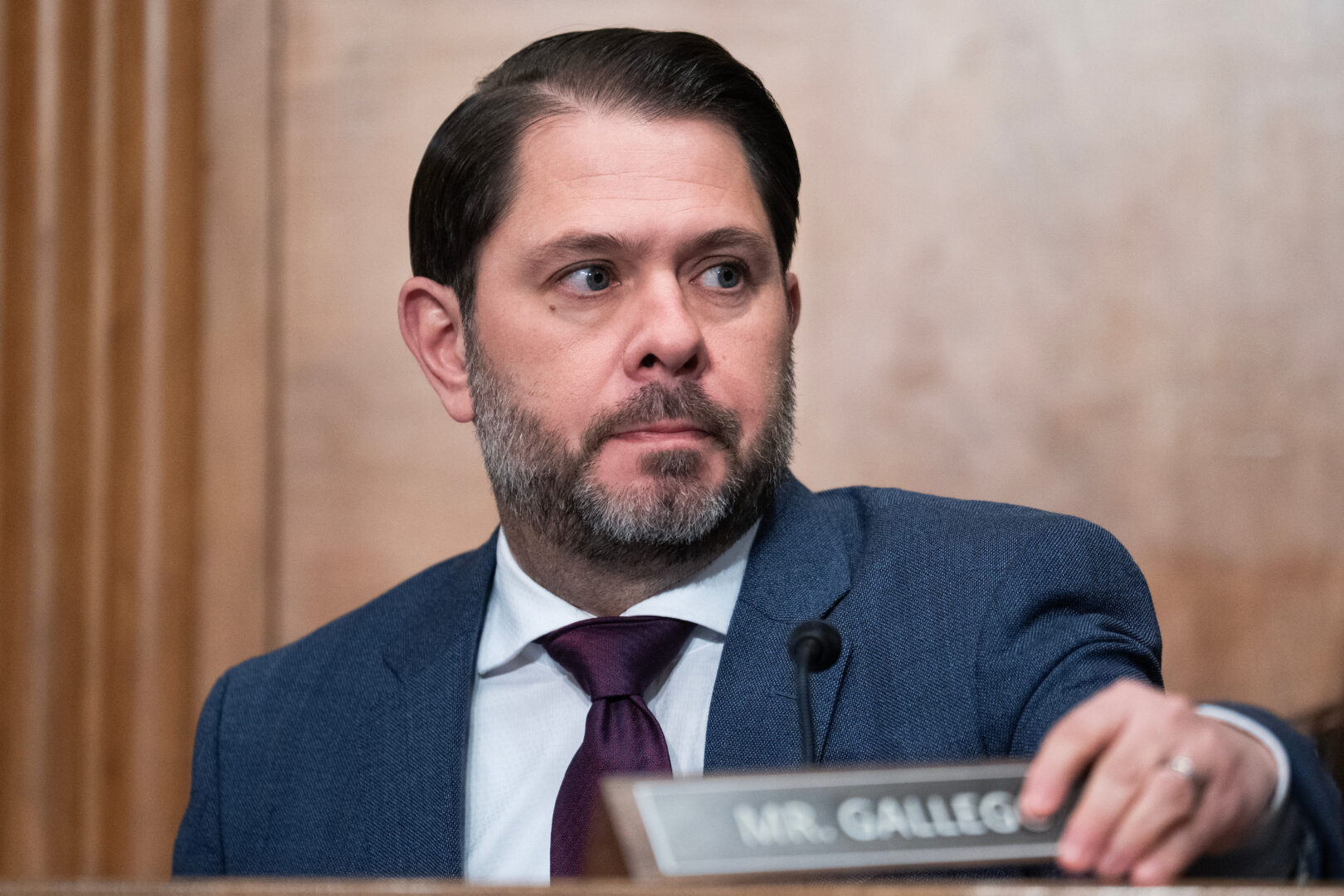
Image via Roll Call
Senate Banking Advances Crypto Market Structure Bill, With Some Bipartisan Support
The Senate Banking Committee voted to advance a crypto market structure bill, marking a significant step in Congress’s long-running effort to clarify who regulates what in digital assets. Notably, Sen. Ruben Gallego (D-Ariz.) was one of only two Democrats to vote to move the legislation forward, highlighting both the bill’s pull with some pro-innovation Democrats and the broader skepticism within the party about consumer risk and industry influence.
Market structure legislation typically aims to define when a token is treated as a security (under the SEC) versus a commodity (under the CFTC), and to set registration, custody, and disclosure rules for exchanges and intermediaries. Supporters say clearer rules will reduce uncertainty, encourage legitimate onshore activity, and better protect customers than today’s patchwork. Opponents argue the industry is seeking looser oversight after high-profile collapses, and that Congress risks preempting stronger enforcement standards.
Advancing out of committee doesn’t guarantee floor passage, but it does increase pressure on leadership to decide whether crypto is headed for a comprehensive framework—or another cycle of incremental fixes after the next blowup.
Read the full story at Roll Call →
Brief Updates — Facts first, context always.
— Brief Updates Editorial