Today’s Sponsor
While the crowd chases the same tired names, RushTheStreet is tracking the stocks that could move before the headlines hit — small caps on the verge of a breakout, AI plays building momentum, biotech approaching major milestones, gold & silver explorers, and companies with market-moving catalysts on the horizon.
October volatility creates opportunity — but only if you're watching the right names first. Don't let the next big mover disappear into the shadows before you even knew it existed.
Sign Up for RushTheStreet FreeBy clicking the link above, you agree to receive emails from rushthestreet.com. You can opt out at any time. — Privacy Policy

Five developments worth your time today: a devastating school shooting in Bend, shifting global market signals, Tesla’s long-promised Roadster, another sticky inflation read, and tough questions around AI-era dealmaking and insider cash-outs.

Image via ABC News
Bend, Oregon, Elementary School Shooting Leaves 4 Dead; Suspect Described as Teen
Police in Bend, Oregon, said four people were killed in a shooting at Silver Rail Elementary School: three children and one teacher. Authorities said they responded to reports of an active shooter at the school and later identified the suspect as a teenager, according to ABC News.
Details about motive, how the suspect obtained the weapon, and whether there were warning signs remain preliminary. In the immediate aftermath, the usual fault lines are already forming: calls for tighter access to firearms and safer storage on one side, and on the other, renewed demands for hardened security and quicker armed response. As investigators work the scene and interview witnesses, the public will likely learn more about timelines, security protocols, and any prior contacts the suspect may have had with schools or law enforcement.
✓ The Bottom Line: The first obligation here is clarity and accountability: the public needs verified answers about how a teenager gained access to a lethal weapon and how quickly the threat was stopped. The policy debate can’t just be slogans—it should focus on interventions that measurably reduce risk, including secure storage enforcement, better threat-assessment processes, and practical on-campus safety planning. Any serious response has to acknowledge both realities at once: access matters, and so does the ability to interrupt an attack quickly.
📎 ABC News
Europe Rallies as Bond Yields Ease; Dollar Heads for a Weekly Slide
European stocks climbed while the U.S. dollar drifted toward a weekly loss after government bond yields fell, a reminder of how quickly markets reprice when rates expectations move. Reuters reported that easing yields helped lift risk sentiment and took some pressure off global equities, while currency markets reflected a softer dollar tone.
The bigger signal is what lower yields imply: investors are either growing more confident that central banks can slow inflation without pushing economies into recession, or they’re getting more worried about growth and seeking safety. Either way, the rates backdrop remains the key driver for everything from bank margins to tech valuations to emerging-market capital flows, and the mood can swing sharply with each inflation print or central-bank hint.
✓ The Bottom Line: This looks less like a victory lap and more like markets trying to find stable footing in a high-rate world. Falling yields are a relief, but they’re not a guarantee that inflation is beaten or that growth is secure. Investors should treat week-to-week moves in yields and FX as signals to manage risk, not invitations to assume the cycle is over.
📎 Reuters
Tesla Finally Shows the New Roadster, With Flashy Claims and Familiar Questions
Tesla unveiled its long-delayed next-generation Roadster, reviving a project that has been promised for years. CNBC noted that Elon Musk first debuted the Roadster refresh concept in 2017, but Tesla has repeatedly missed targeted delivery dates, leaving many would-be buyers and watchers skeptical about timelines.
The company is also teasing extreme performance targets and more futuristic ambitions, including a nod to “flying-car” ideas. That kind of showmanship fits Tesla’s brand, but it also collides with practical constraints: manufacturing complexity, regulatory realities, and the opportunity cost of focusing engineering bandwidth on halo products when competition in mainstream EVs is tighter than ever.
✓ The Bottom Line: A new Roadster is a useful branding tool, but Tesla’s credibility now hinges on execution, not spectacle. If timelines slip again, this becomes another example of overpromising that hurts consumer trust and investor patience. If Tesla can ship at scale and hit verifiable performance targets, it’s a win—but the burden of proof is firmly on the company.
📎 CNBC
September Inflation Still Runs Hot, Complicating the Fed’s Next Moves
September’s CPI report showed inflation remains uncomfortably elevated, reinforcing the message that price pressures are proving stubborn. Kiplinger highlighted that the latest read underscores ongoing challenges for households and policymakers, as elevated costs continue to show up across key categories even after earlier disinflation progress.
For markets, the implication is straightforward: sticky inflation keeps interest rates higher for longer, raising borrowing costs for consumers, businesses, and the federal government. For families, it means pay gains can feel less meaningful when essentials remain expensive, and for elected officials, it revives pressure to explain what they’ll do about affordability without turning the economy into a political science experiment.
✓ The Bottom Line: If inflation is still running hot, the Fed can’t responsibly declare victory, and Washington shouldn’t pretend spending choices are irrelevant. The evidence points to an economy where demand is resilient and pricing power hasn’t fully broken, which argues for policy discipline rather than rosy messaging. The least-helpful response now would be new broad stimulus that risks re-accelerating prices.
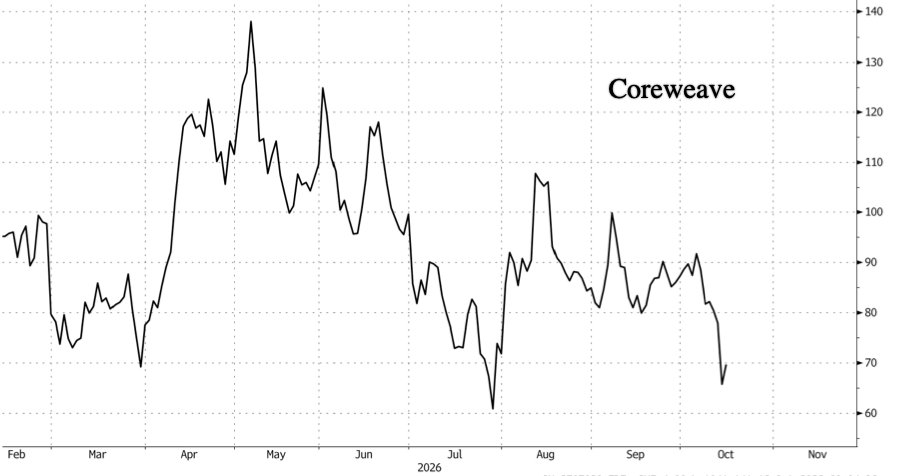
Image via Zero Hedge
CoreWeave Insider Cash-Outs Raise Hard Questions About the AI Boom’s Incentives
A report circulated by Zero Hedge claims the three CoreWeave co-founders cashed out $3.3 billion worth of stock before the company’s collapse. The piece portrays the sales as aggressive and well-timed, framing them as emblematic of frothy AI-era finance where rapid markups and complex funding structures can reward insiders well before a business model is stress-tested.
If the core allegation is accurate, the story is less about one company and more about governance: what boards approved, what disclosures were made, and what investors understood about risk concentration, customer exposure, and leverage. It also reopens an old debate in a new sector—when founders and early executives take massive liquidity early, does that reflect prudent diversification, or does it create a misalignment between insider incentives and long-term company health?
✓ The Bottom Line: Big founder liquidity events aren’t automatically unethical, but timing and transparency matter, especially when a company is marketed as systemically important to the AI supply chain. If insiders truly extracted billions pre-collapse, regulators and investors should scrutinize disclosures, risk controls, and whether ordinary shareholders and lenders were left holding the bag. The AI boom doesn’t need moral panic—it needs tougher governance and fewer incentives to monetize hype ahead of fundamentals.
That’s the Brief Updates rundown for Friday. We’ll keep tracking the Bend investigation, the inflation path, and what today’s market signals say about the months ahead.
— Brief Updates Editorial