Today’s Sponsor
While other sectors stall, AI investment is accelerating — showing up in earnings calls, corporate budgets, and real-world deployment. Capital is quietly concentrating around companies with clear demand and long-term relevance, and selective opportunities are forming right now.
A new research brief identifies 2 AI stocks trading under $15 that may be positioned for the next phase of growth — including key developments that could move these names in the months ahead.
Get the Free AI Stocks ReportBy following the link above, you're choosing to opt in to receive insightful updates from Investing Ideas Daily + 2 free bonus subscriptions! Your privacy is important to us. You can unsubscribe anytime. See our privacy policy for details.

Wishing our readers a meaningful Memorial Day
A day set aside to honor those who died in U.S. military service, and to remember the families who carry that loss forward.
Image via Associated Press
Memorial Day: From Civil War Graves to a National Day of Remembrance
Memorial Day began in the aftermath of the Civil War as communities, veterans’ groups, and grieving families decorated the graves of fallen soldiers — an observance often referred to as “Decoration Day.” Over time, the tradition spread beyond Union and Confederate cemeteries and gradually became a broader national ritual of honoring America’s war dead across conflicts.
The modern holiday’s meaning has expanded even as its civic core remains the same: commemoration. The day is now marked by ceremonies at national cemeteries, including Arlington, where families visit graves and sections like Arlington’s Section 60 — known for the burials of service members killed in Iraq and Afghanistan. It has also evolved into an unofficial start of summer, which has created an enduring tension between remembrance and recreation — one reason many veterans’ organizations continue to emphasize formal rituals like moments of silence and grave decoration.
Read the full story at Associated Press →
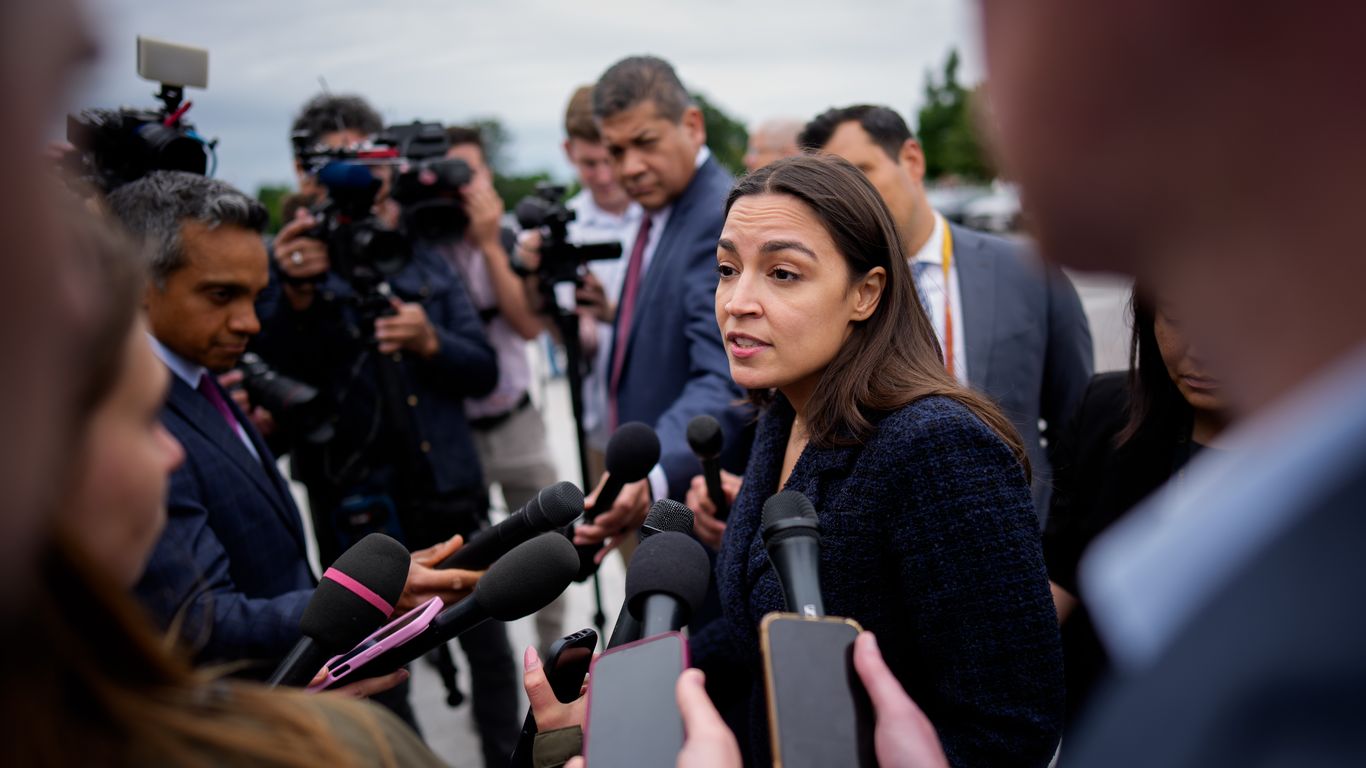
Image via Axios
AOC Signals Serious 2028 Ambitions, Even Without a Formal Announcement
Rep. Alexandria Ocasio-Cortez is taking visible steps that align with building a national campaign infrastructure, even as she continues to say she hasn’t decided whether she will run for president in 2028. The latest moves, as described by Axios, fit a familiar pattern for would-be candidates: raising her profile beyond her House district, testing messages with broader audiences, and strengthening alliances that matter in a crowded Democratic field.
AOC remains a uniquely polarizing figure — a fundraising powerhouse with a strong progressive base, but one who could face skepticism from Democratic moderates and swing-state voters. Her path, if she runs, would likely hinge on whether Democrats in 2028 want a generational shift and a sharper ideological contrast with Republicans, or whether the party opts for a more conventional nominee focused on suburban persuasion and institutional reassurance.
Read the full story at Axios →

Image via Bloomberg
Markets Tilt Risk-On as U.S.–Iran Deal Hopes Resurface
Global markets opened the week leaning optimistic after renewed signals that Washington and Tehran may be moving toward an understanding that could cool tensions and stabilize energy flows. Investors generally treat any credible path to de-escalation as a “risk-on” catalyst, especially when recent volatility has been tied to geopolitical headlines and fears of disrupted supply routes.
Still, traders are balancing hope against the history of U.S.–Iran negotiations: talks can turn quickly, domestic politics in both countries can harden positions, and implementation details often matter as much as the announcement. For markets, the near-term question is whether diplomacy reduces tail risks around shipping, sanctions, and regional escalation — or simply buys time before the next rupture.
Read the full story at Bloomberg →

Image via The Hill
Trump Targets Iran-Deal Critics as White House Faces Blowback
President Trump on Monday attacked critics of a reported U.S. effort to reach a deal with Iran aimed at ending the nearly three-month conflict and reopening certain channels, calling opponents “weak and ineffective.” The comments come amid rising scrutiny from parts of the Republican coalition and national security hawks who argue any arrangement must be tougher, verifiable, and structured to deny Iran strategic benefits.
The dispute underscores a familiar political dynamic: presidents often face pressure to show they can end conflicts, while critics warn that diplomacy can reward bad actors or lock in concessions that are hard to reverse. The practical test will be what the deal (if finalized) requires from Iran, how compliance would be enforced, and whether any sanctions relief or security assurances would be conditioned on measurable steps rather than broad promises.
Read the full story at The Hill →
Oil Supplies Near Operational Lows in Asia, With Europe “Not Far Behind,” Currie Warns
Carlyle’s Jeff Currie warned that oil inventories in parts of Asia are nearing “tank bottoms” — minimum operational levels needed to keep systems functioning — with Europe potentially next and the U.S. facing possible shortages by July if conditions don’t improve. His comments reflect a growing concern that recent geopolitical stress and supply-chain constraints could translate into real-world tightness rather than just price volatility.
The warning matters because low inventories reduce the buffer against shocks: refinery outages, shipping disruptions, or sudden demand spikes can have outsized effects on prices and availability. While some analysts argue markets can rebalance through higher prices, substitution, and releases from strategic stocks, Currie’s point is that physical logistics and minimum inventory requirements can bind faster than financial markets expect — especially when multiple regions draw down at once.
Thanks for reading Brief Updates — we’ll be back tomorrow with a fair, well-rounded look at what matters.
— Brief Updates Editorial