Today’s Sponsor
Most retail traders are getting chopped up in 0DTE SPX options — not because they lack effort, but because they have no rules-based system. Pro trader Michael Love has taught 15,000+ traders his "Convert The Vert" method: one strategy, one ticker, and about a week of practice. He's breaking it all down — including his Time Of Day Secret and the Holy Shift pivot signal — in a completely free live webclass.
Michael demonstrates the entire approach live, so you see it working in real time — not just on a slide deck. Seats are limited and it costs you nothing to show up. If SPX options have ever felt chaotic or unpredictable, this is the session that changes that.
Reserve My Free Seat NowRisk Disclosure: Trading options involves substantial risk and is not suitable for all investors. You can lose some or all of your invested capital, and certain strategies can result in losses exceeding the initial investment. 0DTE options carry heightened risk due to rapid price movement and time decay, and positions can lose their entire value within a single session. Before trading options, read the OCC's Characteristics and Risks of Standardized Options at theocc.com. This webclass is for educational purposes only and is not investment, financial, or trading advice. Trade With Me Now is not a registered investment adviser or broker-dealer. Past performance is not indicative of future results. Examples are for illustration only. Testimonials reflect individual experiences and are not typical; results will vary. Never trade with money you cannot afford to lose. This is an advertisement for Trade With Me Now. Privacy Policy

A divided socialist movement collides with big-city power politics, Trump works the map with a week to go, Congress hangs on a handful of seats, entrepreneurs keep it small on purpose, and France’s bond stress meets street unrest.
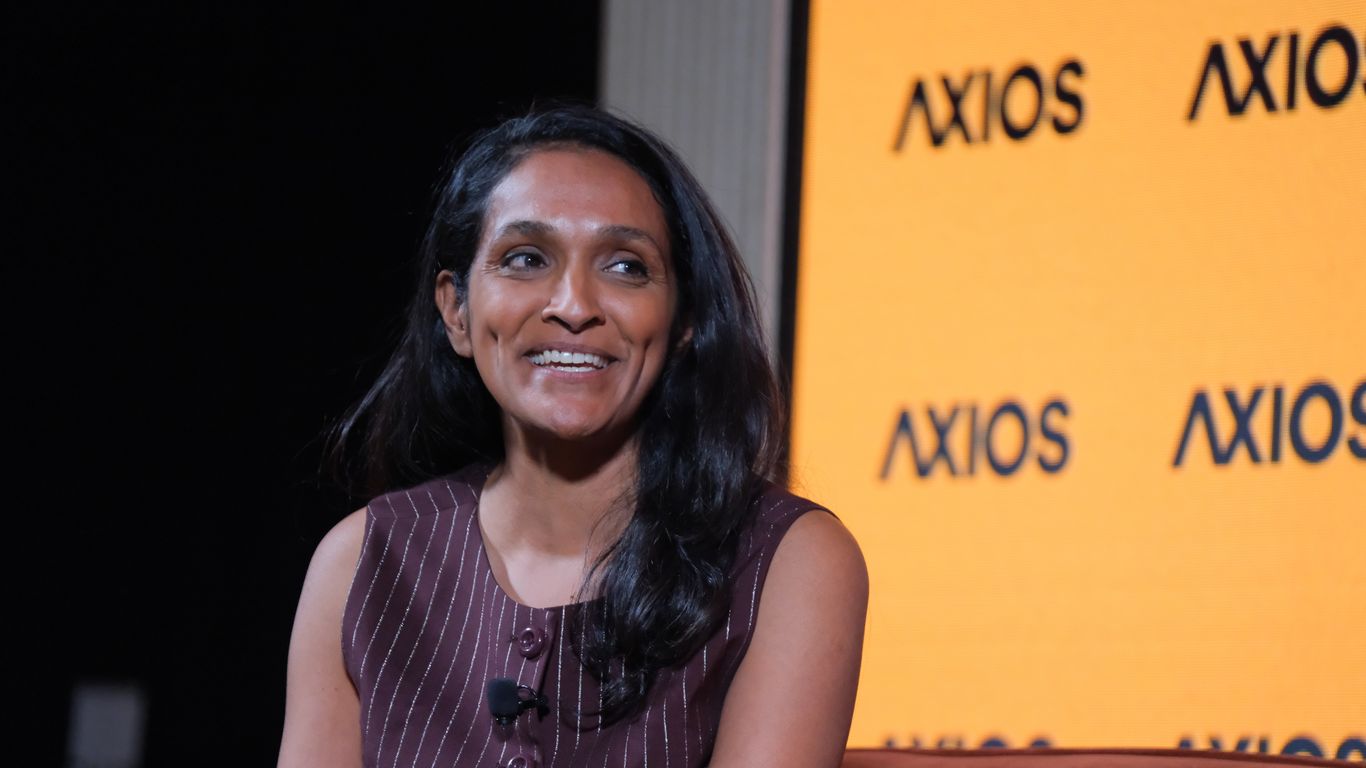
Image via Axios
Israel splits L.A. socialists as a real shot at City Hall comes into view
A dispute over Israel is widening into a broader rupture inside Los Angeles’ socialist ecosystem at the exact moment it has a plausible path to the mayor’s office. The dynamic is less about abstract foreign policy than about coalition maintenance: labor, tenant groups, progressive nonprofits, and activist chapters that usually row in the same direction are now testing whether they can still share a ballot line and a candidate.
The practical stakes are immediate. In a high-cost, high-crime-anxiety city where housing policy is existential and public safety is politically radioactive, a disciplined left coalition can be competitive citywide. But when internal legitimacy fights spill into endorsements, field operations, and donor networks, the movement risks turning a winnable race into an intramural referendum on who counts as “acceptable” on the issue of the moment.
A second-order implication: national progressive organizations increasingly treat municipal races as proving grounds. If the L.A. left can’t manage factional conflict under the pressure of a top-ticket opportunity, it sends a signal to allies and opponents alike that governance coalitions may be harder than protest coalitions—especially in diverse cities where foreign-policy litmus tests collide with local bread-and-butter demands.
✓ The Bottom Line: This looks like a textbook case of a movement confusing moral signaling with winning and governing. Voters will judge a mayor on housing, homelessness, policing, and basic competence; making Israel the organizing axis of a city executive race is politically indulgent. If socialists want to be taken seriously as administrators, they need to prove they can hold coalitions together when emotions run hot.
📎 Axios

Image via The Hill
Trump barnstorms Texas as GOP defends narrow margins heading into the midterms’ final week
With one week until the midterms, President Trump is campaigning in Texas with a rally doubleheader in Corpus Christi and Lubbock. The trip underscores the party’s closing argument: nationalize the election around Trump’s agenda, energize base turnout, and avoid any late-cycle drift among casual Republican voters.
Texas is not just about headline optics. It’s also about money, volunteer energy, and regional media saturation that can spill over into competitive House contests and shape turnout patterns. At the same time, high-profile rallies come with a tradeoff: they can refocus the campaign on Trump personally—useful for mobilization, but potentially risky in districts where independents want a check on Washington without more drama.
Democrats, for their part, are trying to frame the election as a referendum on Republican governance and to maximize turnout in urban and suburban pockets where margins are won or lost. In the final stretch, both parties are essentially betting on which emotion dominates: dissatisfaction with the status quo, or distrust of the other side.
✓ The Bottom Line: Trump’s late push is a rational strategy for a GOP that lives and dies on turnout, but it’s not a free lunch. The rallies can juice enthusiasm, yet they also sharpen the contrast for voters who are exhausted by constant political intensity. If Republicans want to protect their majorities, they’ll need more than crowd size—they’ll need discipline in messaging and candidates who look steady under scrutiny.
📎 The Hill
Image via ABC News
The congressional map comes down to a small number of seats—and a big turnout question
Republicans currently hold majorities in both the House and the Senate, and the battleground math is tight enough that a handful of races can decide control. The House is typically a margin game across dozens of districts where candidate quality, local issues, and late shifts among independents matter as much as national branding. The Senate, by contrast, often turns on fewer states, where ticket-splitting is rarer and the cost of a flawed nominee is higher.
Democrats’ pathway depends on assembling a coalition that includes base turnout plus meaningful gains among suburban and independent voters, while limiting losses in more culturally conservative areas. Republicans’ task is simpler in theory—defend what they have—but harder in practice when a few close races can be tipped by candidate gaffes, economic perceptions, or a late-breaking issue.
One underappreciated factor is the asymmetry of persuasion versus mobilization. In this environment, both parties can find their voters; the harder part is converting the “I’m annoyed with everyone” electorate into a clear choice rather than a stay-home decision.
✓ The Bottom Line: The evidence suggests this cycle is less about grand realignment and more about execution: turnout operations, candidate discipline, and whether swing voters feel safer with divided government or a unified one. Republicans are favored when the election becomes a referendum on everyday governance—prices, crime, and competence—but they can still squander that edge with undisciplined nominees. Democrats can win the math if they keep the contest focused on extremism and rights, but they must also answer the basic “are things better?” question credibly.
📎 ABC News

Image via Forbes
Microbusinesses surge as more entrepreneurs choose control over scale
Microbusinesses—very small firms often run by a single owner or a tiny team—are increasingly the default starting point for entrepreneurship. The appeal is straightforward: lower overhead, faster decision-making, and the ability to build a business around flexible schedules, specialized skills, or local demand rather than around investor-driven growth targets.
The tradeoffs are real. Staying small can limit access to capital, bargaining power, and the capacity to absorb shocks like a slow quarter or an unexpected expense. Microbusiness owners also tend to wear every hat—sales, operations, compliance, customer service—which can cap growth simply through time constraints.
Still, the economics make sense for many. Modern tools have reduced the cost of running payroll, marketing, inventory, and payments, while niche markets reward focus. In a labor market where workers value autonomy and where some consumers prefer local or bespoke offerings, “small by design” is becoming a strategy rather than a stage.
✓ The Bottom Line: This is one of the healthier business trends in years: more people building real, taxable, community-rooted enterprises without chasing hype. The policy implication is boring but important—simpler compliance, predictable taxes, and less red tape matter more than splashy grant programs. If we want durable local prosperity, we should make it easier for microbusinesses to stay compliant and profitable, not force them into premature scaling.
📎 Forbes
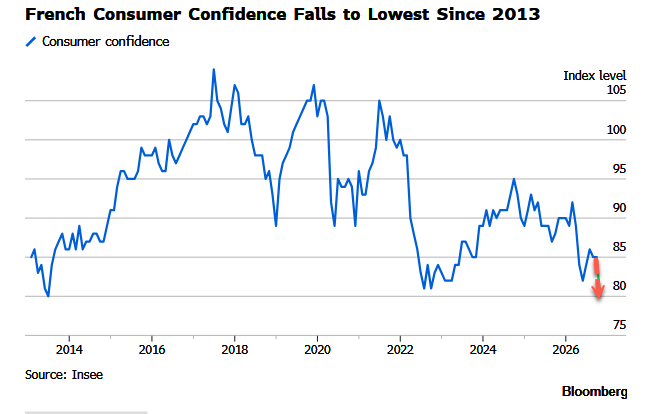
Image via ZeroHedge
France’s confidence slump highlights the political cost of bond-market stress and street disorder
French consumer confidence has reportedly fallen to a multi-year low amid a worsening mix of bond-market anxiety and public unrest. When borrowing costs rise, governments face harsher choices: cut spending, raise taxes, or risk a credibility problem with investors. For households, that often translates into higher rates, weaker job confidence, and the sense that the country’s economic steering wheel is wobbling.
The added complication is politics in the street. Protests and disorder—especially when tied to far-left factions—can amplify economic pessimism by making day-to-day life feel less stable and by discouraging investment and tourism. Even when protests are rooted in genuine economic grievance, sustained instability tends to punish the very working- and middle-class consumers it claims to defend.
Europe’s broader lesson is that markets and politics are now feeding each other faster. Bond investors watch governance, cohesion, and reform capacity; voters react to the fallout from market pressure. If policymakers can’t establish credibility on budgets and public order simultaneously, confidence can deteriorate quickly.
✓ The Bottom Line: Treating bond markets as a villain is a category error: they are a thermometer, not the disease. France can argue about ideology later; right now it needs fiscal clarity, credible enforcement of public order, and reforms that don’t pretend math is optional. The longer leaders indulge street factions and postpone budget realism, the more painful the eventual adjustment will be for ordinary households.
That’s the file for today. We’ll be watching late-cycle polling shifts, turnout signals, and any market moves that force policymakers’ hands.
— Brief Updates Editorial